
Digestive System of a Broiler
High-Speed Nutrient Assimilation & Feed Conversion Kinetics
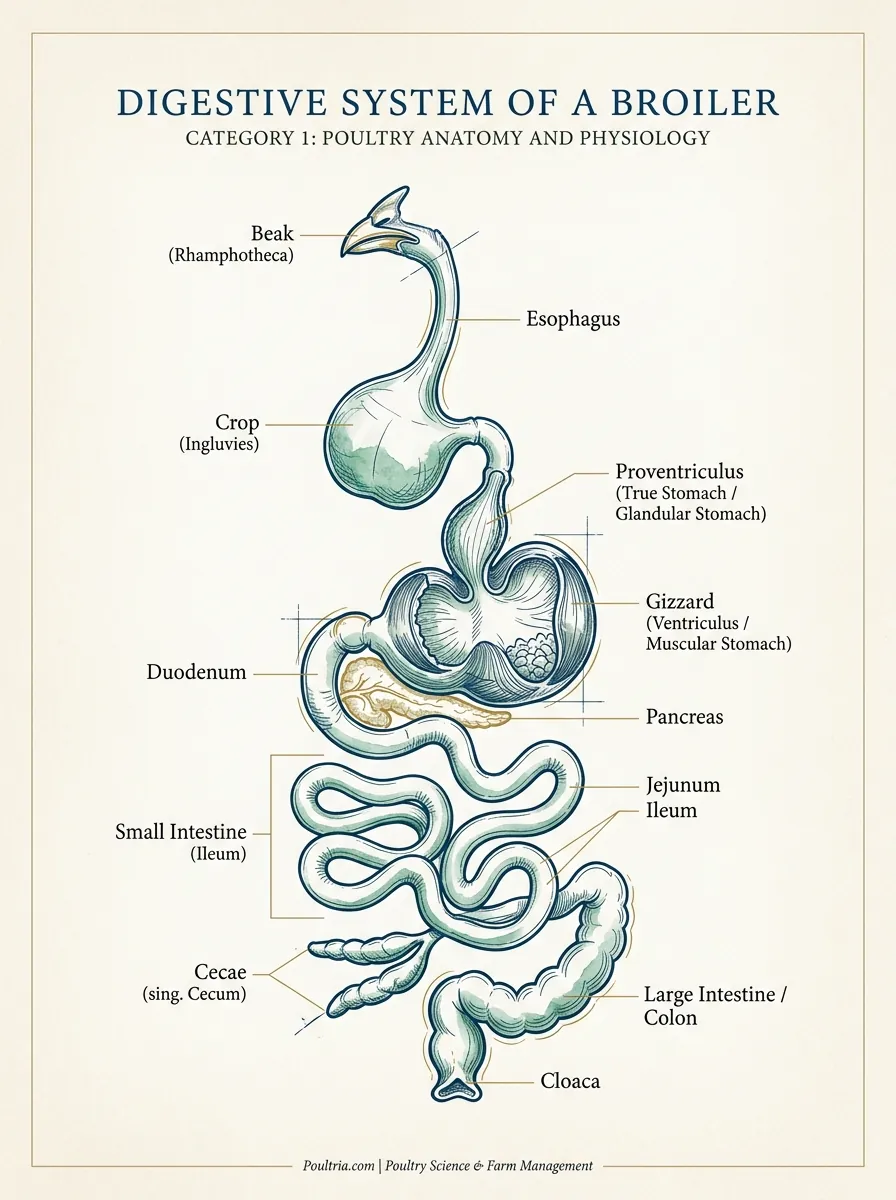
Scientific Overview & Physiological Context
A modern meat broiler can turn less than 1.5 kilograms of feed into 1 kilogram of live weight. How is that biological miracle possible? It all comes down to an ultra-efficient digestive tract that grinds, digests, and absorbs nutrients in record time—moving feed from beak to cloaca in as little as 3.5 hours.
The Two-Stomach Mechanical Grinding Factory
Because chickens have no teeth, nature gave them a two-part stomach. First, swallowed feed enters the crop (a temporary storage pouch in the neck) where moisture and salivary enzymes soften hard pellets. Next, feed moves into the proventriculus (the true glandular stomach), which rapidly drenches the food in hydrochloric acid (pH 2.0 to 2.5) and pepsinogen. Moments later, the chyme slides into the powerful muscular gizzard. Lined with tough, sandpaper-like koilin plates, the gizzard contracts with over 150 mmHg of crushing force, pulverizing whole grains and hard feed particles into a smooth slurry.
The Small Intestine: A Microscopic Absorptive Carpet
Once crushed chyme exits the gizzard, it enters the duodenum loop where bile from the liver and pancreatic enzymes rapidly break down starches, proteins, and fats. The inner walls of the jejunum and ileum are densely packed with millions of microscopic finger-like projections called villi. In high-performing broilers, these villi are tall and healthy, creating a massive surface area that pulls amino acids, glucose, and fatty acids directly into the bloodstream to power rapid muscle growth.
The Ceca: Fermentation & Natural Gut Protection
Where the small intestine meets the colon, two blind pouches called ceca branch off. Here, billions of beneficial bacteria ferment leftover soluble fibers into volatile fatty acids like butyrate, propionate, and acetate. Butyrate serves as the primary fuel for gut lining cells, keeping the intestinal wall tight and preventing harmful pathogens like Salmonella and Clostridium from gaining a foothold.
Core Biological & Management Mechanisms
Feed moves at high velocity, requiring highly digestible micro-pellets with balanced amino acids for maximum absorption.
Tough muscular contractions grind grains without teeth, stimulating natural acid production and gut motility.
Long, undamaged villi expand absorptive surface area, directly improving daily weight gain and lowering FCR.
Friendly gut microbes ferment fiber into butyric acid, repairing the intestinal lining and crowding out harmful bacteria.
Veterinary Takeaway & Practical Application
Feeding 1% to 2% coarse particles (such as coarse-ground corn or cracked wheat) stimulates gizzard development by up to 20%. A well-developed gizzard produces stronger stomach acid (pH ~2.0), creating a natural chemical barrier against Clostridium and Salmonella.
Open FCR Calculator →