
Chicken Anatomy Overview
Complete Avian Anatomical Architecture & Organ Systems
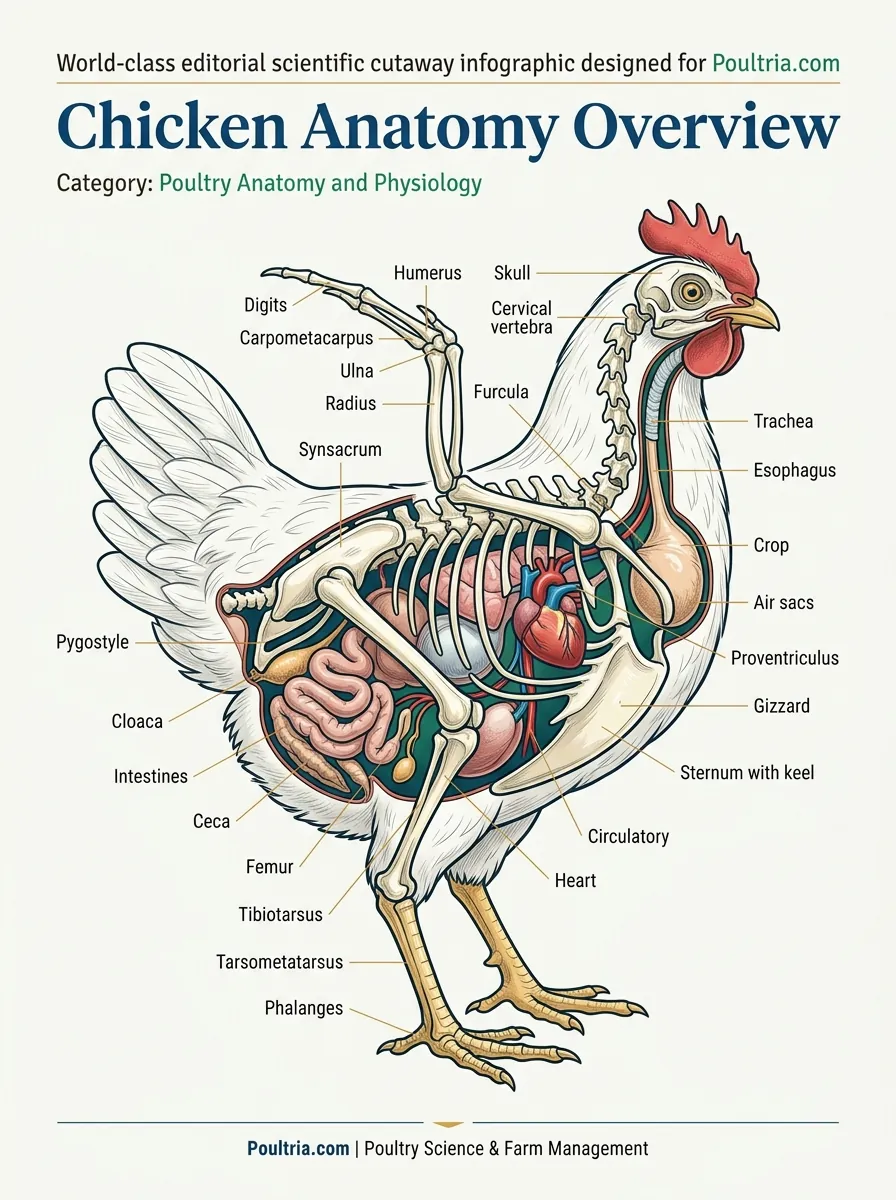
Scientific Overview & Physiological Context
Ever wondered how a chicken's body is engineered to produce an egg a day or convert feed into muscle with incredible speed? Unlike mammals, a chicken is a lightweight biological machine built for extreme metabolic output. Every single organ—from hollow bones to nine air sacs—is strategically designed to minimize body weight while maintaining maximum physiological efficiency.
The Undivided Coelomic Body Cavity
The first thing that surprises most poultry farmers and veterinary students is that chickens do not have a muscular diaphragm. In mammals, the diaphragm acts as a physical wall separating the chest from the belly. In a chicken, there is only one shared space called the coelomic cavity. This means the heart, lungs, nine air sacs, liver, gizzard, intestines, and reproductive organs all sit together in intimate contact. While this keeps the bird lightweight and compact, it also means that if an infection starts in the gut (like enteritis) or the reproductive tract (like egg peritonitis), it can easily spread to the surrounding air sacs and turn into a life-threatening whole-body infection.
Living at 41.5°C: High-Speed Avian Metabolism
Chickens run 'hotter and faster' than almost any farm animal. Their normal resting body temperature sits between 41°C and 42°C (106°F–108°F), and a healthy resting chicken's heart beats between 250 and 400 times a minute. To keep this high-speed internal furnace burning, their digestive system processes grains in just 3 to 4 hours. The liver works overtime as the body's chief chemical factory, synthesizing the massive amounts of protein, fat, and cholesterol needed for daily growth and egg production.
Hands-On Field Evaluation: Reading the Bird's Body
When you walk into a poultry house, the bird's external anatomy tells you everything about its internal health. Bright red, warm combs and wattles indicate strong blood flow and active hormone production. A smooth, well-fleshed keel bone (breastbone) signals proper muscle development without wasting. By gently palpating the soft abdomen below the pin bones, experienced flock managers can immediately feel whether a hen is actively laying, holding fluid (ascites or water belly), or suffering from an impacted gizzard.
Core Biological & Management Mechanisms
Air sacs extend directly inside hollow bones like the humerus, slashing skeletal weight by 40% while keeping bone strength high.
Because chickens cannot sweat, unfeathered combs, wattles, and legs act like radiators, dumping excess heat into the air.
Vertebrae are naturally fused together into rigid bony plates (the notarium and synsacrum) to absorb ground shock when walking.
With no diaphragm barrier, respiratory and digestive pressures interact directly, making clean air vital for overall gut and organ health.
Veterinary Takeaway & Practical Application
Because internal organs share an open cavity with the air sacs, poor shed air quality (ammonia >15 ppm or heavy dust) doesn't just irritate the lungs—it weakens the whole coelomic defense system, opening the door to systemic E. coli infections and high mortality.
Explore Biology Lab →