
Feather Structure & Molting Stages
Pterylography, Keratin Architecture & Molt Physiology
Scientific Overview & Physiological Context
Feathers are marvels of biological architecture made of 90% tough beta-keratin. They provide flight aerodynamics, waterproof weather shielding, and thermal insulation. Molting is the natural annual cycle where spent feathers are shed and the bird's reproductive tract is completely rejuvenated.
Microscopic Hook Architecture of a Feather
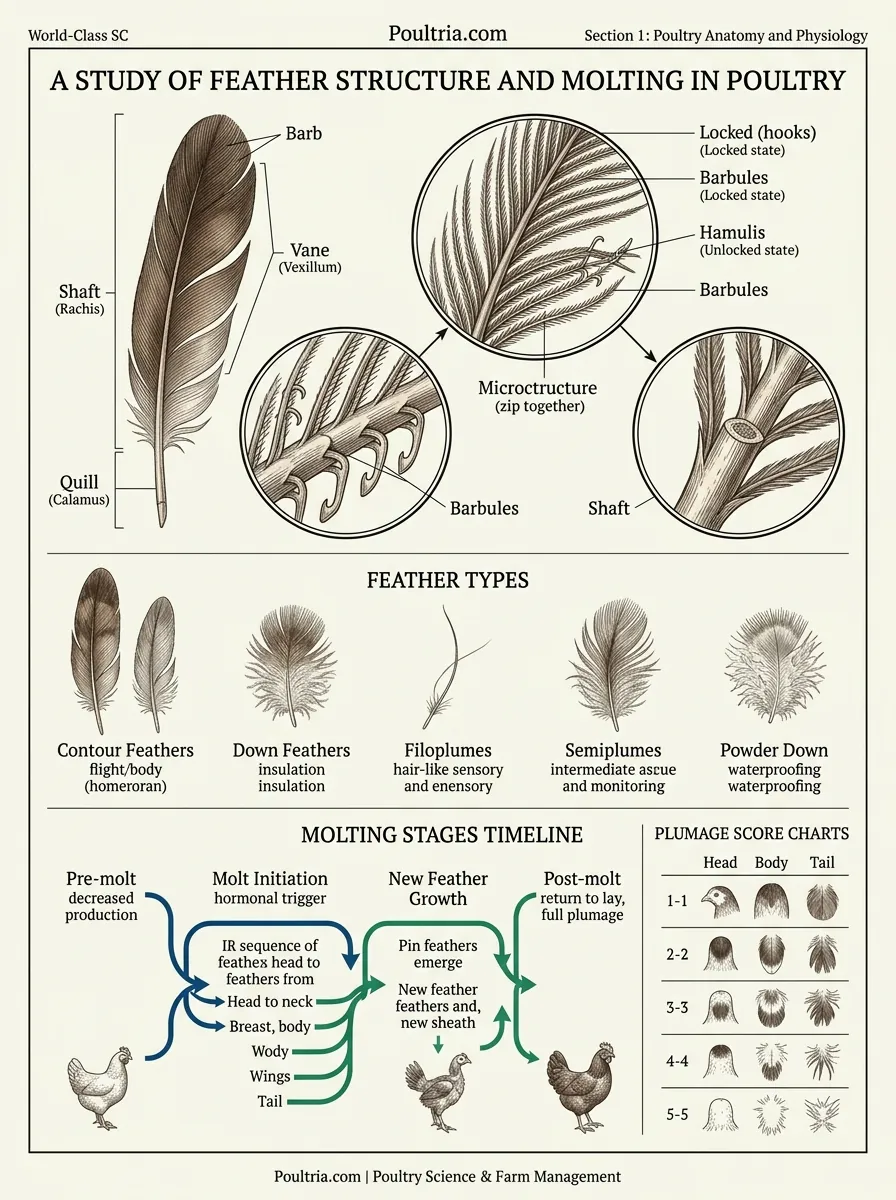
A contour feather consists of a hollow central quill (calamus) that transitions into the main shaft (rachis). Branching off from the shaft are thousands of parallel barbs. Under a microscope, each barb carries hundreds of microscopic barbules fitted with tiny interlocking hooks called hamuli. When a chicken preens with oil from its uropygial gland, it zips these microscopic hooks together, creating a tight, windproof, and waterproof barrier.
Feather Tracts (Pterylae) & Bare Skin Zones
Feathers do not sprout randomly across a chicken's skin. They grow in distinct, organized rows called pterylae (feather tracts), separated by bare skin spaces called apteria. This tract layout allows muscles to move the wings and legs freely without binding, while giving bare skin areas room to dissipate excess body heat during hot weather.
How Molting Rejuvenates the Laying Hen
When day length shortens in autumn, a hormonal shift occurs: estrogen drops, thyroid hormone (thyroxine) surges, and old feather shafts are pushed out by new growing 'blood feathers.' As the hen stops laying eggs to redirect all her energy into growing new plumage, her exhausted oviduct naturally shrinks, rests, and repairs itself. When she finishes molting, she returns with strong eggshells and renewed high laying persistence.
Core Biological & Management Mechanisms
Microscopic hooks zip feather barbs together to form a windproof, waterproof, and heat-trapping shield.
Feathers grow in organized rows separated by bare apteria skin zones that assist with thermal heat release.
A natural hormonal shift causes old feathers to drop while fresh keratin papillae push through the skin.
Molting provides a necessary biological rest period that restores post-molt eggshell strength and internal egg quality.
Veterinary Takeaway & Practical Application
Feathers are composed of 90% keratin, which is rich in sulfur-containing amino acids (Methionine and Cysteine). During molt recovery, boost dietary digestible methionine levels (0.45%+) to speed up feather regrowth and return the flock to lay faster.
Calculate Molt Economics →