
Fowl Cholera (P. multocida)
Pasteurella multocida Septicemia, Wattle Edema & Liver Focal Necrosis
Scientific Overview & Physiological Context
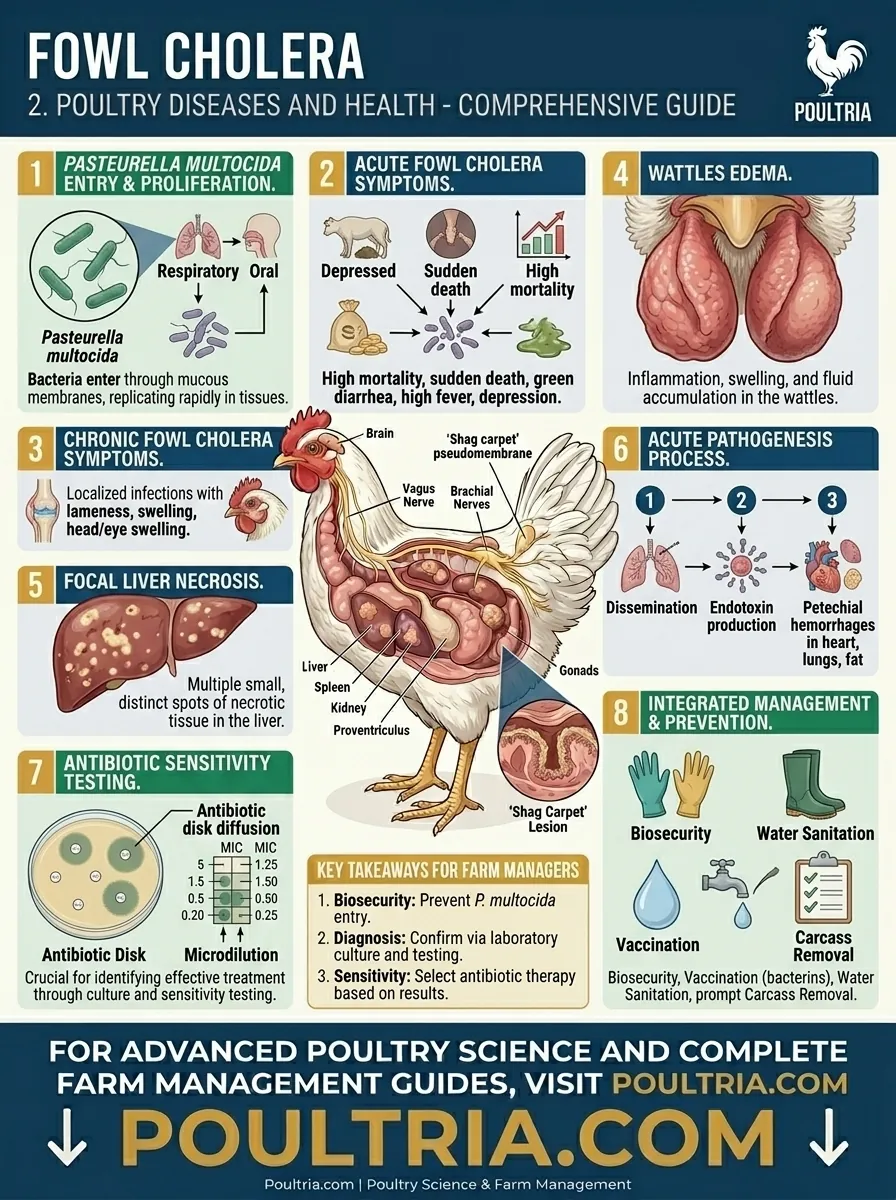
Fowl Cholera is an ancient and aggressive bacterial infection caused by Pasteurella multocida. It strikes in two forms: an explosive, acute septicemia that causes sudden death in healthy-looking birds, or a chronic localized infection that fills wattles, joints, and ears with cheesy abscesses.
The Bacteriology: Gram-Negative Bipolar Rods
Pasteurella multocida is a Gram-negative, non-motile coccobacillus. Under a microscope with Wright's or Giemsa staining, it displays characteristic bipolar staining—looking like tiny safety pins with dark ends and a clear center. Capsular Serogroup A strains (such as Heddleston types 1, 3, and 4) are the most common culprits in commercial poultry outbreaks.
Acute Septicemia vs. Chronic 'Wattle Cholera'
In acute outbreaks, death is sudden and shocking—well-fleshed birds drop dead on the feeders with little warning. Necropsy reveals severe petechial hemorrhages on the heart surface (epicardium) and abdominal fat, congested dark lungs, and a swollen liver peppered with hundreds of tiny white pinpoint necrotic spots. In chronic cases, the bacteria localize in the wattles, causing them to swell with firm, cheesy caseous pus ('wattle cholera'), or invade the middle ear, causing severe torticollis.
Rodent Reservoirs & Biosecurity Eradication
Rats, mice, farm cats, and wild birds are natural oral carriers of Pasteurella multocida. The bacteria spread through contaminated drinking water, feed troughs, or cannibalism of infected dead birds. In commercial breeder and layer complexes, controlling rodents is mandatory. Treatment requires immediate water antibiotics (tetracyclines or sulfonamides) followed by killed bacterin vaccinations at 10 and 14 weeks of age.
Core Biological & Management Mechanisms
Pasteurella multocida shows classic bipolar staining under Giemsa microscopy from fresh liver or heart blood smears.
Multifocal tiny white spots across a swollen liver parenchyma alongside severe heart fat petechiae.
Firm caseous exudate swelling the wattles and hock tendon sheaths in surviving chronic carrier birds.
Aggressive farm rat and mouse eradication is mandatory to eliminate the primary persistent bacterial reservoir.
Veterinary Takeaway & Practical Application
Birds that survive Fowl Cholera remain lifetime carriers, shedding P. multocida in nasal and oral secretions. In commercial breeder and layer operations, cull all birds with swollen wattles and vaccinate replacement pullets with killed bacterin at 10 and 14 weeks.
View Fowl Cholera Guide →