
Infectious Bronchitis (IBV Strains)
Gammacoronavirus Diversity, Nephropathic Strains & Egg Shell Deformities
Scientific Overview & Physiological Context
Infectious Bronchitis (IB) is a highly contagious coronavirus infection of chickens. Famous for its lightning-fast spread and high mutation rate, IBV attacks the respiratory tract, causes severe kidney swelling, and irreversibly ruins eggshell quality in laying flocks.
Why IBV Mutates Constantly: The S1 Spike Protein
Infectious Bronchitis Virus is an avian Gammacoronavirus with a single strand of positive RNA. The outer surface of the virus is covered in spike proteins with a bulbous tip called the S1 subunit. This S1 tip undergoes frequent spontaneous mutations and genetic recombination in the field, constantly producing new variant strains (such as Massachusetts, 793B/4-91, QX, D274, and Var2) that can bypass single-strain vaccines.
Respiratory, Kidney, and Reproductive Damage
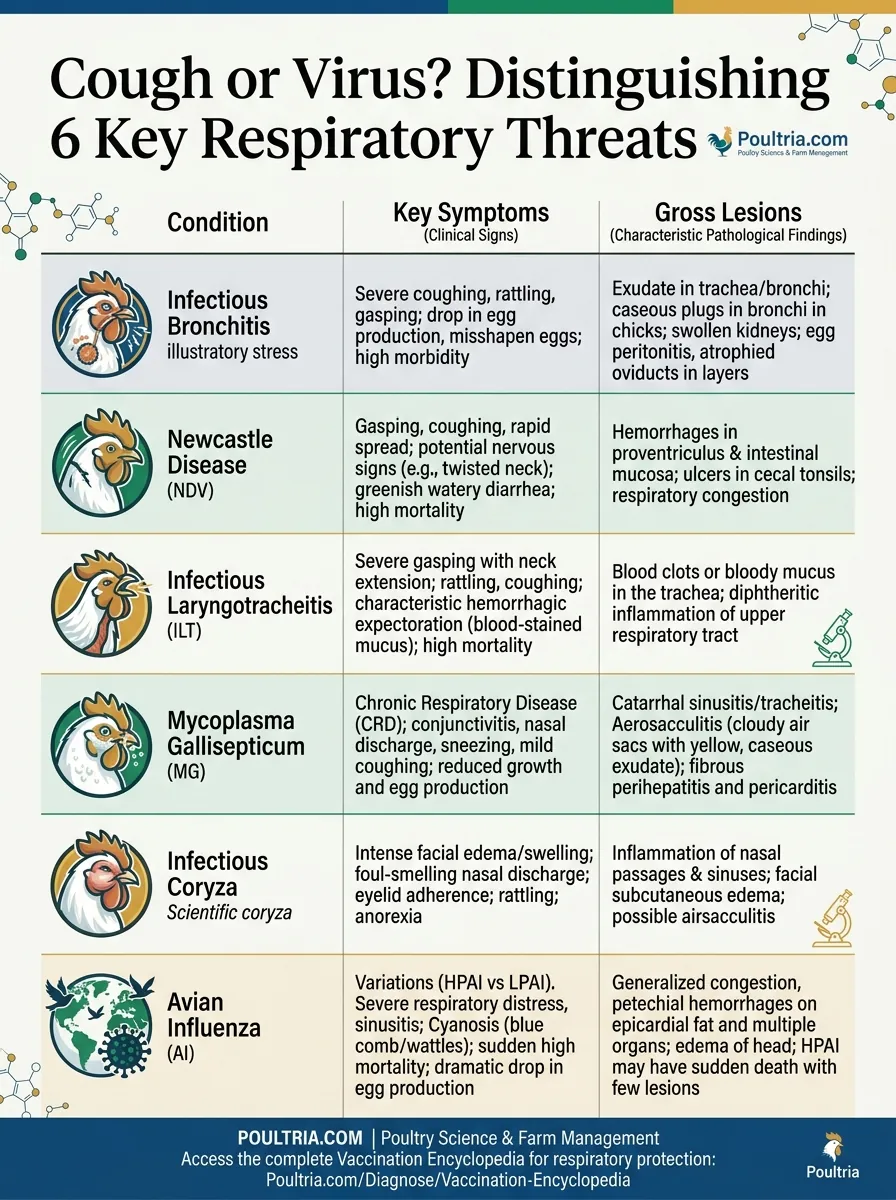
Classical IBV causes coughing, sneezing, and tracheal rattling (rales) in broilers. However, nephropathic variants (like QX) migrate to the kidneys, causing extreme renal tubule swelling and white urate deposits (visceral gout). In laying hens, IBV infects the oviduct, producing corrugated, wrinkled, thin-shelled, and pigment-depleted eggs with watery albumen (loss of Haugh units).
The Protectotype Vaccination Strategy
Because new IBV variants arise regularly, a single vaccine strain cannot protect against every field challenge. To overcome this, the industry uses the 'Protectotype' strategy: by administering two genetically distinct live vaccine strains (such as Massachusetts + 793B) at hatch, the bird's immune system develops broad cross-reactive cellular immunity against emerging field variants.
Core Biological & Management Mechanisms
Frequent genetic drift in the outer S1 spike glycoprotein generates new field variants that evade older vaccines.
QX-type strains swell kidney collecting tubules, filling them with white chalky urates and triggering high mortality.
Viral damage to the oviduct shell gland produces characteristic corrugated, soft-shelled, and bleached eggs.
Combining two different live vaccine strains at Day 0 creates wide-spectrum protection against field variants.
Veterinary Takeaway & Practical Application
Never rely on a single Massachusetts vaccine strain in regions with high IBV challenge. Applying the Protectotype approach (Mass + 793B/4-91 at Day 0) provides proven cross-protection against nephropathic and egg-drop field variants.
View IBV Disease Atlas →