
Backyard Chickens Complete Care Handbook: Rooster vs Hen Sexing, Daily Flock Routines, Ethology & Health Triage
The comprehensive veterinary manual for raising backyard chickens: identifying roosters vs hens, managing flock behavior, balanced layer nutrition, safe treats, and disease triage.
Scientific Overview
Raising backyard chickens is an enriching agricultural pursuit that unites sustainable food production with fascinating animal ethology. However, transitioning from casual hobbyist to a successful flock steward demands an understanding of avian biology, social hierarchies, and preventative health protocols. This handbook provides an exhaustive, practical roadmap for managing small backyard flocks (5 to 30 birds): determining sex through plumage and spur development, understanding rooster behavioral dynamics and courtship ethology, organizing daily care calendars, balancing calcium nutrition, distinguishing safe foods from lethal toxins, and triaging common backyard ailments like bumblefoot and crop impaction.
1. The Ethology of Backyard Chickens: Social Structure & Pecking Orders
Successful flock stewardship starts with mastering the biological fundamentals of raising chickens and caring for chickens in a suburban or homestead environment. Chickens (Gallus gallus domesticus) descended from the wild Southeast Asian Red Junglefowl (Gallus gallus). Despite centuries of domestication, backyard chickens maintain complex, ancestral social systems governed by a rigid dominance hierarchy known universally as the pecking order.
The pecking order dictates priority access to premium feed, elevated roosting perches, preferred nesting boxes, and morning dust-bathing sites. High-ranking alpha hens enforce rank through subtle postural cues—raising neck feathers, standing tall, and issuing gentle disciplinary head pecks. Subordinate hens signal submission by crouching low or yielding path.
Dust bathing is an essential communal grooming ethology. Chickens dig shallow wallows in dry dirt or wood ash, flinging fine particulate dust into their plumage and rubbing their bodies against the soil. This abrasive particulate absorbs excess lipid oils secreted by the uropygial (preen) gland at the base of the tail, smothering external parasites and maintaining clean feather insulation. Flocks that lack access to dry dust-bathing substrates exhibit chronic feather deterioration and heightened social tension.
Integrating New Birds Protocol: Never release unfamiliar chickens directly into an established flock. The resident birds will perceive newcomers as intruders, leading to severe territorial violence. Always quarantine new birds for 21 days for biosecurity disease monitoring, then place them in an adjacent see-through wire enclosure ("look but don't touch") inside the run for 7 to 10 days before releasing them together at dusk under roosting conditions.
2. Rooster vs Hen: Complete Anatomical, Morphological & Behavioral Sexing Guide
One of the most frequent challenges facing backyard keepers is evaluating a juvenile chicken vs rooster to determine whether a bird is a cockerel or a pullet. Vent sexing at day-old requires specialized commercial training, but between 6 and 14 weeks of age, distinctive sexual dimorphism emerges across plumage, physiology, and vocalizations:
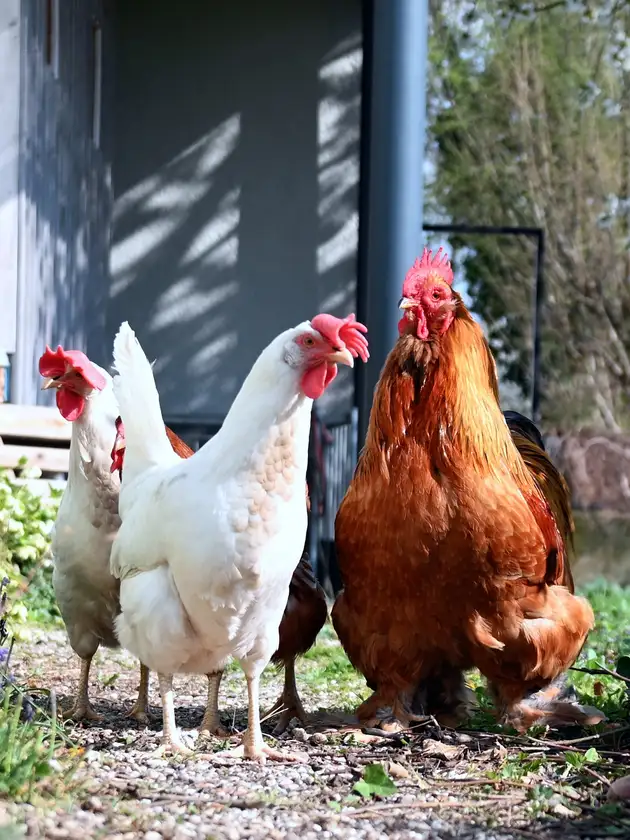
Primary Anatomical Differences (Rooster vs Hen):
| Anatomical Feature | Rooster (Male / Cock) | Hen (Female) | Diagnostic Age of Confirmation |
|---|---|---|---|
| Neck Hackle Feathers | Long, narrow, sharp, pointed lanceolate feathers draped around neck | Broad, blunt, rounded contour feathers | 8 to 12 weeks |
| Saddle Feathers (Back/Hips) | Pointed, thin, cascading iridescent ribbons draped in front of tail | Broad, round-tipped, tightly overlapping contour feathers | 10 to 12 weeks |
| Tail Covert & Sickle Feathers | Prominent, tall, upward-arching main sickle feathers curving backward | Compact, wedge-shaped, flat, straight tail feathers | 12 to 14 weeks |
| Comb & Wattle Vascularity | Large, thick, deep crimson red flush developing early | Small, pale pink/yellow, expanding only near point-of-lay (18+ wks) | 5 to 8 weeks |
| Tarsometatarsal Leg Spurs | Sharp, bony, keratinized calcified defensive weapon (2.5 cm to 5 cm / 1 to 2 in) | Small residual flat nub (rarely develops true spurs in older hens) | 6 to 10 months |
| Stance & Bone Mass | Tall, upright, alert posture; thick shanks; 20% to 35% heavier body mass | Horizontal, compact, low-centered posture; slender shanks | 8 to 12 weeks |
3. Rooster Ethology, Courtship Rituals & Managing Aggression
A good rooster is a tireless, vigilant guardian of the backyard flock. He continuously scans the perimeter and overhead canopy for hawks, foxes, and neighborhood cats, alerting hens with distinct auditory predator alarm calls.
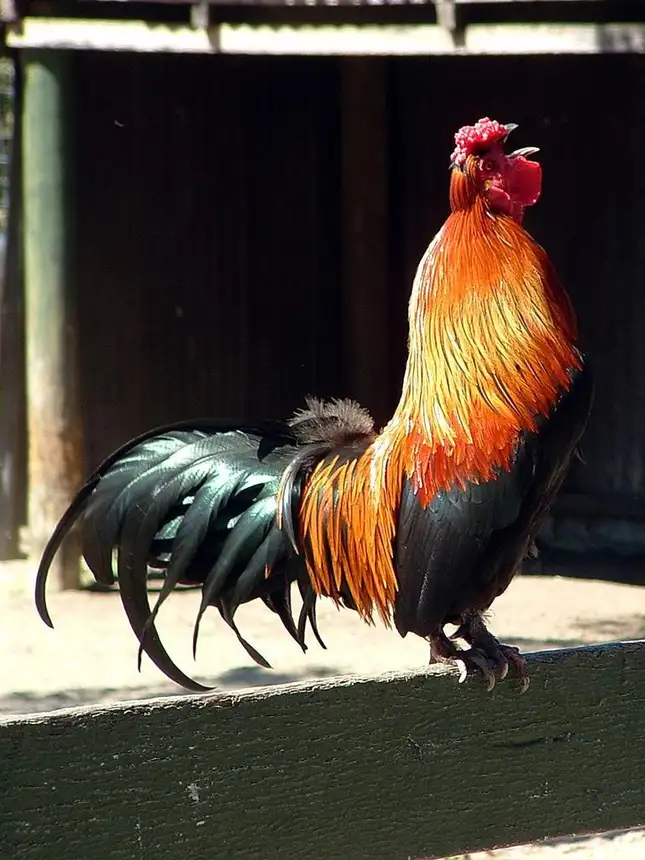
Rooster Courtship Ethology: The Tidbitting Dance:
When a rooster locates a high-protein treat (such as a beetle or earthworm), he drops his head, picks up and drops the morsel repeatedly, and emits a rhythmic, high-frequency clucking call known as tidbitting. He stands aside, refusing to eat until his hens arrive to consume the prize. To initiate mating, he circles a chosen hen while dragging one wing tip along the ground in a stylized waltz dance.
Managing Rooster Aggression & Over-Mating:
- The 1:10 Mating Ratio: Maintain a minimum ratio of 1 rooster for every 8 to 12 hens. If a rooster manages only 3 or 4 hens, his frequent mating advances will tear plumage from the hens' backs and crowns, causing bare skin and open lacerations. Fit over-mated hens with canvas chicken saddles to protect dorsal skin while feathers regrow.
- Non-Violent Human De-escalation: As cockerels reach sexual maturity around 6 months of age, testosterone surges can cause them to perceive humans as rival roosters. Never kick, hit, or chase an aggressive rooster; physical violence confirms that you are a rival sparring partner, escalating attacks. Instead, calmly approach the bird, pick him up firmly tucking his wings beneath your arm, and carry him around while performing chores for 10 to 15 minutes. Holding him beneath your arm calmly asserts dominant flock status without inflicting injury.
- Spur Trimming: To prevent injury to hens during mating or caretakers during chores, blunt overgrown spurs by carefully trimming the sharp outer tip using dog nail clippers (avoiding the live inner vascular quick) or smoothing with a metal file.
4. Daily, Weekly & Seasonal Flock Management Calendar
Structuring your flock chores into a disciplined schedule ensures preventative biosecurity and steady egg productivity:
Daily Routine (15 Minutes)
- Morning (Dawn): Open the coop pop-door to release hens into the predator-proof run. Conduct a quick headcount. Observe birds as they emerge—a healthy hen steps out vigorously; an ailing bird remains hunched on the roost with ruffled feathers.
- Hydration Check: Dump, rinse, and refill drinkers with fresh cold water. Scrub slimy bacterial biofilm from drinker bowls.
- Feed Provisioning: Inspect feed hoppers. Ensure balanced layer crumble/pellet is accessible.
- Afternoon (2–4 PM): Collect eggs. Prompt afternoon gathering prevents egg breakage and discourages hens from developing the destructive vice of egg eating.
- Dusk (Night Lockup): Count all birds on the perches. Close and double-lock the coop pop-door with carabiner latches.
Weekly & Monthly Tasks
- Weekly Poop Board Scraping: Scrape dropping boards directly beneath roosts into a compost bin. Top up nesting box straw.
- Monthly Health Audit: Randomly lift 3 to 5 birds from perches after dark. Inspect vents and feather bases for northern fowl mites or lice. Palpate crops to ensure nighttime fullness and morning emptiness. Check footpads for black bumblefoot scabs.
- Deep Clean (Bi-Annual): Remove all bedding down to the floorboards. Scrape dried feces. Spray interior timber with diluted food-grade hydrogen peroxide or virucidal disinfectant. Allow to dry thoroughly before spreading fresh kiln-dried pine shavings.
Seasonal Photoperiod Biology & Winter Lighting:
A laying hen's reproductive cycle is regulated by light entering her retinal receptors and pineal gland. When autumn day length drops below 14 hours of light, the hypothalamus reduces gonadotropin-releasing hormone (GnRH), prompting the anterior pituitary gland to cease secreting follicle-stimulating hormone (FSH) and luteinizing hormone (LH). The ovary regresses, and egg laying naturally drops or stops for the winter.
Backyard keepers face a choice: allow the flock to take a natural 2 to 3 month winter laying holiday (which allows calcium reserves in skeletal bones to replenish, prolonging layer longevity), or install gentle automated LED coop lighting to sustain egg production. If supplementing light, provide 14 to 15 total hours of light daily by setting a timer to turn low-wattage warm LED bulbs on in the early morning (e.g., 4:30 AM to dawn), never in the evening. Turning lights off abruptly in the evening strands birds on the floor in pitch darkness, unable to locate their roosts.
Autumn Molting Physiology & Keratin Regeneration:
Around 18 months of age and every autumn thereafter, chickens undergo an annual post-nuptial molt. Over an 8 to 12 week period, hens shed worn, frayed feathers and regenerate an entirely new protective winter plumage. Feathers consist of over 85% pure keratin protein rich in sulfur-containing amino acids (methionine and cysteine). Because protein synthesis is redirected entirely to feather production, egg laying ceases completely. During active molt, switch the flock to a high-protein 20% to 22% grower or broiler ration supplemented with black oil sunflower seeds and dried black soldier fly larvae. Avoid handling molting birds; emerging juvenile pinfeathers are engorged with live blood vessels and are extremely painful to the touch.
5. Layer Nutrition: Calcium Balancing, Insoluble Grit & Toxic Foods Directory
A high-producing backyard laying hen deposits approximately 2.0 g to 2.2 g of pure calcium into every single eggshell. If dietary intake fails to meet this metabolic demand, her parathyroid gland draws calcium from her skeletal medullary bones, causing cage-layer osteoporosis, paralysis, and paper-thin or soft-shelled eggs.
Feeding Stages & Nutrition Guidelines:
- Chick Starter (0–6 Weeks): 20% to 22% Crude Protein (CP) with 0.9% to 1.0% Calcium to foster bone, feather, and muscle growth.
- Pullet Grower (6–18 Weeks): 16% to 18% CP with 0.9% Calcium to sustain steady growth without taxing juvenile kidneys.
- Complete Layer Ration (18+ Weeks): 16% to 18% CP with 3.8% to 4.2% Calcium. Warning: Never feed high-calcium layer feed to chicks under 18 weeks; excess calcium causes fatal visceral gout and renal failure in young kidneys.
- Supplemental Calcium: Provide free-choice crushed oyster shells or coarse limestone grit in a separate container. Hens instinctively self-regulate their calcium intake according to eggshell calcification timings.
- Insoluble Granite Grit: Chickens have no teeth; they grind whole grains and tough fiber in their muscular gizzard using swallowed stones. Always supply insoluble granite grit free-choice, especially if birds forage in runs.
The Backyard Poultry Poison Directory (Deadly Foods):
| Toxic Food Item | Lethal Compound | Clinical Pathology & Symptoms |
|---|---|---|
| Avocado (Skin & Pit) | Persin (Fungicidal toxin) | Myocardial necrosis, pulmonary edema, hydropericardium, acute heart failure within 24 hours. |
| Raw / Green Potato Peels & Sprouts | Solanine (Glycoalkaloid) | Gastroenteritis, severe diarrhea, neurological paralysis, hypothermia, death. |
| Raw / Dried Kidney Beans | Phytohemagglutinin (Lectin) | Erythrocyte agglutination (red blood cell clumping), severe intestinal sloughing; fatal in small doses. |
| Chocolate, Coffee & Cacao | Theobromine & Caffeine | Tachycardia, cardiac arrhythmias, central nervous system seizures, death. |
| Moldy Feed or Bread | Mycotoxins (Aflatoxin, T-2) | Acute hepatic necrosis, oral mucosal ulcers, profound immunosuppression, death. |
6. Preventive Health Triage: External Parasites, Bumblefoot & Crop Disorders
Recognizing early symptoms enables swift clinical triage before systemic illness compromises the flock:
External Parasite Defense: Mites & Lice:
Northern Fowl Mite (Ornithonyssus sylviarum): Blood-sucking mites that spend their entire life cycle on the chicken, congregating around the vent and producing dirty, crusty feather shafts. Severe infestations cause anemia, pale combs, and drop egg yield by 30%.
Red Roost Mite (Dermanyssus gallinae): Nocturnal parasites that hide in wooden coop crevices during daylight and emerge at night to feed on roosting birds. Treat coops by painting perches with neem oil and dusting crevices with food-grade diatomaceous earth. Provide an outdoor dust bath box filled with dry sand, wood ash, and sulfur powder for natural flock parasite bathing.
Bumblefoot (Ulcerative Pododermatitis):
A localized Staphylococcus aureus infection on the bottom of the foot pad, initiated by splinters from rough roosts or jumping onto rocky ground. Symptoms include limping, heat, swelling, and a characteristic black necrotic scab on the footpad. Triage: Soak foot in warm water with Epsom salts for 20 minutes to soften tissue. Clean with povidone-iodine, extract the hard, cheesy caseous pus core, pack with antimicrobial ointment, and wrap firmly with non-stick gauze and Vetrap.
Crop Disorders: Impacted Crop vs Sour Crop:
- Impacted Crop: The crop feels hard, firm, and enlarged like a golf ball upon morning inspection before feeding, caused by gorging on long, fibrous grass clippings or string. Triage: Administer 5 mL of food-grade olive oil via syringe, gently massage the crop downward, withhold solid food for 24 hours, and provide water with electrolytes.
- Sour Crop (Candidiasis): The crop feels squishy, enlarged, and fluid-filled like a water balloon, emitting a distinct foul, fermenting yeast odor from the beak. Caused by Candida albicans fungal overgrowth. Triage: Isolate the hen, administer oral copper sulfate or veterinary antifungal (Nystatin), provide plain unflavored probiotic yogurt, and withhold scratch grains.
7. Egg Collection, Safe Handling & Backyard Biosecurity Protocols
Protecting the quality and safety of fresh backyard eggs requires understanding the eggshell's natural biological defense:
The Natural Protective Cuticle (The Bloom):
Immediately prior to oviposition, the hen's shell gland deposits a thin proteinaceous liquid layer called the cuticle or bloom over the porous eggshell. The bloom dries rapidly upon contact with ambient air, physically sealing the 7,000 to 17,000 microscopic shell pores. This barrier blocks bacterial invasion (including Salmonella enterica) and slows the evaporation of internal moisture.
The Washing Rule: To Wash or Not to Wash?
Keep Nest Boxes Spotless: Replace soiled straw weekly so eggs remain pristine upon collection. Do not wash unsoiled eggs. Washing strips away the protective bloom, opening pores to bacterial penetration. Unwashed farm-fresh eggs with intact blooms remain wholesome at cool room temperature (15°C to 20°C / 59°F to 68°F) for 2 to 3 weeks, or in the refrigerator for up to 3 to 4 months. If an egg has manure stains, wash it only immediately before cooking using warm water at least 11°C (20°F) warmer than the egg (around 40°C to 45°C / 104°F to 113°F). Cold water causes the egg's internal contents to contract, creating a vacuum that pulls surface bacteria straight through the shell pores.
Backyard Chickens Complete Care Handbook: Rooster vs Hen Sexing, Daily Flock Routines, Ethology & Health Triage — Frequently Asked Questions
Add Poultria to your Google Preferred Sources
Follow Poultria on Google so our peer-reviewed poultry veterinary research, commercial breed genetics, and agronomic field guides are highlighted and cited first in your Google Search, Top Stories, and AI Overviews.