
Chicken Tractor Plans & Pasture Engineering Manual: Mobile Coops, Wheel Lift Mechanics & Rotational Grazing
The definitive engineering blueprint for designing portable chicken coops, pasture broiler shelters, wheel lever jacks, and rotational grazing systems.
Scientific Overview
A chicken tractor is a bottomless, mobile pastured poultry shelter that integrates the biological foraging behaviors of chickens directly into ecological grassland management. By systematically moving birds across fresh forage on a daily schedule, the chicken tractor fulfills four regenerative functions: it provides a clean, pathogen-free ground environment that breaks parasite life cycles, distributes concentrated nitrogenous poultry manure uniformly without scorching pasture, supplies natural vitamins, minerals, and carotenoids from fresh grass and invertebrates, and protects vulnerable foraging flocks from mammalian and raptor predators.
1. The Agronomy & Soil Ecology of Rotational Pastured Poultry
Pasture Nitrogen Loading Formula: Fifty pastured broilers deposit approximately 1.5 kg to 1.8 kg (3.3 to 4.0 lbs) of pure elemental nitrogen per 10 m² (107 sq ft) per 24-hour cycle. Moving the tractor every morning ensures uniform distribution, stimulating rapid perennial pasture regrowth without chemical fertilizers or ground scorching.
In stationary housing, manure accumulates in deep bedding, where anaerobic bacteria volatilize uric acid into toxic ammonia gas. In contrast, the chicken tractor deposits fresh, un-degraded droppings directly onto the soil surface. Active earthworms, mycorrhizal fungi, and dung beetles incorporate this organic matter within 48 to 72 hours.
Breaking Pathogen Life Cycles with Rotational Rest Cycles:
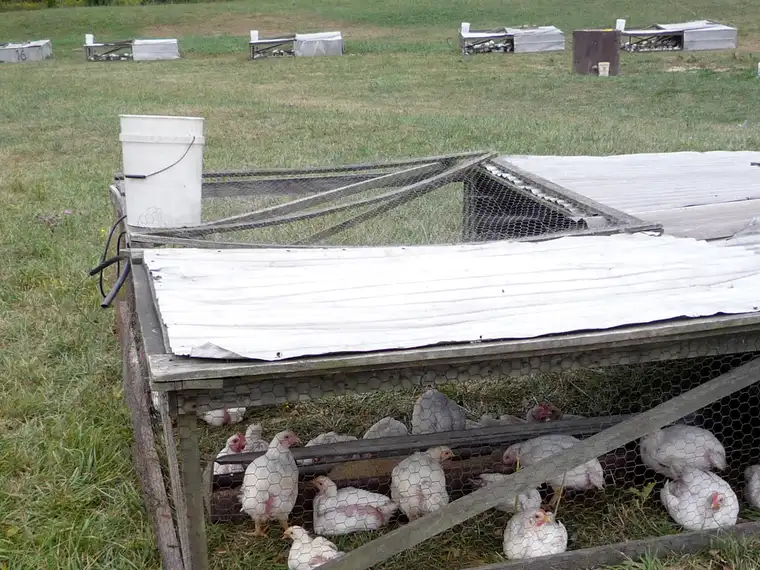
The primary biological benefit of a mobile chicken tractor is disease exclusion. Protozoal parasites like Eimeria tenella and roundworms (Ascaridia galli) shed unembryonated eggs in feces. In stationary coops, oocysts sporulate in warm, damp litter and reinfect birds continually.
In a daily rotational pasture system, birds move forward onto pristine, untouched forage every 24 hours, completely walking away from their fresh manure. By maintaining a pasture recovery period of 28 to 35 days before returning to the same grazing paddock, environmental ultraviolet (UV) solar radiation and soil microbes desiccate and destroy surviving oocysts, completely breaking the infection cycle without pharmaceutical prophylactic coccidiostats.
2. Structural Engineering & Aerodynamics: Wind Loading vs Weight Limits
The engineering challenge of DIY chicken tractor plans lies in balancing two conflicting physical requirements: structural rigidity against severe pasture winds versus low total mass for effortless one-person daily mobilization.
| Structural Material | Weight per 3 m (10 ft) | Wind Rigidity | Rot & Weather Resistance | Primary Application |
|---|---|---|---|---|
| EMT Electrical Conduit (19 mm / 3/4 in) | 2.0 kg (4.4 lbs) | Very High (Flexible arch) | Galvanized; Immune to rot | Hoop-style tractors & curved roofs |
| Spruce/Pine 2x2 Timber (38x38 mm) | 2.7 kg (6.0 lbs) | Moderate (Needs gussets) | Moderate; Requires sealant | Suscovich A-Frames & light coops |
| Dimensional 2x4 Lumber (38x89 mm) | 5.9 kg (13.0 lbs) | Extremely High | High if pressure-treated | Base skid rails & axle mounts only |
| Schedule 40 PVC Pipe (25 mm / 1 in) | 1.5 kg (3.3 lbs) | Poor (Sags in heat, shatters in frost) | High UV degradation over time | Not recommended for permanent shelters |
Aerodynamic Ground Anchoring & Wind Resistance:
A portable chicken coop with high vertical solid walls acts as an aerodynamic sail. In wide-open pastures, thunderstorm squalls exceeding 70 km/h (43 mph) can easily flip an unanchored shelter, injuring or killing the flock. To prevent uplift, design low-profile shelter profiles (under 60 cm / 2 ft high for meat birds), orient the covered roof section into prevailing winds, and anchor shelters during severe weather warnings with heavy auger screw ground anchors or weighted perimeter ballast.
3. Chicken Tractor with Wheels: Mobilization Mechanics & Over-Center Lever Jacks
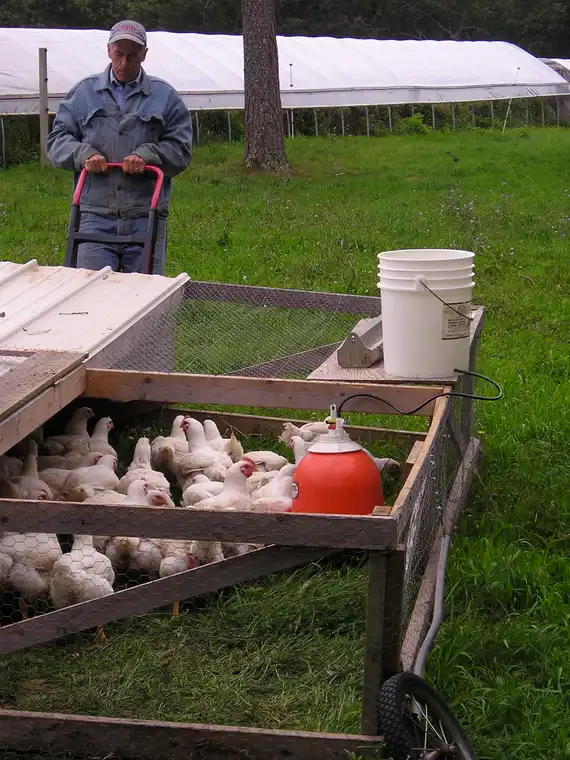
A chicken tractor that is difficult to move will not be moved daily, destroying the pasture and compromising flock hygiene. Building a heavy-duty chicken tractor with wheels and an ergonomic lever engagement system is what makes a 90 kg to 135 kg (200 to 300 lb) shelter maneuverable across rough ground by a single person:
The Three Core Wheel Mobilization Mechanisms:
- Over-Center Cam Lever Jacks: Mount 25 cm to 30 cm (10 to 12-inch) pneumatic flat-free wheels to steel pivot arms at the rear corners. Connecting these arms to a rigid conduit lever creates an over-center mechanical lock. Pushing the lever down swings the wheels beneath the frame, raising the rear skids 8 cm (3 inches) off the ground and locking itself into place. The operator then lifts the front pull rope and walks forward smoothly.
- Fabrication Geometry: For a 3 m (10 ft) wide tractor, construct pivot arms from 25 mm × 50 mm (1 in × 2 in) rectangular steel tubing or heavy angle iron. Drill the main fulcrum pivot hole 7.5 cm (3 inches) from the axle centerline. This 3:1 mechanical advantage reduces the physical effort required to lift a 100 kg (220 lb) shelter down to less than 15 kg (33 lbs) of hand force on the lever handle. Lubricate axle bushings with marine-grade water-resistant lithium grease to prevent pasture grit from seizing wheels.
- Removable Transom Dolly Wheels: For lightweight pasture shelters, weld or bolt two vertical steel receiver tubes to the rear baseboard. A pair of heavy wheels mounted on an axle with drop-pins slides into the tubes only during transit, then detaches once the tractor is parked flat on the turf.
- Low-Friction HDPE Plastic Skids: Line the underside of pressure-treated 2x4 base skids with strips of 6.3 mm (1/4-inch) High-Density Polyethylene (HDPE) or recycled plastic conduit. Plastic skids slide across thick pasture fescue and clover with 60% less pulling resistance than raw timber.
4. Three Definitive Pasture Shelter Blueprints
Explore three distinct, rigorously field-tested pasture chicken shelter plans engineered for varying flock scales:
Blueprint 1: The John Suscovich A-Frame Pasture Tractor (1.8 m × 3.0 m / 6 ft × 10 ft)
Capacity: 20 to 25 meat broilers or 6 to 8 laying hens. Built from lightweight 2x2 spruce framing, corrugated metal roofing, and 12.7 mm (1/2-inch) hardware cloth.
- Structural Triangular Strength: The 60-degree A-frame profile provides immense natural shear resistance against crosswinds while minimizing timber volume.
- Ergonomic Access: Features a high walk-in end door allowing the farmer to step inside to inspect feed hoppers and collect eggs without kneeling on wet grass.
Blueprint 2: The Joel Salatin Polyface Low-Profile Broiler Pen (3.0 m × 3.6 m / 10 ft × 12 ft)
Capacity: 75 to 90 commercial broilers from 3 weeks to slaughter. Total height: 60 cm (24 inches). Built from rough-sawn 1x4 timber and aluminum sheet metal.
- Ultra-Low Profile: By keeping the shelter height at 60 cm (24 inches), pasture wind glides directly over the roof, eliminating wind lift risk.
- Sliding Hatch Feeding: Top-mounted aluminum sliding doors allow the farmer to reach into the pen to top up hanging feed troughs and water bell drinkers without stepping onto the grass.
Blueprint 3: The Heavy-Duty Cattle Panel Hoop Shelter (2.4 m × 3.6 m / 8 ft × 12 ft)
Capacity: 35 to 45 broilers or 12 to 15 laying hens. Built using two 4.8 m (16 ft) 4-gauge galvanized welded cattle panels arched across a 2x4 base skid frame.
- Extreme Structural Flexibility: Welded 4-gauge steel arches flex under intense wind gusts and bounce back without fracturing joints.
- Silage Tarp Cladding: Clad the rear half with heavy-duty 12-mil black/white silage plastic for 100% shade and waterproof roosting, while wrapping the front half in hardware cloth for 360-degree cross-ventilation.
5. Pasture Management Cycles, Stocking Densities & Forage Protection
Operating a chicken tractor successfully requires matching flock stocking density to grass growth rates and soil carrying capacity:
Stocking Density Benchmarks:
- Pastured Broilers: Provide a minimum of 0.12 m² to 0.14 m² (1.3 to 1.5 sq ft) of floor space per bird inside the mobile shelter for meat birds moved once daily. If moving twice daily during the final two finishing weeks, stocking density can reach 0.11 m² (1.2 sq ft).
- Pastured Laying Hens: Allocate 0.23 m² to 0.28 m² (2.5 to 3.0 sq ft) per hen if the tractor serves as their sole confinement area, or 0.14 m² (1.5 sq ft) if the tractor connects to an electrified temporary perimeter netting paddock.
Optimal Pasture Sward Agronomy:
A healthy poultry pasture is not a monoculture lawn. Establish a diverse, multi-species perennial sward combining high-protein legumes (white Dutch clover, birdsfoot trefoil) with cool-season grasses (perennial ryegrass, meadow fescue, orchard grass) and deep-taproot bio-accumulators (chicory, ribwort plantain). Legumes fix atmospheric nitrogen and supply digestible crude protein (18% to 24% dry matter), while chicory provides tannins that suppress internal nematodes. Chickens actively graze the tender leaf tips, obtaining up to 10% to 15% of their daily metabolizable energy and concentrated carotenoid pigments (lutein and zeaxanthin) that yield rich, deep-orange egg yolks.
The Daily Morning Move Protocol:
Always execute the pasture tractor move early in the morning before birds begin heavy feeding. Walk slowly to the front of the shelter, engage the rear wheel levers, lift the tow rope, and pull smoothly forward at a slow walking speed. Alert birds will naturally walk forward toward the lush green forage entering beneath the front skid. To prevent crushing slower or injured birds, install a lightweight wooden "foot scraper" flap suspended 2.5 cm (1 inch) off the ground inside the rear baseboard. This gentle flap touches birds' hocks, encouraging them to step forward away from the descending rear rail.
6. Predator Fortification & Security on Open Pasture
Pastured poultry face intense predation pressure from coyotes, red foxes, feral dogs, raccoons, skunks, badgers, hawks, and owls. Because tractors operate far from human residential dwellings, secondary security barriers are mandatory:
- Perimeter Weighted Flaps & Skids: Ground mammals attempt to burrow under tractor skids. Fasten a 20 cm (8-inch) wide horizontal strip of galvanized hardware cloth or conveyor belt rubber along all exterior bottom rails. When the tractor rests on grass, this flap splays flat on the turf, preventing predators from prying their noses beneath the wooden framing.
- Integrated Electrified Poultry Netting: For maximum security on expansive pastures, erect a perimeter paddock of 107 cm (42-inch) or 122 cm (48-inch) electrified polywire poultry netting around your tractor cluster. Power the fence with a 0.5 to 1.0 Joule solar energizer maintaining a continuous line voltage of at least 5,000 to 7,000 Volts. A single nose-contact shock permanently trains coyotes, dogs, and bears to avoid the pasture perimeter.
- Aerial Hawk Deterrence: Clad at least 50% of the tractor roof with solid metal sheeting or heavy UV-treated silage tarp. This provides visual shelter where foraging chickens instinctively dash whenever a raptor shadow crosses the pasture.
7. Pasture Hydration & Feeding Logistics in Motion
Pasture logistics require supplying abundant water and balanced nutrition without stalling daily mobilization:
- Suspended Gravity Nipple Pipe Lines: Install 19 mm (3/4-inch) rigid PVC pipe lines fitted with 360-degree stainless steel poultry drinker nipples suspended from the ceiling by adjustable chains. Connect the line via a quick-disconnect garden hose coupling to a 19-liter (5-gallon) gravity reservoir mounted on the exterior roof. Suspending drinkers keeps water 100% clean and free of trampled pasture mud.
- Trough Feeders with Rain Guards: Fasten lightweight galvanized V-trough feeders directly to the interior side framing 15 cm (6 inches) off the ground. Install an overhanging aluminum rain baffle to prevent feed from getting soaked during unexpected downpours.
- Pasture Hydration Water Volume: In 30°C (86°F) summer weather, fifty finishing broilers consume over 20 liters to 25 liters (5.3 to 6.6 gallons) of water daily. Never let pasture waterers run dry; severe heat prostration and mortality occur within hours of water deprivation in direct sunlight.
 zoom_in Click to Enlarge
Related Calculators
Scientific Literature
- Salatin, J. (1993). Pastured Poultry Profits. Polyface Farm Publishing.
- Suscovich, J. (2016). Stress-Free Chicken Tractor Plans. Farm Marketing Solutions.
- National Center for Appropriate Technology (NCAT / ATTRA). (2021). Pastured Poultry: Nutrition and Forages.
- Gassett, P., et al. (2020). Soil Health and Nutrient Dynamics in Rotational Poultry Grazing. University of Wisconsin Extension.