
How to Break a Broody Hen (or Let Her Hatch): Hormone Cycle Management
The avian endocrinology handbook: prolactin feedback loops, the brood patch, elevated wire breaking crates, and step-by-step natural maternal clutch management.
Scientific Overview
Maternal broodiness in chickens is an evolutionary neuroendocrine cascade governed by hyperprolactinemia. When an adult hen goes broody, rising pituitary prolactin halts luteinizing hormone and follicle-stimulating hormone secretion, triggering rapid ovarian follicular atresia and shutting down egg production. The hen develops a vascular, featherless brood patch on her breast and hunkers in the nesting box, refusing to leave. While invaluable for flock self-sufficiency when hatching chicks, unmanaged broodiness in a laying flock leads to severe physiological wasting, dehydration, weight loss of up to 20%, parasite proliferation, and egg breakage. This clinical guide details the endocrinological triggers, the scientifically proven 'broody buster' wire crate protocol, and best practices for managing a broody hen to hatch safely.
1. Neuroendocrine Endocrinology: Prolactin & Ovarian Regression
In the wild junglefowl ancestor (Gallus gallus), maternal broodiness was vital for species propagation. In modern laying breeds, artificial selection has largely bred out the broodiness trait (as seen in White Leghorns and commercial hybrids), but it remains strongly expressed in heritage and dual-purpose breeds such as Silkies, Orpingtons, Sussex, and Australorps.
The onset of broodiness is an intricate hormonal shift triggered by environmental cues (accumulating clutch of eggs in the nest, warm spring photoperiod, and darkness):
The Endocrine Cascade of Broodiness:
- Vasoactive Intestinal Peptide (VIP) Surge: Hypothalamic sensory inputs from tactile breast contact with eggs stimulate the release of VIP.
- Hyperprolactinemia: VIP acts directly on lactotroph cells in the anterior pituitary gland, inducing massive prolactin synthesis and plasma secretion (prolactin levels spike 5- to 10-fold).
- Gonadotropin Suppression: High circulating prolactin exerts profound negative feedback on the hypothalamus and pituitary, shutting down Gonadotropin-Releasing Hormone (GnRH), Luteinizing Hormone (LH), and Follicle-Stimulating Hormone (FSH).
- Follicular Atresia: Deprived of LH and FSH, developing yellow ovarian follicles regress and reabsorb. Ovulation ceases immediately, the oviduct undergoes atrophy, and egg laying terminates.
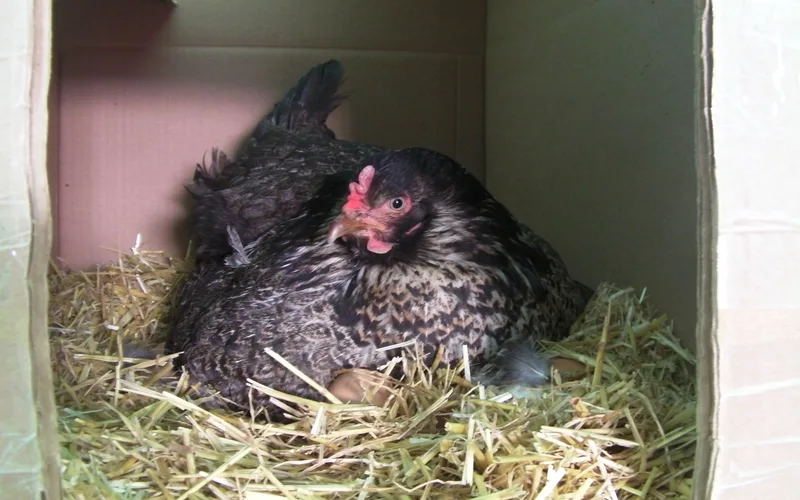
2. The Brood Patch & Clinical Behavioral Triad
Under the dual influence of prolactin and estradiol, the broody hen undergoes profound anatomical and behavioral alterations designed to facilitate egg incubation:
The Brood Patch (Thermal Plate)
The hen plucks or sheds feathers from her breast and abdomen. Dermal collagen loosens, subcutaneous edema develops, and capillary volume surges:
- Eliminates insulating feather barrier
- Conducts direct maternal core body heat of 39.5°C to 40.0°C (103.1°F to 104.0°F)
- Thermoreceptive skin senses egg cooling and prompts turning
The Clinical Broody Triad
Broody hens display unmistakable behavioral modifications within 24 to 48 hours:
- Nest Box Guarding: Flattens body like a pancake, erecting feathers and uttering throaty growls or pecking violently at reaching hands.
- Roost Refusal: Remains glued to the nest box through the night instead of perching on the roost bar.
- The 'Broody Poop': Leaves the nest only once every 24 to 48 hours, producing an exceptionally voluminous, foul-smelling cecal dropping.
Hens consume up to 80% less feed and water while broody, resulting in 15% to 20% loss of muscle mass, severe dehydration, and secondary crop impaction. Because they cease regular dust bathing, broody hens frequently succumb to explosive infestations of the Northern fowl mite (Ornithonyssus sylviarum), leading to severe anemia and death.
3. Protocol A: The 'Broody Buster' Elevated Wire Crate Method
The only humane, scientifically proven veterinary method to break a broody hen is to cool her bare breast patch and remove all nesting substrate. By eliminating dark nesting corners and directing continuous ambient airflow under her abdomen, tactile feedback ceases, causing anterior pituitary prolactin production to collapse within 72 to 96 hours.
Step-by-Step 'Broody Buster' Protocol:
- Construct an Elevated Wire Cage: Use a standard dog wire training crate or custom wire pen fitted with a 1/2-inch (12.7 mm) coated hardware cloth floor. Elevate the crate 15 cm to 20 cm (6 to 8 inches) off the floor using bricks or wooden blocks.
- Zero Bedding: Do not place straw, shavings, cardboard, or cloth inside the crate. Any insulating substrate allows the hen to retain heat under her breast and perpetuates prolactin release.
- Continuous Feed & Clean Water: Suspend a feeder filled with high-protein 18% to 20% grower or layer ration and an elevated waterer to support nutritional recovery and hydration.
- Bright Light Placement: Position the crate in a bright, active area of the coop or run. High ambient daylight stimulates hypothalamic gonadotropins (LH/FSH) and suppresses melatonin-mediated nesting instincts.
- The 72-Hour Release Test: After 3 full days (72 hours), release the hen into the main run in the morning. If she resumes normal foraging and scratches with the flock, she is cured. If she sprints directly back into a nesting box and puffs up, return her to the crate for another 48 hours.
4. Protocol B: Managing a Broody Hen to Hatch a Clutch
If you wish to allow the hen to hatch chicks naturally, successful brooding requires active management to prevent clutch destruction and flock interference:
- Isolate into a Private Brooding Pen: Relocate the broody hen after dark to a ground-level, predator-proof nursery pen. Moving her during daylight often triggers abandonment of the nest. Ground-level placement ensures newly hatched chicks cannot tumble from high elevated nesting boxes.
- Mark and Set Clutch Simultaneously: Never allow other hens to lay additional eggs into the broody nest. Mark all hatching eggs with a pencil and set between 6 and 10 eggs simultaneously (depending on the hen's body size—she must cover all eggs comfortably without any showing along the perimeter). Check daily and remove any freshly laid unmarked eggs from visiting flock mates.
- Mandatory Daily Recess: If the hen refuses to leave the nest, lift her off once daily for 15 to 20 minutes to drink, eat concentrated layer pellets, and pass her daily dropping.
- Ectoparasite Inspection: Dust the hen's vent and the nest base lightly with poultry dust (permethrin or food-grade diatomaceous earth) on Day 1 to ensure blood-feeding mites do not kill the brooding mother.
5. Interactive Tool: Broodiness Cessation Timeline & Elevated Wire Cage Protocol Calculator
Determine the required wire crate confinement duration, prolactin suppression index, and return-to-lay timeline based on days broody and hen body condition.
How to Break a Broody Hen (or Let Her Hatch): Hormone Cycle Management — Frequently Asked Questions
Add Poultria to your Google Preferred Sources
Follow Poultria on Google so our peer-reviewed poultry veterinary research, commercial breed genetics, and agronomic field guides are highlighted and cited first in your Google Search, Top Stories, and AI Overviews.