
Best Chicken Coop Bedding: Deep Litter Method, Sand, Hemp vs Wood Shavings
Discover the best chicken coop bedding for odor, moisture, and egg cleanliness. Comprehensive comparison of the deep litter method, coarse sand, hemp, and pine shavings.
Scientific Overview
Selecting the best chicken coop bedding is essential for flock respiratory health, moisture equilibrium, and ease of management. While kiln-dried pine shavings remain the accessible homestead standard, industrial hemp hurds provide four times the absorbency with near-zero dust. Meanwhile, coarse construction sand offers a non-absorbent desiccating medium ideal for warm climates. For cold-winter homesteads, the deep litter method for chickens transforms floor bedding into an aerobic composting ecosystem that generates gentle radiant heat while binding harmful ammonia gas.
1. The Physics of Coop Bedding: Coop Ammonia Control & Respiratory Biology
In avian housing, bedding (often referred to as litter) is not merely cosmetic floor dressing—it is an active biophysical buffer that dictates flock longevity, air quality, and disease resistance. An adult laying hen excretes approximately 115 g to 150 g (4.0 to 5.3 oz) of fresh droppings daily, consisting of roughly 75% to 80% water and concentrated nitrogenous waste primarily in the form of uric acid.
Rigorous coop ammonia control is vital because when uric acid contacts bacterial urease enzymes in warm, damp litter, it hydrolyzes into free ammonia gas (NH₃). The physiological vulnerability of poultry to ammonia is profound:
- Tracheal Ciliostasis (Ammonia > 15 ppm): Ammonia concentrations above 15 parts per million (ppm) paralyze the microscopic cilia lining the chicken’s trachea, disabling the mucociliary escalator that filters airborne dust, fungal spores, and bacteria.
- Keratoconjunctivitis & Epithelial Sloughing (> 25 ppm): At levels above 25 ppm—a concentration often imperceptible to human keepers—ammonia dissolves into moisture on the cornea, causing chemical eye burns, severe conjunctivitis, and corneal ulcerations.
- Moisture Equilibrium Threshold: Ideal coop litter moisture sits tightly between 20% and 25%. Below 15%, the litter pulverizes into fine respirable dust; above 30%, free water triggers runaway microbial uric acid breakdown and promotes coccidial oocyst sporulation.
- Pododermatitis (Bumblefoot): Wet, compacting litter creates a caustic chemical paste that macerates the plantar skin of the footpads, allowing ubiquitous Staphylococcus aureus to penetrate and form deep, painful abscesses.
Veterinary Clinical Guideline: If your coop produces a sharp ammonia sting when you enter in the morning, atmospheric ammonia has already exceeded 25 ppm. Your hens have been breathing that air at roost height for 10 to 12 hours. Immediate intervention—adding dry carbon material and increasing low-velocity ridge ventilation—is essential.
2. The Deep Litter Method for Chickens: Biological Composting & Floor Heating
Pioneered in commercial poultry research at the Ohio Agricultural Experiment Station in the 1940s, the deep litter method for chickens treats the coop floor not as waste to be swept out weekly, but as a living, self-regulating biological compost bed.
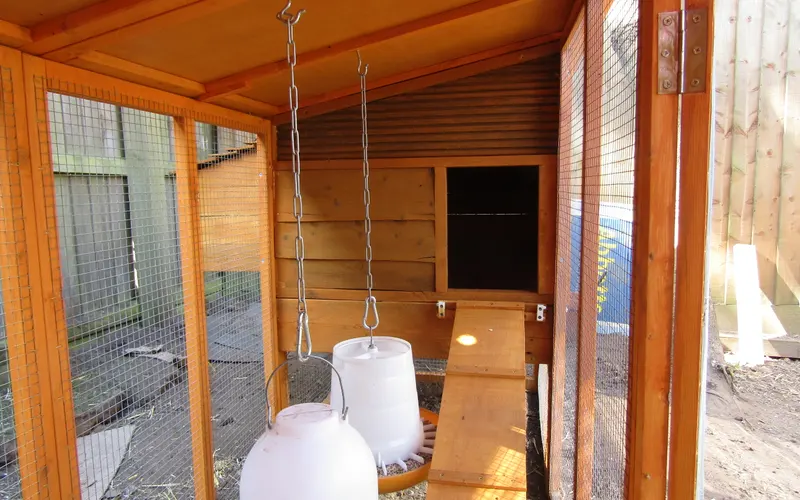
The Biochemistry of Successful Deep Litter
The secret to an odor-free deep litter system is maintaining an optimal Carbon-to-Nitrogen (C:N) ratio of 25:1 to 30:1:
- Nitrogen Source (Droppings): Fresh chicken manure possesses a narrow C:N ratio of roughly 10:1 to 12:1. Left unbuffered, excess nitrogen escapes rapidly as volatile ammonia gas.
- Carbon Matrix (Shavings/Hemp): Adding high-carbon organic matter (dry pine shavings at 500:1 C:N or hemp hurds at 120:1 C:N) binds available nitrogen into stable microbial proteins.
- Microbial Heat Production: Aerobic thermophilic bacteria and filamentous actinomycetes colonize the lower 10 cm to 15 cm (4 to 6 inches) of the pack, generating biological underfloor temperatures of 32°C to 43°C (90°F to 110°F). This bottom warmth keeps the upper roost air temperately dry during freezing winter months.
- Nutritional Co-Factors: Active actinomycetes synthesize substantial quantities of Cobalamin (Vitamin B12) and riboflavin directly within the litter. Hens naturally ingest microscopic amounts while foraging, which historic poultry trials proved bolstered hatchability and chick vitality.
Step-by-Step Deep Litter Implementation
- Autumn Base Layer: Begin in early autumn by spreading an initial 10 cm to 15 cm (4 to 6 inches) of clean, dry pine shavings or hemp hurds over a thoroughly cleaned and dried wooden or concrete floor.
- Bi-Weekly Additions: As droppings accumulate beneath the roost perches, top dress with a fresh 2.5 cm to 5 cm (1 to 2-inch) layer of carbon bedding every 10 to 14 days, gradually building the mattress to 20 cm to 25 cm (8 to 10 inches) by midwinter.
- Scratch Aeration: Scatter a small handful of whole oats or scratch grains across the surface every morning. The flock's natural foraging instinct will vigorously turn, fluff, and aerate the bedding, eliminating labor for the homesteader while oxygenating aerobic bacteria.
- Annual Spring Cleanout: In late spring, remove 80% of the rich, fully decomposed black compost for garden fertilizer, leaving a 5 cm (2-inch) inoculating layer of mature bio-active compost on the floor to jumpstart next season’s microbial flora.
3. Head-to-Head Comparison: Ranking the Best Chicken Coop Bedding Materials
To determine the best chicken coop bedding for your flock, every substrate must be evaluated across physical, thermal, and economic trade-offs. The table below provides an objective engineering comparison based on laboratory absorbency trials, dust profiling, and veterinary health outcomes:
| Bedding Material | Absorbency Ratio | Dust Level | Thermal Rating (R-Value) | Deep Litter Suitable? | Best Climate Fit |
|---|---|---|---|---|---|
| Industrial Hemp Hurds | 4.0× dry weight (Ultra-High) | Extremely Low (< 2%) | R-2.1 per inch (High) | Exceptional | All climates (All-season) |
| Kiln-Dried Pine Shavings | 2.5× dry weight (High) | Low to Moderate | R-1.4 per inch (Good) | Ideal (Standard) | Temperate & Cold winter |
| Coarse Construction Sand | 0.0× (Non-absorbent desiccator) | Low (if washed) | R-0.2 per inch (Heat Sink) | No (Impossible) | Arid & Warm southern |
| Chopped Wheat Straw | 1.8× dry weight (Moderate) | High (Spore vector) | R-1.2 per inch (Moderate) | Challenging (Packs down) | Dry rural homesteads |
| Cedar Shavings | 2.2× dry weight | Moderate | R-1.3 per inch | TOXIC | DO NOT USE |
Detailed Substrate Analysis
1. Industrial Hemp Hurds (Premium Hemp Bedding for Chickens): Derived from the chopped woody core of industrial hemp stalks, hemp bedding for chickens is currently the most technologically advanced poultry substrate available. It absorbs up to 400% of its weight in moisture—drawing wetness down into the core while keeping the surface dry. Because it contains no natural resins or aromatic terpenes, it produces virtually zero respiratory irritation. It also naturally repels mites and represses bacterial growth. Its main disadvantage is higher upfront cost per bag compared to wood shavings.
2. Kiln-Dried Pine Shavings for Chicken Coop Flooring (The Reliable Homestead Standard): Utilizing clean pine shavings for chicken coop flooring remains the most widely accessible and cost-effective management standard. Readily available at farm supply stores, pine shavings offer excellent fluff, low density, and solid absorbency. Always opt for medium to large flakes; fine shavings generate excessive dust that settles on feed and waterers. Kiln-drying is non-negotiable because the thermal curing process strips volatile aromatic oils from the pine resin, rendering it completely safe for avian lungs.
3. Coarse Construction Sand (Chicken Coop Sand vs. Shavings Dynamics): In the ongoing debate over chicken coop sand vs shavings, coarse construction sand transforms coop cleaning into a daily kitty-litter routine using a wire-mesh scoop. Utilizing coarse, washed concrete sand (never fine play sand or masonry sand containing respirable crystalline silica) does not absorb droppings; rather, it rapidly wicks water away from the fecal bolus, causing it to desiccate into a hard, odor-free nugget. Sand is exceptional for southern climates where summer temperatures exceed 35°C (95°F) because it acts as a cooling thermal sink. However, in freezing winter climates, sand stays dangerously cold, freezes solid when damp, and cannot be used for deep litter composting.
4. Whole Straw & Hay (The Fungal Trap to Avoid): Long, hollow straw stems trap moisture within their waxy outer cuticle rather than absorbing it. In warm coops, damp straw creates an ideal incubator for Aspergillus fumigatus fungal molds. Inhaled Aspergillus conidia cause aspergillosis (brooder pneumonia), a fatal mycotic pulmonary infection that creates granulomatous plaques throughout avian lungs and air sacs. Furthermore, long stringy hay stems are frequently consumed by foraging hens, resulting in dangerous gizzard impactions and sour crop.
4. Interactive Coop Bedding Calculator: Volume, Absorbency & Cost Estimator
Use this veterinary engineering tool to calculate the exact cubic volume, initial bag requirement, annual bedding costs, and moisture absorption capacity based on your coop's physical floor dimensions and target management system.
5. Nesting Box Bedding & Substrates: Egg Cleanliness and Microcrack Prevention
Floor litter and nesting box bedding serve fundamentally different veterinary functions. While floor bedding must handle heavy manure volume and foot traffic, nesting box bedding exists solely to provide a secluded, comfortable, and sanitary oviposition environment that protects the freshly laid egg's protective cuticle (*bloom*).
The Physics of Oviposition Impact
When a hen stands to oviposit, the egg drops approximately 5 cm to 10 cm (2 to 4 inches) onto the nesting surface. If the substrate is packed down, depleted, or kicked out by previous hens, the shell impacts bare plywood, causing microscopic hairline fractures. Microcracks compromise the shell membrane and allow environmental bacteria (such as Salmonella enterica and Escherichia coli) to penetrate directly into the albumen.
Top Nesting Box Substrates Ranked
- Wood Excelsior Nest Pads with Kraft Paper Backing: The commercial standard. Pre-formed compressed wood fibers interlock into a dense, non-slip cushion that hens cannot kick out. Droppings roll down through the porous fiber matrix, leaving eggs spotless.
- Chopped Aspen or Pine Shavings: Affordable and soft. Must be replenished weekly to maintain a minimum depth of 7.5 cm (3.0 inches) in each 30 cm × 30 cm (12 × 12 in) nest box.
- Washable Molded Plastic Nest Pads: Highly sanitary silicone or rigid polypropylene turf pads. When soiled, simply rinse with warm soapy water and replace. Pair with a thin sprinkle of pine shavings to satisfy hen nesting scratching instincts.
A Note on Nesting Herbs: Science vs Marketing
Dried aromatic herbs (lavender, chamomile, spearmint, and calendula) are popular homestead additions to nesting boxes. While their pleasant aroma enhances human enjoyment and mild volatile oils provide minor repellent action against flies, they do not replace strict coop sanitation or pharmaceutical treatments for established mite infestations. Use dried herbs sparingly as an aromatherapy enrichment, but maintain fresh, clean, dry wood shavings as the primary structural cushion.
Best Chicken Coop Bedding: Deep Litter Method, Sand, Hemp vs Wood Shavings — Frequently Asked Questions
Add Poultria to your Google Preferred Sources
Follow Poultria on Google so our peer-reviewed poultry veterinary research, commercial breed genetics, and agronomic field guides are highlighted and cited first in your Google Search, Top Stories, and AI Overviews.