
Chicken Egg Colors by Breed: Shell Pigment Genetics & Rarest Colors
A friendly guide to chicken egg colors by breed: how blue, dark chocolate brown, olive green, pink, and white eggs are made, plus tips for building your own rainbow egg basket.
Scientific Overview
Few things in homesteading and backyard chicken keeping bring as much daily delight as opening the nesting box to find a colorful rainbow egg basket. From sky blue and spearmint green to deep chocolate brown, soft pink, and chalk white, chicken eggs come in a dazzling variety of shades. But why do chicken eggs have different colors, which chicken breeds lay which shades, and how can you breed your own Olive Eggers? While all eggshells start out as pure white calcium, nature uses two natural pigments and an invisible protective coating to paint every shell. In this guide, Dr. Imad Khan breaks down the science of eggshell colors in simple, everyday language, shows you which breeds lay the prettiest eggs, and busts common myths about taste and nutrition.
1. How Chickens Paint Their Eggs: The Simple Science of Shell Colors
The Golden Rule of Eggshells: Every single chicken egg starts out as pure white calcium carbonate. Mother nature uses only two natural pigments to create every egg color on earth: biliverdin (which makes blue) and protoporphyrin (which makes brown). Every shade in your carton—from cream and peach to olive green and chocolate brown—is just a mix of these two colors and the egg's outer protective bloom!
The secret to how different egg colors are created comes down to when and where the hen applies the color during the 20 hours the egg spends in her shell gland:
The Blue Pigment (Biliverdin)
Biliverdin is a natural pigment produced when the hen recycles red blood cells. It gets mixed straight into the calcium as the shell is forming over 15 to 20 hours. Because the pigment soaks into the shell from start to finish, blue eggs are blue all the way through. When you crack an Ameraucana or Cream Legbar egg, the inside of the shell is just as blue as the outside!
The Brown Pigment (Protoporphyrin)
Protoporphyrin acts like a fresh coat of paint. The hen's shell gland sprays it onto the exterior of the shell in the final 2 to 3 hours before laying. Because it is applied only to the surface, the inside of a brown eggshell is always bright white. If you lightly scrape a fresh brown egg, you can actually see the white shell underneath!
What about green and olive eggs? Green eggs are the ultimate poultry art project: when a hen lays a blue eggshell and sprays a coat of brown paint over it, blue plus brown makes gorgeous olive green!
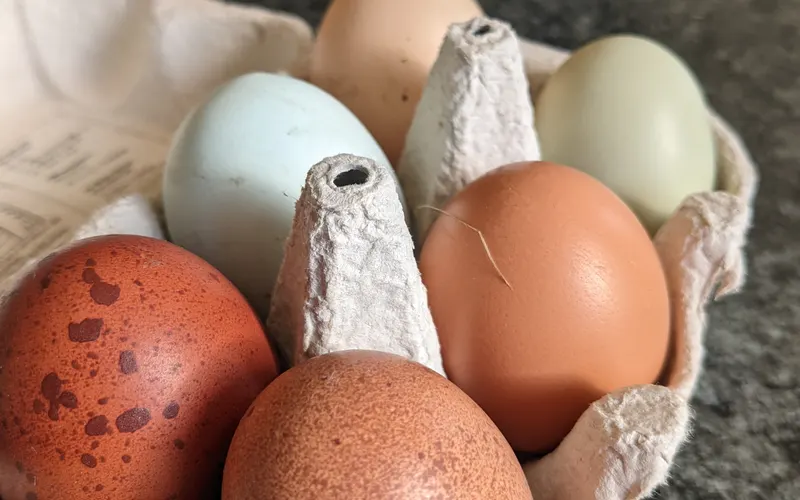
2. Chicken Egg Colors by Breed: The Ultimate Guide to Who Lays What
If you want specific colors in your nesting box, choosing the right chicken breeds is everything. Here is the complete breakdown of which chickens lay which egg colors:
1. Sky Blue & Pastel Blue Egg Layers
True blue egg layers carry the dominant blue egg gene (Oocyan). Their eggs are clear pastel to vibrant robin's egg blue:
- Ameraucana: Standardized heritage breed with fluffy muffs and beard; lays medium-to-large clear blue eggs (~200 to 240 eggs/year).
- Cream Legbar: An active, friendly crested British breed that lays beautiful pastel sky-blue eggs (~220 to 260 eggs/year).
- Araucana: The rare, tailless (rumpless) South American breed with distinctive ear tufts that first introduced blue eggs to domestic chickens.
- Easter Eggers: Friendly hybrid chickens carrying the blue gene; they can lay anything from aqua-blue to soft mint green.
2. Dark Chocolate & Terracotta Brown Layers
These breeds produce heavy layers of brown pigment, turning their shells into stunning dark mahogany and speckled works of art:
- Black Copper Marans: The gold standard for dark chocolate eggs. Their shells range from deep coffee to rich reddish-mahogany (~180 to 210 eggs/year).
- Welsummer: Famous for golden-brown eggs generously dusted with dark terracotta speckles (~180 to 200 eggs/year).
- Barnevelder: A classic Dutch breed laying glossy, rich dark-brown eggs with occasional speckling (~180 to 200 eggs/year).
- Penedesenca: A rare Spanish breed known for laying some of the darkest reddish-brown eggs in the poultry world.
3. Olive, Sage & Mint Green Egg Layers
Green egg layers combine the blue shell base with a brown outer coating, producing everything from pale seafoam to rich army olive:
- Olive Eggers: Specially bred crosses between a blue layer and a dark brown layer; lays stunning khaki, sage, and deep olive eggs (~180 to 240 eggs/year).
- Silverudd's Blue (Isbar): A rare purebred Swedish breed that lays naturally speckled mint, jade, and moss green eggs without needing to be crossed!
- Favaucana: A cross of Faverolles and Ameraucana that produces delicate sage green eggs with calm, sweet temperaments.
4. Warm Brown, Tan & Peach Egg Layers
The beloved, high-production backyard favorites that lay dependable, hearty brown eggs:
- Rhode Island Red & New Hampshire: Steady, hardy champions laying rich chestnut-brown eggs (~260 to 300 eggs/year).
- Plymouth Barred Rock: Classic dual-purpose favorite laying warm rosy-tan eggs (~220 to 280 eggs/year).
- Buff Orpington & Australorp: Extremely docile family pets laying lovely light brown to cream-tinted eggs (~200 to 280 eggs/year).
- Golden Comet & ISA Brown: Production powerhouses laying 300+ uniform medium-brown eggs per year.
5. Crisp Chalk-White Egg Layers
Breeds that deposit zero pigment onto their calcium shells, giving you clean, bright white eggs:
- White Leghorn: The undisputed world egg champion, laying 280 to 320 large, spotless chalk-white eggs each year with incredible feed efficiency.
- Ancona & Minorca: Elegant Mediterranean heritage breeds laying large, pristine white eggs.
- Polish & Campine: Striking ornamental crested breeds that lay dainty medium-sized white eggs.
6. Soft Pink, Lavender & Plum Egg Layers
These shades happen when a hen deposits a thick, powdery white protective bloom over a light tan or dark brown shell:
- Light Sussex: Frequently lays light tan eggs with a delicate bloom that gives them a soft, unmistakable pastel pink blush.
- Croad Langshan: Famous among heritage fanciers for eggs that often show an enchanting plum or purplish tint.
- Select Australorps: Often produce light tinted eggs with a rosy, iridescent morning glow.
3. How to Build Your Own Rainbow Egg Basket (Flock Recipes)
The secret to a show-stopping egg carton is choosing 3 or 4 breeds whose colors complement each other. If you are starting or expanding your backyard flock, try one of these proven flock combinations:
The 4-Hen Starter Rainbow Basket
Perfect for standard urban backyards and small family coops:
- 1 Ameraucana or Cream Legbar: Sky Blue
- 1 Black Copper Marans: Dark Chocolate Brown
- 1 Olive Egger: Rich Moss Green
- 1 Buff Orpington or Sussex: Rosy Peach / Tan
The 6-Hen Deluxe Rainbow Basket
The ultimate showstopper for maximum egg color variety:
- 1 Cream Legbar: Sky Blue
- 1 Olive Egger: Deep Army Olive
- 1 Black Copper Marans: Dark Mahogany
- 1 Welsummer: Terracotta with Dark Speckles
- 1 White Leghorn: Crisp Chalk White
- 1 Light Sussex: Soft Pastel Pink Tint
4. How to Breed Olive Eggers: The Simple Genetics Recipe
You don't need a biology degree to breed your own gorgeous green egg layers! An Olive Egger is not an official heritage breed—it is simply a cross between a blue egg layer and a dark brown egg layer:
The First-Generation (F1) Olive Egger
To make a first-generation (F1) Olive Egger, breed:
- Parent 1 (Blue Egg Genes): An Ameraucana, Cream Legbar, or Araucana (provides the blue calcite shell base).
- Parent 2 (Dark Brown Egg Genes): A Black Copper Marans, Welsummer, or Penedesenca (provides the heavy brown paint coating).
- The Result: 100% of the female chicks will grow up to lay beautiful, uniform olive green eggs (blue shell + brown paint = olive green)!
The F2 Generation & Backcrossing (Deep Moss & Speckles)
If you want even darker green eggs—like deep camouflage, army green, or avocado covered in chocolate speckles—breed your F1 Olive Egger hen back to a Black Copper Marans rooster. This adds a double dose of brown pigment over the blue base, producing breathtaking F2 moss-green eggs! (Note: Because genetics shuffle in the second generation, about 25% of these chicks may lay rich dark chocolate eggs instead of green).
5. The Secret of the Bloom: Why Some Eggs Look Pink, Plum, or Purple
Have you ever spotted an egg that looked distinctly pink, lilac, or powdery grey? That magical color is created by the bloom (known scientifically as the cuticle):
The bloom is an invisible, natural protein coating the hen applies right before she lays her egg. Its job is to seal the shell's microscopic pores and protect the egg from dirt and bacteria. But depending on the hen, the bloom can also act as an optical filter:
How the Bloom Creates Pink & Plum Tones
When a hen deposits a thick, powdery white bloom over her shell, it scatters the incoming light like a soft-focus camera lens:
- Pink Eggs: A powdery white bloom over a light tan or beige shell reflects light as a soft, baby pink blush (common in Light Sussex and Australorps).
- Plum & Lavender Eggs: A heavy, matte-white bloom over an ultra-dark chocolate Marans egg makes the egg look rich plum or lavender!
- The Water Test: If you gently wet a pink or plum egg with warm water, the bloom becomes clear, revealing the normal tan or brown shell underneath. Once it dries, the powdery hue returns!
6. Why Do Hen Egg Colors Fade in Summer?
Many chicken owners notice that their hens lay dark chocolate or vivid turquoise eggs in April, but by August, the eggs look much paler. Don't worry—your hen isn't sick! This seasonal color shift is completely normal:
- The "Ink Cartridge" Effect: When a hen lays an egg almost every single day through spring and summer, her pigment reserves naturally get drawn down faster than her body can replenish them. Her eggs gradually lighten as the season progresses.
- Bigger Eggs as Hens Age: As hens grow older, their eggs get larger (often growing from 50 g to 65 g / 1.8 to 2.3 oz). Because the hen has the same amount of pigment to spread over a bigger surface area, the color naturally looks a shade lighter.
- The Autumn Reset: When your hens take a break to molt their feathers in the fall, their pigment stores completely recharge. When they resume laying in the spring, their eggs will be back to their darkest, richest colors!
7. Common Myths: Does Egg Color Change the Taste or Nutrition?
There are many grocery store myths about egg colors, but veterinary science sets the record straight:
- Myth 1: "Brown or green eggs are healthier than white eggs." False. Controlled lab tests show that white, brown, blue, and green eggs have identical levels of protein, calcium, and essential vitamins.
- Myth 2: "Blue eggs have lower cholesterol." False. When blue Araucana eggs first became popular, rumors claimed they had less cholesterol. Scientific testing showed their cholesterol levels are identical to standard eggs.
- What Actually Makes Eggs Taste Amazing? The hen's diet and lifestyle! A pasture-raised hen that eats clover, dandelion greens, bugs, sunshine, and a fresh 16%–18% layer feed will produce rich, deep-orange yolks packed with omega-3 fatty acids and vitamin D—regardless of whether her shell is chalk white, sky blue, or dark chocolate brown.
Chicken Egg Colors by Breed: Shell Pigment Genetics & Rarest Colors — Frequently Asked Questions
Add Poultria to your Google Preferred Sources
Follow Poultria on Google so our peer-reviewed poultry veterinary research, commercial breed genetics, and agronomic field guides are highlighted and cited first in your Google Search, Top Stories, and AI Overviews.