
Chicken Pecking Order: Establishing Hierarchy & Aggression
Understanding social rank dynamics, dominance displays, feather pecking triggers, and veterinary interventions for flock aggression.
Scientific Overview
The avian pecking order is a foundational ethological concept first documented in 1921 by Norwegian zoologist Thorleif Schjelderup-Ebbe. In domestic gallinaceous flocks, social hierarchy is not an accidental pattern of random bickering; it is a genetically hardwired evolutionary survival strategy designed to maintain group stability, optimize foraging efficiency, and distribute biological resources. However, when stocking density, nutritional deficits, or environmental stressors disrupt natural flock dynamics, benign dominance interactions can rapidly degenerate into severe feather pecking, tissue trauma, and fatal vent cannibalism. This comprehensive clinical guide explores the neurobiology of flock hierarchy, differentiates normal dominance displays from maladaptive aggression, and outlines proven veterinary protocols to maintain social peace.
1. The Ethology of the Pecking Order: Evolutionary Function & Hierarchy
Key Ethological Fact
In cohesive flocks of up to 30 individuals, domestic fowl form a strict linear hierarchy (A > B > C > D). In commercial flocks exceeding 50 to 100 birds, individual facial recognition breaks down, causing the social structure to transition into a decentralized, tolerant territorial mosaic.
Every domestic chicken (Gallus gallus domesticus) inherits the behavioral instincts of the wild red junglefowl. In wild populations, junglefowl live in small, stable harems consisting of one dominant cock, several mature hens, subordinate satellite males, and juveniles. Within this group, a non-random, unidirectional peck order dictates which individual enjoys primary access to high-value resources, including preferred roosting boughs, dust-bathing hollows, nest sites, and prime foraging grounds.
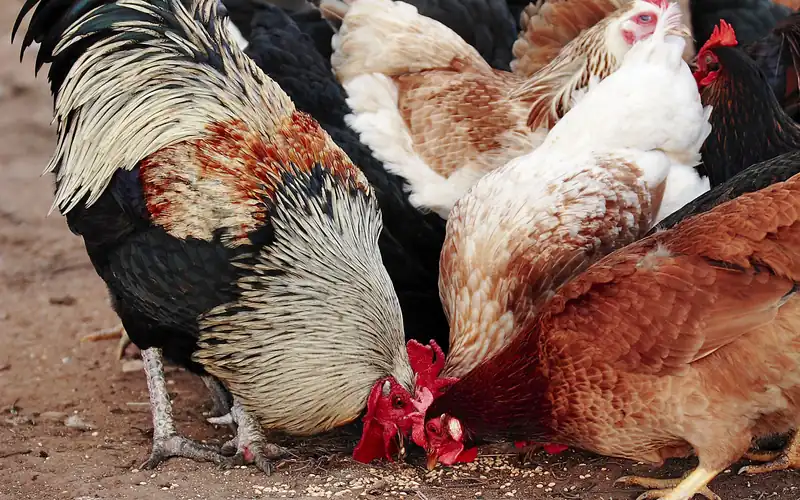
The ranking mechanism relies on sophisticated cognitive recognition. Fowl recognize conspecific flock members primarily through facial architecture, comb size, wattle coloration, and head morphology. A dominant bird asserts rank through subtle postures: an erect neck carriage, elevated head, sleeked plumage, and direct frontal eye gaze. Subordinate birds signal submissive deference by dropping their heads, ruffling their neck hackles, crouching, or promptly yielding walking paths.
When physical contests occur—most commonly between adolescent birds reaching sexual maturity at 16 to 24 weeks of age—the altercation involves neck flare posturing, wing flapping, chest bumping, and rapid downward pecks to the head and comb. Once the subordinate bird flees or performs a submissive squat, the victor immediately ceases the attack. In a healthy flock environment, physical combat is rare once rank is established; acoustic signals and brief ritualized displacements maintain order with minimal energy expenditure.
2. Differentiating Normal Hierarchy from Pathological Cannibalism
Flock managers must distinguish between functional social dominance and destructive behavioral pathologies. A mild nip to an encroaching pullet at the feeder is completely normal avian communication. In contrast, feather pulling, cloacal vent pecking, and cannibalism represent severe physiological distress and neurobehavioral derangement.
| Behavior Type | Target Anatomical Zone | Primary Etiology | Clinical Severity & Risk |
|---|---|---|---|
| Dominance Displacement | Comb, crown, nape of neck | Resource competition, hierarchy reinforcement | Low: Normal ethological communication; self-limiting |
| Gentle Feather Pecking | Feather tips, tail covert margins | Redirected exploratory foraging, dust-particle pecking | Moderate: Can escalate to severe feather pulling if substrate is deficient |
| Severe Feather Pecking (SFP) | Rump, uropygial preen gland, back plumage | Dietary methionine/sodium deficit, high stocking density | High: Denudes skin, causes hypothermia and invites tissue pecking |
| Vent & Cannibalistic Pecking | Cloaca, perineal tissue, evisceration | Uterine prolapse, excessive lux (light intensity), sodium hunger | Critical Emergency: Fatal within hours if unmitigated |
Vent pecking frequently originates immediately following oviposition. As a hen lays an egg, the mucosal lining of the cloaca naturally inverts and protrudes momentarily. If nesting boxes are illuminated by direct sunlight or high-intensity artificial bulbs exceeding 20 lux, nearby flock members notice the glistening, vascularized red mucosa and deliver investigatory pecks. Once blood is drawn, flock social inhibitions dissolve, rapidly triggering frenzied group cannibalism.
3. Environmental, Spatial & Nutritional Triggers of Aggression
Flock aggression is seldom a genetic personality flaw; in over 90% of field investigations, it is an adaptive response to environmental deprivation or nutritional imbalances. Chickens are naturally motivated to spend 50% to 70% of daylight hours actively ground-scratching and foraging for seeds, insects, and grit. When confined to bare, barren concrete or muddy runs without loose, dry friable litter, foraging drives are frustrated and redirected directly toward conspecific feathers.
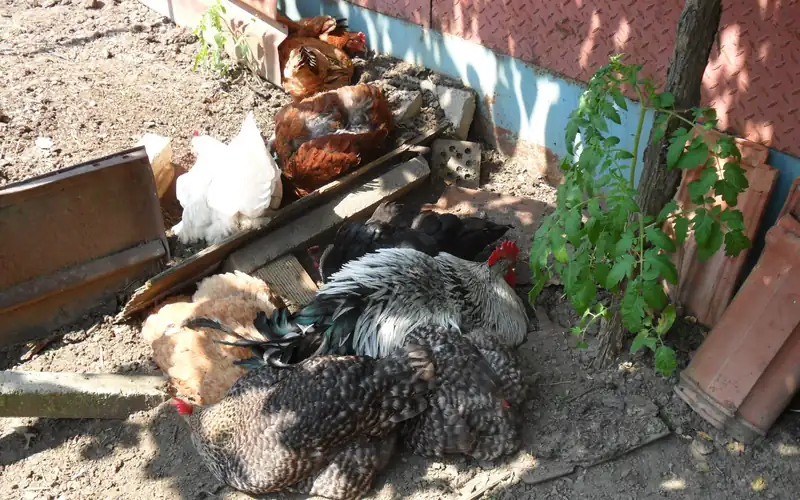
Crucial Management Benchmarks to Eliminate Aggression:
- Stocking Density Limits: Provide a minimum indoor coop floor area of 0.37 m² to 0.46 m² (4.0 to 5.0 sq ft) per standard hen, paired with at least 0.93 m² to 1.39 m² (10 to 15 sq ft) of secure outdoor run space per bird. Overcrowding exponentially raises corticosterone stress hormones.
- Feeder & Drinker Linear Allocation: Subordinate hens are most vulnerable to aggression at feeding stations. Ensure a minimum of 10 cm to 15 cm (4 to 6 inches) of linear feeder trough space per adult bird. Never rely on a single central feeding station; always position at least two physically separated feed and water stations out of direct line of sight.
- Methionine & Crude Protein Requirements: Growing pinfeathers are comprised of over 85% beta-keratin, a structural protein extraordinarily rich in sulfur-containing amino acids (methionine and cysteine). If layer feed falls below 0.38% methionine or 16% crude protein, hens actively pull and eat feathers to satisfy their amino acid deficit.
- Substrate Enrichment: Maintain a minimum 10 cm to 15 cm (4 to 6 inches) depth of dry, dust-free wood shavings, chopped straw, or coarse river sand. Scatter whole grains, black soldier fly larvae, or coarse alfalfa flakes across the litter to promote natural ground pecking.
- Visual Breaks & Vertical Perches: Mount elevated perches at staggered heights of 30 cm, 60 cm, and 90 cm (12, 24, and 36 inches) above the floor, and install solid plywood partitions or straw bales inside the run. Subordinate hens can escape behind barriers or hop to upper perches to break eye contact with aggressive alpha birds.
4. Clinical Veterinary Interventions, Wound Care & Pinless Peepers
When aggressive pecking breaks out, prompt medical separation and physical management tools are required to arrest the behavioral cycle before mortalities occur.
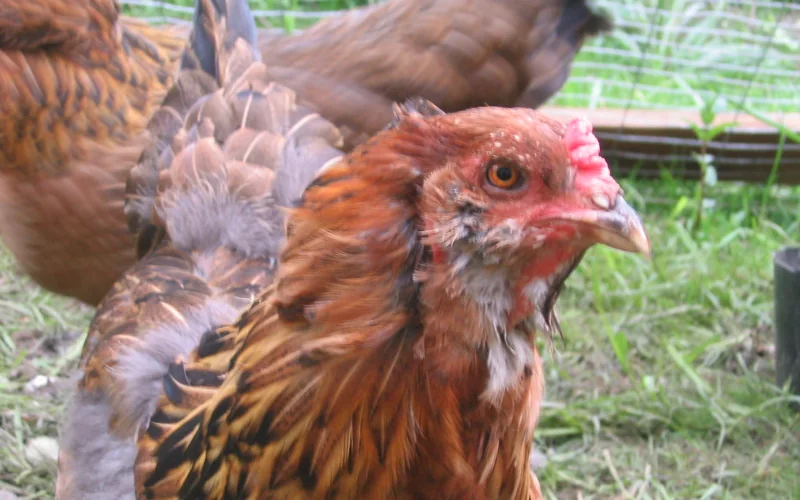
Step-by-Step Triage & Intervention Protocol:
- Physical Separation of Victim: Immediately transfer the pecked hen to a clean, quiet dog crate or isolation pen within the coop. Maintaining auditory and visual proximity preserves social rank and eliminates the trauma of reintroduction later.
- Antiseptic Wound Debridement: Flush lacerations with warm sterile saline or 0.05% chlorhexidine diacetate solution. Debride dirt and detached feather fragments. Do not apply petroleum-based ointments that mat down surrounding down feathers and attract dirt.
- Color Camouflage & Antimicrobial Barrier: Spray the injured dermis with veterinary gentian violet spray, Blu-Kote, or a non-toxic aluminum barrier spray (AluShield). These compounds dry to a dark purple, silver, or blue hue, masking red blood that instinctively triggers peck frenzy in conspecifics.
- Temporary Blinders (Pinless Peepers): If a specific alpha hen or chronic feather puller is identified, fit the aggressor with pinless peepers for 14 to 21 days. The flexible polypropylene device snaps into the nares without penetrating the septum. By obstructing straight-ahead binocular vision while permitting normal downward and lateral peripheral sight, the bird loses the stereoscopic depth perception required to seize feathers, effectively breaking the neurological habit loop.
- Rebalancing Flock Demographics: If a hyper-aggressive hen continues to terrorize subordinates despite environmental enrichment and peepers, temporarily remove the aggressor from the flock for 7 to 10 days. Place her in a solitary isolation pen while the remaining hens reorganize their social structure. When the bully is returned to the flock, she enters as an unfamiliar newcomer at the bottom of the pecking order.
Chicken Pecking Order: Establishing Hierarchy & Aggression — Frequently Asked Questions
Add Poultria to your Google Preferred Sources
Follow Poultria on Google so our peer-reviewed poultry veterinary research, commercial breed genetics, and agronomic field guides are highlighted and cited first in your Google Search, Top Stories, and AI Overviews.