Double Yolk Eggs: Causes, Candling & Can Twin Chicks Hatch?
Why chickens lay double yolkers, which breeds lay the most, how to spot them by candling, and the fascinating science of whether twin chicks can ever hatch.
Scientific Overview
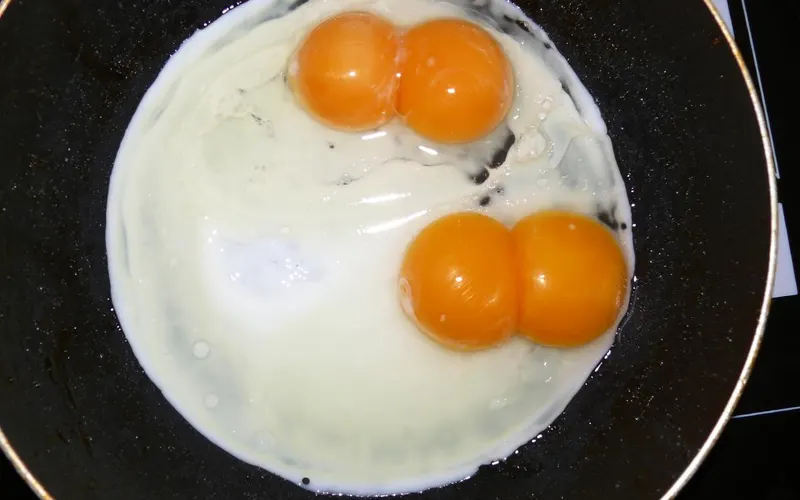
Cracking an egg into a skillet and discovering two golden yolks side-by-side is one of the most delightful surprises in the kitchen. In folklore, double yolk eggs are celebrated as symbols of good luck, abundance, and twin blessings. But in the chicken coop, what actually causes a hen to lay a double yolker? Is it safe for the hen, can twin chicks hatch out of one egg, and are certain chicken breeds more likely to lay them? In this guide, Dr. Imad Khan breaks down the fascinating biology of double yolk eggs into plain, easy-to-understand terms—from young pullet growth spurts and giant breed genetics to hands-on candling tips and kitchen nutrition.
1. How Do Double Yolk Eggs Happen? (The Biology Made Simple)
How It Happens: Under normal conditions, a hen's ovary releases one mature yolk every 24 to 26 hours. A double yolk egg occurs when her ovary releases two yolks within an hour or two of each other. Both yolks travel down the oviduct together, get wrapped in the same egg white (albumen), and are packaged inside a single, extra-large calcium shell!
Here is the step-by-step journey of a double yolker down the hen's reproductive assembly line:
- The Funnel (Infundibulum): The hen's ovary releases two yolks in rapid succession. Both yolks enter the oviduct funnel side-by-side. If a rooster has mated with the hen, both yolks can be independently fertilized!
- The Egg White Section (Magnum): Over the next 3 hours, glands secrete rich egg white (albumen) around both yolks as a single combined unit.
- The Membrane Section (Isthmus): Both yolks and their shared egg white are wrapped inside common inner and outer shell membranes.
- The Shell Gland (Uterus): Over the final 15 to 16 hours, the shell gland builds a single, unusually large calcium shell to fit both yolks.
2. The 3 Main Reasons Chickens Lay Double Yolkers
Double yolk eggs don't happen completely at random. In backyard coops, they are usually driven by three key factors:
1. The 'Rookie Pullet' Phase (18 to 26 Weeks)
The vast majority of double yolkers come from young pullets that are just starting to lay. Just like teenage growth spurts, a young hen's hormones run high before settling into a predictable rhythm. Her body occasionally releases two yolks at once. Once her laying cycle stabilizes after a few months, double yolkers become much rarer.
2. Heavy Heritage & High-Production Breeds
Breeds bred for high body weight and heavy egg mass are naturally more likely to lay double yolk eggs. You will find far more double yolkers from heavy breeds like Buff Orpingtons, Rhode Island Reds, Barred Plymouth Rocks, and Sussex, as well as commercial brown layers like Golden Comets and ISA Browns, than from small Mediterranean breeds like Leghorns.
3. The Post-Molt Comeback
Older hens rarely lay double yolks during standard laying. But when an older hen starts laying again in early spring after her autumn molt and winter break, her reactivated reproductive system often delivers a double yolker in her first clutch.
3. Can a Double Yolk Egg Actually Hatch Twin Chicks?
It is one of the most common questions chicken keepers ask: If both yolks are fertile, can twin chicks hatch from one egg?
The honest biological answer is: almost never in nature or standard incubators (less than 1% survival rate). A chicken egg is an incredible life-support capsule, but it is strictly designed for one embryo:
1. Oxygen Starvation (The Air Cell Limit)
On day 19 of incubation, a developing chick pokes its beak into the blunt-end air cell to take its first breaths of air before pipping the shell. A double yolk egg contains only one air cell designed for one chick. When two chicks try to breathe, the oxygen is exhausted in minutes, leading to suffocation.
2. Spatial Cramping & Malpositioning
To hatch, a chick must tuck its head under its right wing and rotate to pip around the shell circumference. Inside a double yolk egg, the two growing embryos become tightly cramped. Neither chick can maneuver into the proper pipping posture, leaving them trapped inside the shell.
Commercial hatcheries automatically candle and remove all double yolk eggs before incubation, as setting them wastes space and leads to unviable hatches.
4. Candling Diagnostics: How to Spot a Double Yolk Before Cracking It
You don't need to crack an egg to find out if it is a double yolker! You can easily spot them with simple candling:
- The Flashlight Test: In a dark room, hold a bright smartphone flashlight or LED candling torch against the wide end of the egg. In a fresh double yolker, you will clearly see two distinct, rounded dark shadows floating independently within the glowing egg white!
- Size and Shape Clues: Double yolk eggs are noticeably larger and more elongated or torpedo-shaped than standard eggs. While a standard Large grocery egg weighs 55 g to 60 g (1.9 to 2.1 oz), double yolkers typically tip the scales at 75 g to 95 g (2.6 to 3.4 oz)—solidly in the 'Super Jumbo' weight class!
5. Kitchen Facts: Are Double Yolk Eggs Good for You?
Double yolk eggs are prized by home cooks and bakers alike:
- Nutritional Powerhouse: Because egg yolks hold virtually all the fat-soluble vitamins (A, D, E, K), choline, lutein, and omega-3s, a double yolker gives you nearly twice the micronutrients of a normal egg.
- Baking Gold: Bakers love double yolk eggs for custards, brioche, and yellow cakes, where extra yolk richness creates a velvety, golden crumb.
6. Does Laying Huge Double Yolks Hurt the Hen?
While finding a giant egg is fun for keepers, laying an egg that is 30% to 50% larger than normal can be hard work for a young hen:
- Vent Straining: Petite pullets may strain to pass a jumbo egg. If you notice a young hen repeatedly laying giant double yolkers, keep a close eye on her vent to ensure she doesn't suffer from vent prolapse (where part of the oviduct tissue stays pushed out).
- How to Protect Your Pullets: Avoid introducing artificial coop lighting too early before pullets reach 18 to 20 weeks of age, as premature lighting forces their reproductive systems to start before their bodies have fully grown. Always provide ample clean water and free-choice coarse calcium to ensure smooth, easy laying.
Double Yolk Eggs: Causes, Candling & Can Twin Chicks Hatch? — Frequently Asked Questions
Add Poultria to your Google Preferred Sources
Follow Poultria on Google so our peer-reviewed poultry veterinary research, commercial breed genetics, and agronomic field guides are highlighted and cited first in your Google Search, Top Stories, and AI Overviews.