
Guinea Fowl for Tick Control: How Many Do You Need?
Biological pest management: Lyme disease tick predation rates, free-range grazing behavior, integration with chickens, and predator alarm dynamics.
Scientific Overview
Utilizing Helmeted Guinea Fowl (Numida meleagridis) as biological pest control agents offers livestock producers and rural homesteaders a chemical-free, highly efficient mechanism to suppress parasitic tick populations. Unlike domestic chickens that scratch vigorously and destroy garden turf, flowerbeds, and mulch layers, guinea fowl forage with rapid, gentle beak strikes, hunting terrestrial arthropods without damaging plant root systems. Field trials indicate that a modest flock of guinea fowl can suppress adult and nymphal blacklegged ticks (Ixodes scapularis)—the primary vector of Lyme disease—by over 90% across grazed perimeters. This comprehensive agronomic manual details quantitative tick predation data, stocking density calculations per acre, keet brooding and coop training protocols, inter-species integration with chickens, and winter hardiness specifications.
1. Executive Summary: The Entomological Advantage of Guinea Fowl
Direct Answer (Featured Snippet Summary): For effective tick eradication on residential properties and pastures, maintain a flock of 6 to 10 guinea fowl per 4,000 m² (1 acre) for light perimeter defense, or 15 to 20 birds per acre for heavy woodland tick infestations. Unlike chickens, guinea fowl hunt in a coordinated sweep line, consume hundreds of ticks daily, and do not scratch up lawn turf or gardens.
In agroecological pest management, guinea fowl occupy a unique predatory niche. Indigenous to the sub-Saharan African savannah, their evolutionary visual acuity and ground-foraging behavior are optimized for detecting small, cryptic insects, arachnids, and small reptiles in tall grass.
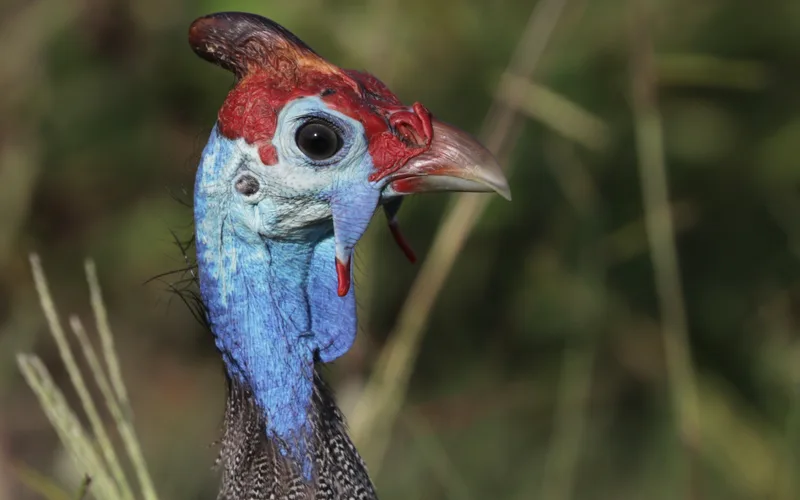
While chickens occasionally eat ticks, ticks are not their preferred forage; chickens prioritize larger earthworms, beetles, seeds, and tender plant shoots, digging deep dust craters in the process. Guinea fowl, by contrast, march shoulder-to-shoulder across pastures in a methodical line, inspecting grass blades from ground level to 60 cm (24 inches) high, snatching ticks, grasshoppers, Japanese beetles, fleas, and horn flies with pinpoint precision.
2. Scientific Research & Field Evidence on Tick Consumption
The efficacy of guinea fowl in reducing tick densities is corroborated by peer-reviewed entomological field trials. In a landmark field experiment published in the Journal of Medical Entomology, researchers in New York state evaluated whether free-ranging guinea fowl reduced the abundance of blacklegged ticks (Ixodes scapularis), the primary vector of Borrelia burgdorferi (Lyme disease):
| Comparative Foraging Trait | Guinea Fowl (Numida meleagridis) | Domestic Chickens (Gallus gallus) |
|---|---|---|
| Foraging Pattern & Formation | Coordinated linear patrol; sweeps entire perimeter | Dispersed, localized clustering near coop |
| Turf & Plant Damage | Zero scratching; targets bugs directly off foliage | Heavy scratching; uproots seedlings & creates dust craters |
| Tick Species Predated | Deer ticks, Lone Star ticks, American dog ticks, cattle ticks | Opportunistic; incidental consumption |
| Daily Foraging Range Radius | 400 m – 800 m (0.25 – 0.5 miles) from shelter | 50 m – 100 m (160 – 330 ft) from coop |
| Alarm Calling & Sentinel Role | Loud shrieking alarm at hawks, coyotes, and snakes | Muted clucks; primarily self-preservation |
The researchers demonstrated a statistically significant reduction of up to 90% in adult tick densities on properties where guinea fowl patrolled regularly compared to control pastures without birds. Furthermore, necropsy gut analysis of pastured guinea fowl reveals hundreds of engorged ticks and agricultural pests packed inside their muscular gizzard.
3. Stocking Formula: How Many Guinea Fowl Do You Need?
Calculating your target flock size depends on acreage, vegetation density, and tick infestation history:
| Property Scale & Terrain | Recommended Flock Size | Management Strategy |
|---|---|---|
| Suburban/Rural Homestead (0.5 to 1 Acre) | 6 to 8 Birds | Minimum flock size to prevent depression (they are intensely social); patrols boundary brush. |
| Small Farm / Pasture (2 to 5 Acres) | 12 to 18 Birds | Splits into two roving patrols; sweeps ecotones between forest edges and lawn. |
| Heavy Wooded Acreage (5 to 10+ Acres) | 20 to 30+ Birds | Large colony foraging; comprehensive tick eradication across livestock pastures. |
Never keep fewer than 5 or 6 guinea fowl. Guinea fowl possess an ultra-strong flocking instinct. A solitary bird or a pair will experience extreme panic, scream constantly, wander off in search of conspecifics, and succumb to predators within days. A cohesive flock of 6 to 10 birds sticks together, defends territory, and roosts cooperatively.
4. Keet Brooding Protocol & Preventing Early Damp Chill
Young guinea fowl are called keets. While adult guinea fowl are tough, bulletproof desert birds, day-old keets are notoriously delicate during the first 14 days of life. In nature, wild guinea hens frequently lose 80% to 100% of their keets because the hen drags them through dewy early-morning grass; wet down feathers cause fatal hypothermia within 30 minutes.
The 4 Essential Keet Brooding Rules:
- High Brooding Heat: Brood keets at 35.0°C to 36.5°C (95°F to 98°F) for Week 1, dropping by 2.8°C (5°F) weekly until fully feathered at 6 weeks. Keets require higher brooding heat than chicken chicks.
- 28% Protein Gamebird Starter: Like quail, keets cannot thrive on 18% chick starter. They demand a 26% to 28% crude protein turkey or gamebird starter to develop their long leg bones and flight muscles.
- Rough Traction Flooring: Never brood keets on slick newspaper or plastic. Keets are highly susceptible to splay leg; cover brooder floors with textured paper towels or coarse burlap for the first 5 days.
- Dew Avoidance: Never allow juvenile keets under 12 weeks of age onto morning pasture until the sun has completely evaporated all dew from the grass blades.
5. Coop Training & Breaking the Instinctive Tree-Roosting Habit
The greatest management challenge with guinea fowl is their innate desire to roost high in mature trees at dusk (often 10 to 15 meters / 30 to 50 feet off the ground). While tree roosting protects them from terrestrial coyotes and foxes, it leaves them completely exposed to nocturnal Great Horned Owls and severe winter blizzards.
The 6-Week Lockdown Coop Training Protocol:
- Total Confinement (Weeks 6 to 12): When keets (young guinea fowl) are fully feathered at 6 weeks, move them into their permanent coop and lock them inside completely for 4 to 6 weeks without outdoor release. This imprints the coop as their immutable home territory and safety refuge.
- High Roost Bars: Guinea fowl feel insecure roosting low. Install roosting perches inside the coop at least 1.5 to 2.0 meters (5 to 6.5 feet) off the floor, higher than standard chicken roosts.
- The One-Bird Release Technique: On Day 1 of outdoor release, let only one bird out an hour before dusk. The solitary bird will panic, stay glued to the exterior coop wire calling to its flockmates, and easily re-enter when the door is opened. On Day 2, release two birds. By Day 7, the entire flock will return reliably inside at sunset.
- White Millet Treat Bribery: White proso millet is the ultimate delicacy for guinea fowl. Shake a metal can filled with millet and call them every evening before locking the door. They will rush into the coop to feed on the millet reward.
6. Mixed-Species Flocks: Integrating Guineas with Chickens & Blackhead Risks
Many homesteaders house guinea fowl alongside chickens. While they can cohabitate peacefully on free range, keepers must understand two critical inter-species dynamics:
- Rooster Aggression & Bullying: Male guinea fowl are aggressive, territorial brawlers. In confined coops, guinea males will chase gentle chicken roosters, pull their tail sickles, and monopolize feed troughs. Provide ample feeder space and high perches to prevent bullying.
- Blackhead Disease (Histomoniasis): Like turkeys, guinea fowl are susceptible to Histomonas meleagridis, a lethal protozoan carried asymptomatically by chickens via the cecal worm Heterakis gallinarum. While guinea fowl exhibit higher resistance than turkeys, maintaining dry litter and routine deworming with fenbendazole protects the flock.
- Predator Alarm Sentinels: Guineas act as the ultimate early-warning alarm system for chickens. Their shrill, piercing two-tone cry (females call "buck-wheat, buck-wheat", males emit a single-tone "chi-chi-chi" machine-gun shriek) alerts free-ranging chickens to diving hawks, raccoons, and human trespassers hundreds of meters away, giving chickens time to dive under cover.
Guinea Fowl for Tick Control: How Many Do You Need? — Frequently Asked Questions
Add Poultria to your Google Preferred Sources
Follow Poultria on Google so our peer-reviewed poultry veterinary research, commercial breed genetics, and agronomic field guides are highlighted and cited first in your Google Search, Top Stories, and AI Overviews.