
Can Turkeys and Chickens Live Together? Blackhead Disease Prevention
The life-or-death biosecurity guide for mixed flocks: Histomonas meleagridis transmission, the Heterakis gallinarum cecal worm vector, clinical pathology, and pasture separation protocols.
Scientific Overview
Housing turkeys and chickens together on the same ground is one of the most perilous practices in backyard poultry husbandry. While chickens and turkeys share many similarities, chickens act as asymptomatic reservoir carriers for Histomonas meleagridis—the microscopic protozoan parasite responsible for histomoniasis, colloquially known as Blackhead Disease. When transmitted to naive turkeys via the eggs of the common cecal nematode (Heterakis gallinarum) or earthworms, Histomonas induces severe necrotizing typhlitis and circular crater-like liver necrosis, carrying mortality rates of 80% to 100%. Following international bans on nitroimidazole therapeutic drugs, prevention through strict biosecurity and physical spatial separation represents the only reliable flock defense.
1. The Veterinary Verdict: Can Turkeys and Chickens Cohabitate?
The Definitive Veterinary Directive: Chickens and turkeys should NEVER share the same coop, enclosed run, or pastured ground. Chickens harbor the cecal worm Heterakis gallinarum with negligible symptoms, shedding millions of worm eggs containing lethal Histomonas meleagridis protozoa into the soil. In turkeys, Blackhead Disease causes 80% to 100% flock mortality. There are currently zero FDA- or EMA-approved drugs to cure active histomoniasis in poultry.
While anecdotal accounts on backyard forums occasionally claim that someone has kept mixed flocks without casualties, veterinary epidemiology confirms that this is merely a matter of soil parasite latency. Once Heterakis eggs become established in the topsoil, the soil remains infectious for 3 to 4 years, creating an invisible biological minefield for any turkey placed on the land.
2. Histomoniasis Etiology: The Tripartite Parasite Transmission Cycle
Understanding how Blackhead Disease decimates turkey flocks requires mapping the intricate tripartite biological relationship between protozoan, roundworm, and earthworm:
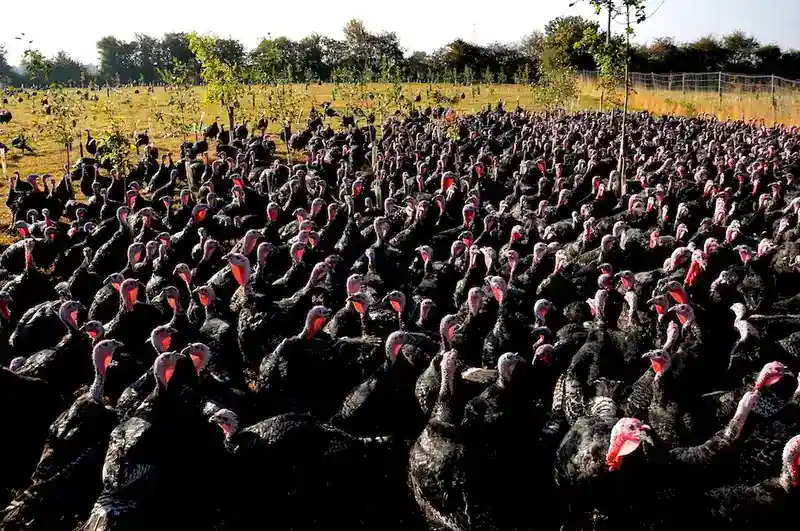
The 3 Transmission Vectors of Blackhead Disease:
- 1. The Primary Vector (Cecal Worms - Heterakis gallinarum): Histomonas meleagridis is an extremely fragile flagellated protozoan that dies rapidly if exposed to ambient oxygen or desiccation. However, it survives by invading the reproductive tract of the avian cecal roundworm (Heterakis gallinarum) and becoming encapsulated inside the thick, double-walled nematode egg. Inside this protective shell, Histomonas can survive in soil, litter, and mud through freezing northern winters for up to 3 to 4 years.
- 2. Paratenic Transport Hosts (Earthworms): Earthworms actively consume topsoil containing Heterakis eggs. The nematode larvae hatch within the earthworm tissues, remaining viable as infectious paratenic vectors. When a foraging turkey scratches and eats an earthworm, thousands of encysted parasites are delivered directly into its gut.
- 3. Direct Lateral Transmission (Cloacal Drinking): While initial infection requires worm egg ingestion, once Blackhead establishes within a turkey flock, it spreads rapidly bird-to-bird via reverse peristalsis of the cloaca (cloacal drinking) when birds huddle on warm bedding contaminated with fresh liquid droppings.
3. Asymptomatic Chickens vs. Lethal Turkey Pathology
Why do chickens thrive with Histomonas while turkeys succumb? Chickens have co-evolved with Heterakis and Histomonas across thousands of years in Southeast Asia, developing an effective immune barrier that confines the protozoan to the superficial cecal mucosal epithelium with minor clinical impact.
In turkeys, by contrast, Histomonas penetrates through the basement membrane of the cecal wall, enters the hepatic portal bloodstream, and colonizes the liver. The resulting inflammatory storm causes massive coagulative necrosis, obliterating hepatic tissue and inducing severe systemic endotoxemia.
4. Clinical Symptoms & Post-Mortem Necropsy Lesions
Live Flock Clinical Symptoms
- Sulfur-Yellow Foamy Droppings: The cardinal pathognomonic clinical sign. Feces turn bright mustard or bright sulfur-yellow due to excess biliverdin from liver breakdown.
- Extreme Depression & Lethargy: Affected turkeys stand hunched with drooping wings, closed eyes, ruffled plumage, and head drawn tightly to the body.
- Cyanosis (Facial Skin Darkening): Poor circulatory perfusion may cause unfeathered head skin to turn dark blue-black (hence Blackhead), though this is an inconsistent terminal sign and not present in all cases.
Gross Post-Mortem Lesions
- Severe Necrotizing Typhlitis: The blind cecal pouches become massively thickened and distended with hard, dry, yellow-gray laminated fibrinonecrotic core casts.
- Circular Target Liver Craters: The liver exhibits characteristic circular, flat or sunken necrotic lesions (1 cm to 2 cm diameter) with yellowish-green centers and raised erythematous rings, resembling artillery impact craters.
5. Treatment Reality & The Post-Nitroimidazole Era
Historically, poultry producers relied on nitroimidazole compounds (dimetridazole, ipronidazole, metronidazole) to cure blackhead outbreaks. However, due to concerns regarding mutagenicity and carcinogenic drug residues in food animals, the US FDA and European Commission instituted total bans on nitroimidazole use in poultry.
Veterinary Drug Reality: Currently, there are zero legal therapeutic medications approved to treat histomoniasis in turkeys in the United States, United Kingdom, and European Union. While dewormers like fenbendazole or albendazole kill the carrier cecal worm (Heterakis), they have zero efficacy against Histomonas protozoa already residing within the turkey's liver. Prevention is the sole viable defense.
6. Practical Biosecurity Protocols: The 15-Meter Separation Standard
If keeping both chickens and turkeys on the same homestead or smallholding, follow these four non-negotiable biosecurity mandates:
- 1. Minimum 15 to 30 Meter (50 to 100 Foot) Spatial Buffer: House turkeys at least 15 to 30 meters uphill or on separate drainage elevations from chicken runs to prevent rainwater runoff carrying worm eggs into turkey paddocks.
- 2. Dedicated Footwear & Tool Airlock: Never enter a turkey enclosure wearing shoes, boots, or overalls worn inside a chicken coop. Fecal particles clinging to boot treads are the primary vector for homestead outbreaks. Maintain dedicated rubber boots at the turkey pen entrance and step through a virucidal/parasiticidal footbath.
- 3. Never Place Turkeys on Historical Chicken Ground: Ensure pasture ground allocated for turkeys has not had chickens, pheasants, or peafowl pastured upon it for a minimum of 3 full years.
- 4. Regular Chicken Deworming: Routine veterinary deworming of the chicken flock with approved anthelmintics (such as fenbendazole under veterinary oversight) suppresses cecal worm population density, drastically lowering the shed rate of Heterakis eggs into the environment.
7. Mixed-Flock Interspecies Biosecurity Risk Assessment Matrix
| Housing Configuration | Histomoniasis Risk | Mortality Expectation | Veterinary Recommendation |
|---|---|---|---|
| Shared Coop & Run | Extreme (95% to 100%) | 80% to 100% in turkeys | Strictly Prohibited |
| Shared Free-Range Pasture | High (70% to 85%) | 50% to 80% over 12 months | Strongly Discouraged |
| Adjacent Pens with Fence Buffer | Moderate (20% to 40%) | Sporadic (driven by boot transfer) | Requires boot protocol & drain diversion |
| Dedicated Silo > 30 m Buffer | Low (< 5%) | < 1% (Zero background incidence) | Veterinary Best Practice |