
Avian Influenza (HPAI vs LPAI)
Influenza A HA/NA Subtypes, Mutational Shifts & Biosecurity Barrier
Scientific Overview & Physiological Context
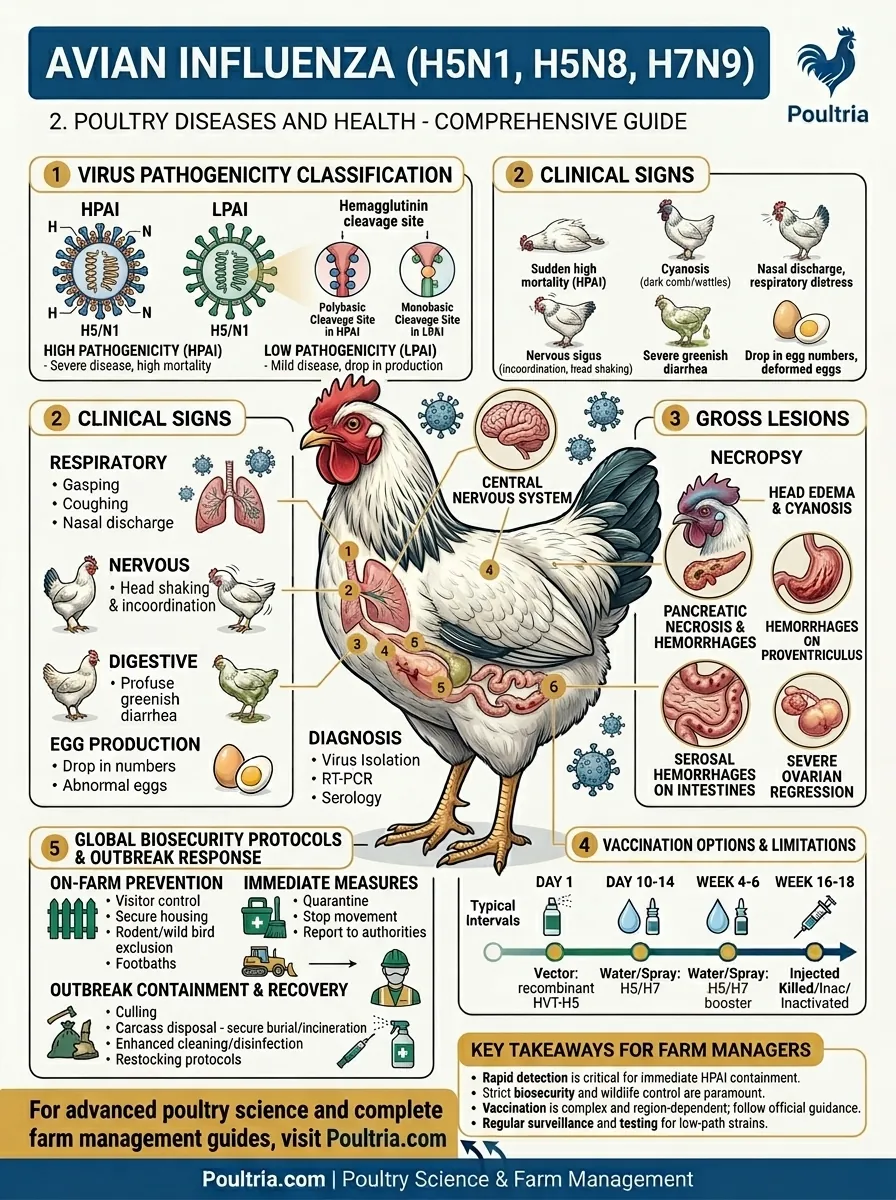
Avian Influenza—often called Bird Flu—is caused by Type A influenza viruses carried naturally by wild waterfowl. While low-pathogenic (LPAI) strains cause mild respiratory signs, high-pathogenic (HPAI) strains are lethal systemic killers that can destroy entire poultry operations within 48 hours.
The Genetics: 16 Hemagglutinin & 9 Neuraminidase Subtypes
Avian influenza viruses are classified by their two surface proteins: 16 Hemagglutinin (H1 to H16) and 9 Neuraminidase (N1 to N9) types. Most AI viruses in wild birds are Low Pathogenic (LPAI). However, when H5 or H7 subtypes spread into dense commercial poultry barns, they can undergo a deadly genetic mutation—acquiring multiple basic amino acids at their cleavage site. This allows the virus to infect and destroy endothelial cells throughout every blood vessel in the bird's body.
Clinical Signs of High-Pathogenic Avian Flu (HPAI)
In HPAI outbreaks, birds die peracutely with little warning. Characteristic clinical signs include severe purple cyanosis and swelling of the comb and wattles, subcutaneous hemorrhages on the unfeathered shanks and feet, blood-tinged nasal discharge, and acute mortality reaching up to 100% of the barn in 2 to 3 days. Post-mortem exams show widespread petechial bleeding on the heart, liver, and abdominal fat.
Wild Waterfowl Reservoirs & Biosecurity Defense
Wild ducks, geese, and shorebirds carry influenza viruses in their intestines and shed them in feces around open ponds and farm surroundings without getting sick themselves. Commercial poultry biosecurity must focus on zero contact with wild birds: bird-proof netting over air inlets, strictly sanitizing vehicle tires, changing boots at Danish entry benches, and never using untreated surface pond water.
Core Biological & Management Mechanisms
Mutational insertion of basic amino acids enables the virus to cleave inside all organ blood vessels, causing systemic bleeding.
Severe vascular damage and blood clotting cause purple discoloration of the head, swollen wattles, and bloody nostrils.
Migratory waterfowl shed viral particles in feces along global flyways, threatening surface water and farm surroundings.
Suspected cases require immediate government notification, quarantine containment, and statutory exclusion zones.
Veterinary Takeaway & Practical Application
Never use surface pond or river water for flock drinking or evaporative cooling pads without continuous chlorination (minimum 2–3 ppm free chlorine residual). Water reservoirs are the #1 source of wild bird influenza contamination.
View Avian Flu Atlas →