
Necrotic Enteritis (C. perfringens)
NetB Toxin Pathogenesis, Dysbacteriosis & Turkish Towel Mucosa
Scientific Overview & Physiological Context
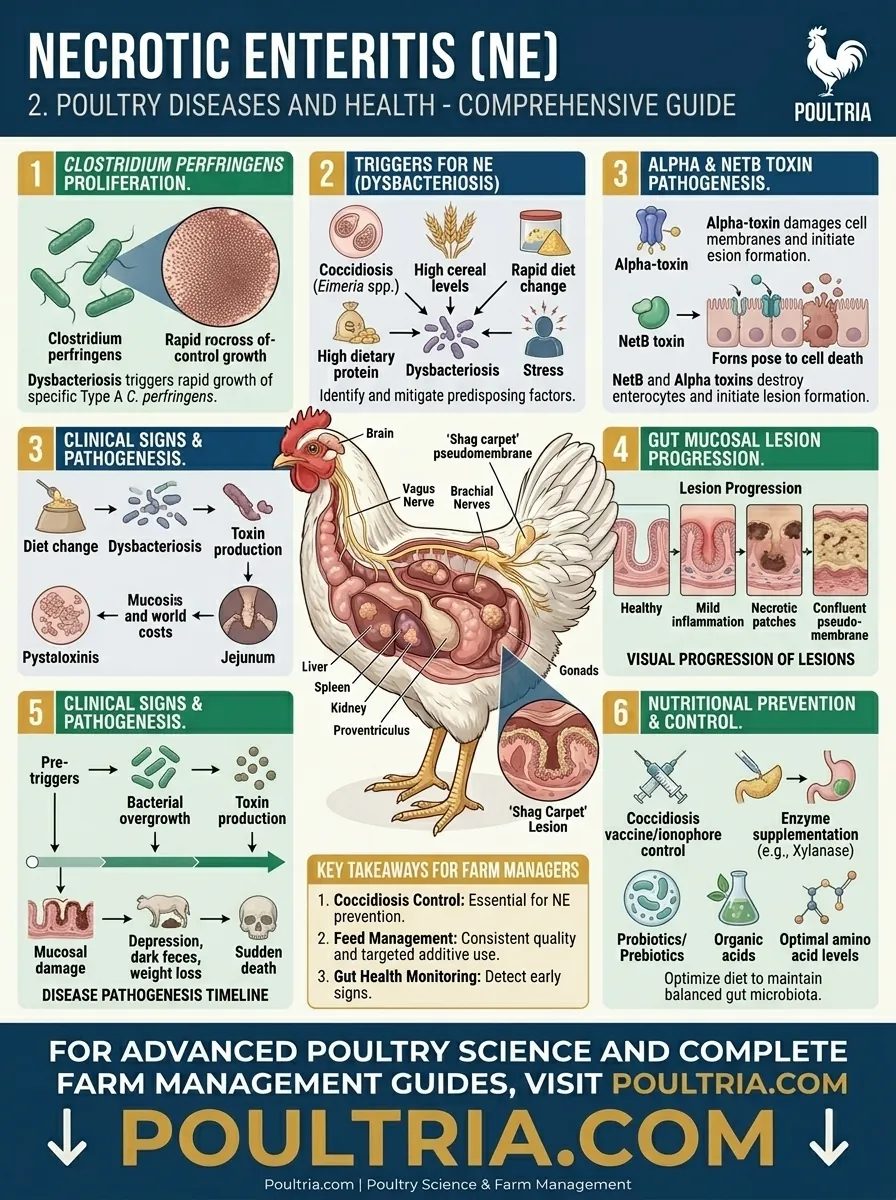
Necrotic Enteritis (NE) is a devastating, acute bacterial disease of broilers caused by virulent strains of Clostridium perfringens producing the pore-forming NetB toxin. It causes severe mucosal necrosis, foul gas buildup, and sudden high flock mortality.
Clostridium perfringens & The NetB Pore-Forming Toxin
Clostridium perfringens is a natural Gram-positive, spore-forming anaerobic bacterium found in low numbers in the healthy chicken cecum. However, when specific NetB-toxin-positive strains proliferate, they secrete a potent pore-forming protein called NetB. This toxin punches microscopic holes in the enterocyte cell membranes of the small intestine, causing the cells to burst, slough off, and die rapidly.
The Pathognomonic 'Turkish Towel' Lesion
When opening the intestines of an affected bird, the jejunum and ileum appear friable, thin-walled, and filled with foul-smelling brown fluid and gas. The inner mucosal surface is lined with a thick, rough, yellow-brown diphtheritic membrane that looks exactly like a damp Turkish towel. In subclinical cases, the flock exhibits poor weight gain, wet litter, and elevated FCR without obvious mortality spikes.
The Deadly Trio of Predisposing Triggers
Clostridium perfringens cannot cause disease on its own—it requires predisposing mucosal damage. The three primary triggers are: 1) Eimeria maxima coccidiosis infection (which damages the gut lining and leaks plasma protein), 2) High-viscosity diets containing rye, barley, or wheat non-starch polysaccharides (NSPs), and 3) High levels of unabsorbed dietary protein like fishmeal or poorly processed soybean meal.
Core Biological & Management Mechanisms
Pore-forming NetB toxin punches holes directly into intestinal wall cells, triggering rapid osmotic cell death.
Confluent, rough, yellow-brown diphtheritic pseudomembrane lining the middle and lower small intestine.
Soluble non-starch polysaccharides (NSPs) from wheat or barley slow gut transit, fueling clostridial blooms.
Microencapsulated sodium butyrate, thymol, and organic acids strengthen mucosal tight junctions against toxin attack.
Veterinary Takeaway & Practical Application
Controlling Coccidiosis is your #1 defense against Necrotic Enteritis. Adding dietary NSPase enzymes (xylanase/glucanase) to wheat-based diets lowers digesta viscosity, eliminating the sluggish gut conditions that Clostridium perfringens needs to multiply.
View Necrotic Enteritis Atlas →