
Chicken Roundworms: Symptoms, Deworming Protocols & Dosages
A veterinary clinical guide to diagnosing Ascaridia galli, understanding the lifecycle, calculating exact dewormer dosages (flubendazole, fenbendazole, levamisole), and breaking environmental re-infestation cycles.
Scientific Overview
Intestinal roundworms (predominantly Ascaridia galli) are among the most widespread and economically destructive parasitic nematodes affecting pastured layers, backyard flocks, and cage-free pullets. Unlike external parasites that are visible during a simple coop inspection, roundworms operate invisibly within the lumen of the small intestine. They siphon vital amino acids, trace minerals, and vitamins directly from digested chyme, while their burrowing larvae traumatize the mucosal brush border. The result is insidious: stunted growth in growing pullets, compromised feed conversion ratio (FCR), dull plumage, pale combs, and a persistent 10% to 25% drop in egg yield. This clinical manual outlines the biology of Ascaridia galli, provides quantitative diagnostic thresholds via McMaster fecal flotation, details evidence-based anthelmintic dosing protocols, and presents an interactive flock dosage calculator.
1. Ascaridia galli Parasitology: Anatomy, Life Cycle & Transmission Dynamics
Clinical Definition: Ascaridia galli is the largest parasitic nematode infesting the gastrointestinal tract of the domestic chicken. Adult females reach 65 mm to 116 mm (2.5 to 4.5 in) in length, while adult males measure 50 mm to 76 mm (2.0 to 3.0 in). They reside predominantly in the lumen of the middle small intestine (jejunum and ileum), competing directly with the host for digested dietary nutrients.
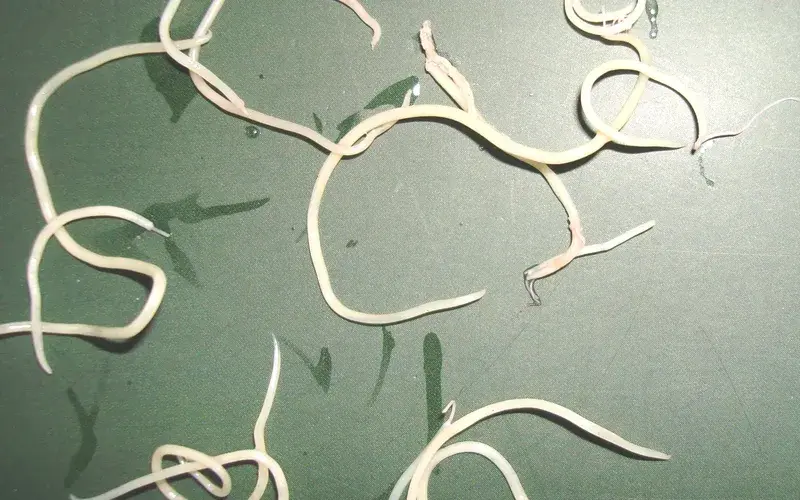
The transmission of Ascaridia galli is direct (monoxenous), meaning the nematode requires no mandatory intermediate host to complete its life cycle. However, transport hosts (paratenic vectors)—such as earthworms (Lumbricus terrestris), litter beetles (Alphitobius diaperinus), and grasshoppers—can ingest embryonated ova from contaminated soil. When free-range hens forage on these invertebrates, they ingest large boluses of infective larvae, drastically amplifying environmental flock transmission.
Phase 1: Environmental Embryonation
Female worms produce tens of thousands of unsegmented, thick-shelled ova daily, expelled in droppings. At ambient temperatures between 20°C and 30°C (68°F to 86°F) and relative humidity above 70%, the egg develops into an infective second-stage larva (L2/L3) within 10 to 14 days. The thick chitinous protein shell resists freezing and common detergents, surviving in damp coop litter or soil for up to 3 years.
Phase 2: The Invasive Histotrophic Phase
Once ingested by a chicken, eggs hatch in the proventriculus or duodenum. Between Day 8 and Day 17 post-ingestion, young larvae burrow into the mucosal crypts of Lieberkühn. This "histotrophic tissue phase" causes severe microscopic enteritis, focal hemorrhages, and destruction of intestinal microvilli before the larvae emerge back into the intestinal lumen around Day 18 to mature.
The total prepatent period—the span between initial ingestion of infective eggs and the emergence of egg-laying adult worms in the droppings—ranges from 28 to 35 days in young pullets, but may extend to 50 days in mature adult hens with developed cell-mediated immunity.
2. Clinical Signs, Triage & Quantitative McMaster Fecal Flotation
In adult hens, light roundworm burdens (fewer than 10 to 20 worms) are frequently subclinical, causing subtle drops in feed efficiency that escape notice until commercial production benchmarks are analyzed. However, in growing pullets under 16 weeks of age or heavily burdened adult layers, roundworms induce severe systemic pathology.
Primary Clinical Signs of Heavy Roundworm Burden:
- Pale Comb & Wattles: Subacute blood loss and iron malabsorption during the larval histotrophic mucosal phase lead to regenerative anemia.
- Substernal Emaciation ("Going Light"): Severe atrophy of the pectoral flight muscles with a prominent, razor-sharp keel bone, despite normal or ravenous appetite.
- Watery Enteritis & Vent Pasting: Profuse, unformed, watery droppings containing mucus, unabsorbed bile salts, and occasionally visible white worms.
- Depressed Laying Intensity & Thin Shells: 10% to 30% drop in flock lay rate, accompanied by rough, chalky, or thin-shelled eggs resulting from calcium and vitamin D3 malabsorption.
- Mechanical Intestinal Impaction: In massive burdens (100+ adult worms), worms tangle into dense biological plugs, causing complete luminal obstruction, hemorrhagic necrosis, and sudden mortality.
Diagnostic Triage: Fecal Flotation vs. Gross Necropsy
Relying solely on visual inspection of droppings is notoriously unreliable because hens only expel adult worms intermittently when worms die or during massive hyper-infections. The gold-standard diagnostic protocol is centrifugal fecal flotation using Sheather’s concentrated sugar solution (specific gravity 1.25 to 1.27) or saturated zinc sulfate (sp. gr. 1.18 to 1.20).
| McMaster Count (EPG) | Infestation Severity | Histopathological Impact | Recommended Action |
|---|---|---|---|
| < 200 EPG | Low / Subclinical | Minimal mucosal disruption; host immune balance maintained. | Monitor pasture; enforce pasture rotation; re-test in 6 weeks. |
| 200 – 1,000 EPG | Moderate Burden | Microvilli blunting, mild enteritis, 5%–10% FCR degradation. | Treat full flock with Flubendazole or Fenbendazole; sanitize coop. |
| > 1,000 EPG | Severe / Clinical | Severe hemorrhagic enteritis, risk of luminal impaction and death. | Immediate anthelmintic therapy; oral vitamin ADE supplements; strip deep litter. |
To review gross post-mortem intestinal lesion scoring and differential diagnosis against coccidiosis, explore our Coccidiosis Lesion Scorecard and Poultry Pathology Atlas.
3. Anthelmintic Pharmacotherapy & Comparison Matrix
Modern avian anthelmintic selection requires balancing three clinical criteria: broad-spectrum nematocidal efficacy (targeting adults, larvae, and companion parasites like cecal worms and hairworms), flock safety margin, and egg withdrawal regulations for laying hens. The table below details the four primary therapeutic compounds used in veterinary medicine:
| Active Compound | Commercial Brands | Clinical Dosage & Protocol | Route & Duration | Egg Withdrawal | Safety & Efficacy |
|---|---|---|---|---|---|
| Flubendazole (Benzimidazole) |
Flubenvet 1%, Solubenol, Flubenol |
1.43 mg/kg BW / day (30 g Flubenvet 1% per 15 kg feed) |
In-feed or drinking water for 7 consecutive days | 0 Days (UK/EU/US approved) |
> 98% against A. galli, cecal worms (Heterakis), and gapeworms. Exceptionally wide safety margin (up to 3x). |
| Fenbendazole (Benzimidazole) |
Safe-Guard Aquasol, Safe-Guard 10% Liquid |
1.0 mg/kg BW / day (FDA approved for drinking water) |
Drinking water for 5 consecutive days | 0 Days (Safe-Guard Aquasol only) |
> 99% efficacy. Highly water-dispersible. Note: Avoid during annual feather molt (can disrupt pinfeather keratinization). |
| Levamisole HCl (Imidazothiazole) |
Chanaverm 7.5%, Provit, Ripercol |
20 to 25 mg/kg BW (Single pulse dose) |
Drinking water for 1 day; repeat in 14 days | 7 to 14 Days (Off-label in layers) |
Potent cholinergic spastic paralytic. Rapid kill. Narrow therapeutic index: accidental 2x overdose causes salivation, ataxia, and mortality. |
| Piperazine (GABA Agonist) |
Wazine-17 (Largely withdrawn) |
32 to 50 mg/bird (Pulse dose in water) |
Drinking water for 1 day; repeat in 14 days | 14 Days (Not approved in layers) |
Only induces flaccid paralysis in adult A. galli; zero efficacy against larval stages, cecal worms, or capillary worms. High resistance documented. |
Benzimidazoles (Flubendazole and Fenbendazole) are time-dependent anthelmintics that inhibit the polymerization of β-tubulin into microtubules, starving the nematode of cellular glucose uptake over several days. Administering a single underdosed "one-shot" treatment fails to achieve lethal tissue saturation and rapidly selects for resistant nematode strains. Always finish the complete 5-day (Fenbendazole) or 7-day (Flubendazole) course as clinically indicated.
4. Interactive Anthelmintic Dosage & Water Dilution Calculator
Flock Anthelmintic Dosage & Solution Mixing Calculator
Calculate exact active substance weights and liquid product volumes for your flock based on bird count, average body weight, and clinical medication choice.
5. Environmental Biosecurity, Pasture Rotation & Eradication Protocols
Dosing your flock with anthelmintics clears the worms currently residing in their digestive tracts, but it does nothing to prevent them from becoming reinfected 48 hours later if the coop floor and outdoor run remain laden with millions of infective eggs. A permanent eradication program integrates physical decontamination with agronomic pasture management.
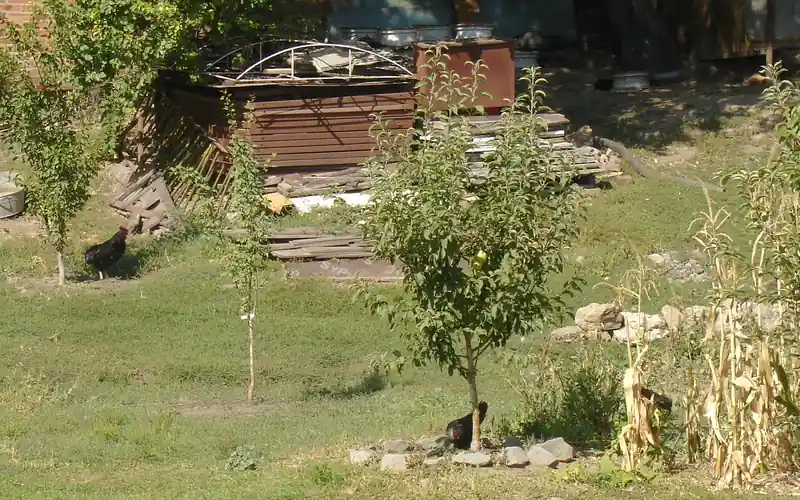
The 4-Step Coop & Pasture Decontamination Protocol:
- Complete Litter Strip & Dry Heat Decontamination: During or immediately following the 5 to 7-day deworming window, strip all bedding down to the bare subfloor. Ascaridia egg shells are composed of lipid-protein complexes that laugh at chlorine bleach and quaternary ammonium compounds. However, they are highly sensitive to thermal desiccation: steam washing with water above 60°C (140°F) or propane weed-torching on concrete pads instantly denatures nematode embryo proteins.
- Hydrated Lime Run Treatment: In outdoor dirt runs with high fecal compaction, broadcast agricultural hydrated lime (calcium hydroxide) at a rate of 0.5 kg to 1.0 kg per 10 m² (1.0 to 2.0 lbs per 100 sq ft). Lightly rake it into the top 2.5 cm (1 inch) of soil. Hydrated lime creates a caustic alkaline surge (pH > 11) that destroys parasite ova and bacteria, followed by resting the paddock for 2 to 3 weeks until rain neutralizes the soil before returning birds.
- Rotational Pasture Grazing (The 28-Day Rule): Divide your outdoor pasture into 3 or 4 rotational paddocks. Because Ascaridia galli eggs require 10 to 14 days to embryonate and reach the infective stage, moving chickens to fresh ground every 2 to 3 weeks ensures birds vacate the paddock before the newly dropped eggs can infect them. Let paddocks rest for 60 to 90 days exposed to direct ultraviolet sunlight.
- Separation from Turkeys and Invertebrate Control: Maintain an absolute buffer distance of at least 15 meters (50 feet) between chickens and domestic turkeys. Chickens act as asymptomatic reservoir hosts for the cecal worm Heterakis gallinarum, which carries Histomonas meleagridis—the lethal etiologic agent of Blackhead Disease (Histomoniasis) in turkeys.
The Diatomaceous Earth (DE) Myth: Veterinary Evidence
Food-grade Diatomaceous Earth (DE) is frequently marketed on backyard forums as an organic dewormer. Mechanistically, DE relies on sharp microscopic silica edges to scratch the wax epicuticle of insects, causing dehydration. However, once ingested into the humid, liquid environment of the chicken crop, proventriculus, and intestinal chyme, DE completely loses its abrasive desiccating capacity. In peer-reviewed veterinary studies (e.g., Bennett et al., 2011), chickens fed up to 2% DE in their ration showed zero reduction in Ascaridia galli worm counts or fecal egg burdens compared to untreated controls. Inhaling dry DE dust also poses severe respiratory risks to both birds and caretakers.
Chicken Roundworms: Symptoms, Deworming Protocols & Dosages — Frequently Asked Questions
Add Poultria to your Google Preferred Sources
Follow Poultria on Google so our peer-reviewed poultry veterinary research, commercial breed genetics, and agronomic field guides are highlighted and cited first in your Google Search, Top Stories, and AI Overviews.