
Laying Hen Feed Guide: 16%–18% Protein Rations, Calcium Curves & Schedules
The comprehensive agronomic manual for feeding egg layers: crude protein ratios, daily calcium metabolism, coarse oyster shell kinetics, and preventing Fatty Liver syndrome.
Scientific Overview
Manufacturing an egg every 24 to 26 hours is one of the most intense metabolic feats in animal agriculture. Over a single production year, a high-producing laying hen will output more than thirty times her own body weight in egg mass, utilizing massive amounts of amino acids, metabolizable energy, and calcium carbonate. Understanding laying hen nutrition is essential to sustaining egg production and flock longevity. Selecting the right feed for laying hens and balancing quality chicken layer feed ensures birds maintain adequate energy without depleting their skeletal reserves. This comprehensive manual outlines essential protein for laying hens, calcium for laying hens, particle size physics, and practical daily feeding schedules for backyard and small commercial flocks.
1. Daily Nutritional Targets for Laying Hens
Quick Summary: An active laying hen requires a complete daily laying hen feed containing 16% to 18% crude protein, 3.8% to 4.2% calcium, 0.40% to 0.45% available phosphorus, and roughly 2,750 to 2,850 kcal/kg (1,250 to 1,290 kcal/lb) of metabolizable energy. When selecting quality feed for laying hens, each hen consumes 110 g to 125 g (3.9 to 4.4 oz) of complete chicken layer feed daily. Supplemental coarse oyster shell must be offered free-choice in a separate hopper to support overnight eggshell calcification.
A common mistake among beginners is treating chicken feed as generic grain scratch. Unlike wild junglefowl that lay 12 to 15 eggs per year during the spring monsoon, modern production hens lay up to 320 eggs annually. If their daily chicken layer feed falls short in calcium, lysine, or methionine, the hen draws minerals out of her own medullary bones. After two or three weeks of nutritional deficit, shell quality deteriorates, osteoporosis sets in, and the hen stops laying.
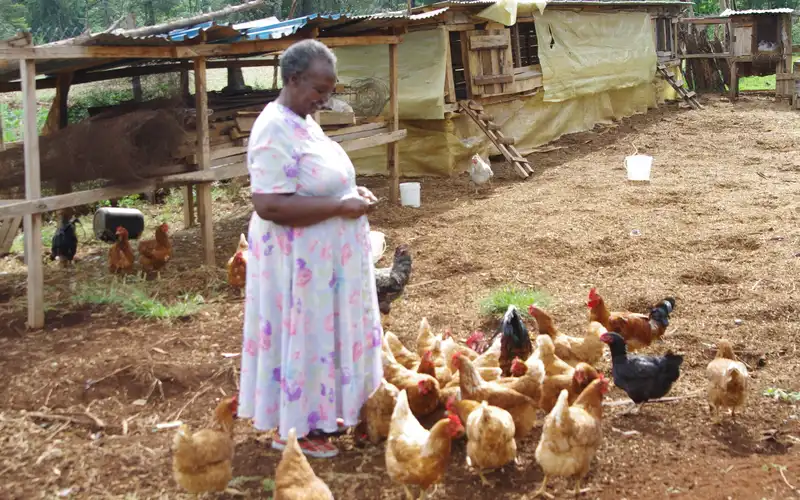
2. The Three Nutritional Life Stages: Protein for Laying Hens
A hen's nutritional demands shift dramatically across her lifespan. Balancing dietary protein for laying hens alongside precise mineral targets prevents developmental bottlenecks. Feeding the wrong ration at the wrong age can either stunt skeletal growth or trigger fatal kidney failure:
| Life Stage | Age Range | Crude Protein (CP) | Calcium Level | Primary Goal |
|---|---|---|---|---|
| 1. Chick Starter | Hatch to 6 Weeks | 20% – 22% | 0.9% – 1.0% | Rapid organ development, feather growth, and immune vigor. |
| 2. Grower / Developer | 6 to 16–18 Weeks | 15% – 16% | 0.9% – 1.1% | Skeletal bone frame expansion without depositing excess abdominal fat. |
| 3. Layer Ration (Phase 1) | 18 to 45 Weeks (Peak) | 16% – 18% | 3.8% – 4.2% | Sustaining 90%+ lay rate and daily shell calcification. |
| 4. Layer Ration (Phase 2) | 45+ Weeks (Late Lay) | 15% – 16% | 4.2% – 4.5% | Maintaining thick shells over larger egg volumes with lower feed waste. |
Chicks and pullets younger than 16 weeks lack the estrogen levels needed to transport excess calcium into skeletal storage. Feeding them 4% calcium layer feed forces their kidneys to work overtime trying to filter the mineral, resulting in visceral gout (chalky white calcium urate crystals smothering the kidneys, pericardium, and liver) and high flock mortality. Keep pullets on grower ration until you see your first egg.
3. Calcium for Laying Hens: Particle Size & Midnight Calcification Kinetics
Optimizing calcium for laying hens requires paying close attention to digestion speed and particle physical size. The mechanics of eggshell assembly explain why feeding the right kind of calcium matters just as much as how much you give. An egg spends roughly 20 hours in the hen's shell gland (uterus). During the final 15 hours of this cycle—almost all of which occurs while the hen is asleep in the dark—the shell gland deposits approximately 100 mg to 150 mg of calcium per hour onto the shell matrix.
Fine Limestone Powder (< 1 mm)
Digests rapidly in the crop and proventriculus within 2 to 3 hours. It spikes blood calcium during daytime feeding hours when the shell gland is relatively inactive, leading to excess renal excretion in the manure. By 2:00 AM, fine calcium has cleared the digestive tract.
Coarse Oyster Shell (2 mm to 4 mm)
Large particle size prevents passage through the gizzard. The muscular gizzard retains these flakes for 6 to 10 hours, slowly releasing dissolved calcium into the blood throughout the night when shell calcification is at its peak.
The Veterinary Standard for Laying Hen Feed: Provide complete layer pellets containing 60% fine limestone and 40% coarse limestone, and always keep a separate hopper of coarse crushed oyster shell available free-choice. Hens possess a specific dietary appetite for calcium and will consume coarse flakes late in the afternoon before roosting.
4. Interactive Flock Feed & Calcium Requirement Calculator
Flock Daily Feed & Calcium Demand Calculator
Enter your current number of laying hens and your local cost for a 20 kg (44 lb) or 25 kg (55 lb) bag of chicken layer feed to calculate daily and monthly feed consumption and necessary calcium for laying hens.
5. Feed Forms in Laying Hen Nutrition: Pellets vs. Crumbles vs. Mash
In modern laying hen nutrition, commercial rations are sold in three primary physical textures. Choosing the best form of laying hen feed depends on your feeder design and flock feeding behavior:
- Pellets: Whole grains, soybean meal, and mineral premixes ground fine and steam-extruded into solid cylinders. Pros: Zero selective sorting, virtually zero dust waste in open runs, and higher nutrient density per bite. Cons: High-energy birds eat their fill in 15 minutes, which can leave idle hens prone to feather pecking if coop enrichment is poor.
- Crumbles: Pellets fractured into coarse granola-sized chunks. Pros: The gold standard for mixed-age backyard flocks. Easier for smaller heritage hens and bantam layers to swallow than large pellets.
- Mash: Ground, unprocessed whole grains and powdery mineral mixes. Pros: Hens spend hours foraging through it, which reduces boredom. Cons: In humid coops or standard gravity hoppers, hens flick their beaks sideways, sorting out the cracked corn while leaving the powdery calcium-vitamin premix at the bottom of the trough.
To formulate your own raw rations or balance protein levels between corn and soybean meal, use our Pearson Square Feed Formulation Tool or explore our interactive Layer Feed Formulator.
6. The 90/10 Rule: Balancing Treats vs. Feed for Laying Hens
The single most common nutritional pathology seen in backyard poultry necropsies is Fatty Liver Hemorrhagic Syndrome (FLHS). In backyard flocks, well-meaning keepers often shower their birds with scratch grains, stale bread, pasta, and kitchen treats instead of balanced feed for laying hens:
Scratch grains are essentially chicken candy: cracked corn and wheat with only 7% to 9% crude protein, low lysine, and virtually zero calcium. When hens gorge on scratch, it displaces their complete layer feed. The excess carbohydrates convert into triglycerides in the liver. The liver softens, turns pale yellowish-tan, and develops fragile vascular beds. During the muscular straining of laying a large egg, a blood vessel in the liver bursts, causing sudden internal hemorrhage and death in an otherwise healthy-looking hen.
The 90/10 Management Law: Complete formulated laying hen feed must make up at least 90% of your flock's daily intake by weight. All treats, scratch grains, mealworms, and kitchen scraps combined must never exceed 10% (roughly one level tablespoon per hen per day). Offer scratch grains only in the late afternoon before roosting, encouraging the flock to fill their crops with complete layer feed first.
7. Seasonal Adjustments: Winter Caloric Density & Heat Stress Hydration
Environmental temperature changes a hen's caloric requirements by more than 30%:
- Winter Cold Management (< 0°C / 32°F): Hens burn up to 25% more metabolizable energy just keeping their body temperature at 41.5°C (106.7°F). In unheated coops, feed intake rises to 140 g to 160 g (4.9 to 5.6 oz) per day. Scattering a small handful of whole corn or scratch grain in the evening gives the gizzard slow-burning starch to generate metabolic heat overnight.
- Summer Heat Stress (> 30°C / 86°F): Birds pant to dissipate heat via evaporative cooling. Panting causes respiratory alkalosis (loss of blood carbon dioxide), reducing blood bicarbonate and causing thin, fragile eggshells. To protect laying hens in summer, add 1 g of sodium bicarbonate (baking soda) per liter of water, provide shade, and feed early in the morning when ambient temperatures are lowest.
To calculate your facility's heat index and airflow cooling velocities, use our Heat Stress THI Calculator.
Laying Hen Feed Guide: 16%–18% Protein Rations, Calcium Curves & Schedules — Frequently Asked Questions
Add Poultria to your Google Preferred Sources
Follow Poultria on Google so our peer-reviewed poultry veterinary research, commercial breed genetics, and agronomic field guides are highlighted and cited first in your Google Search, Top Stories, and AI Overviews.