
Polish Crested Chicken Guide: Care, Egg Laying, Vaulted Skull Anatomy & Temperament
A scientific and practical management manual for raising Polish chickens, managing the bouffant feather crest, vaulted skull protection, and white egg production.
Scientific Overview
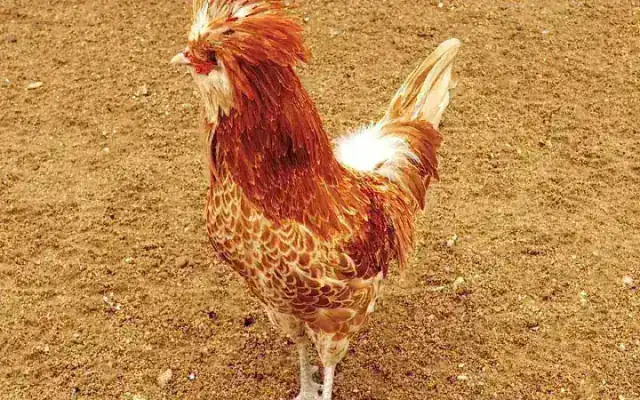
Instantly recognizable by their dramatic, bouffant crest of feathers that crowns their head, the Polish chicken is one of the most celebrated and historic ornamental poultry breeds in the world. While prized primarily for exhibition, heritage preservation, and gentle backyard companionship, Polish chickens also deliver a respectable 180 to 200 medium white eggs per year. Their distinctive skull anatomy—featuring an elevated hemispherical bony protuberance (the vaulted skull)—and restricted peripheral vision demand specialized husbandry, predator protection, and coop management.
Breed History & Genetic Taxonomy: The Crested Vaulted Skull
Breed Definition: The Polish chicken (also historically designated as the Padovana or Dutch Crested) is an ancient European domestic fowl characterized by a dominant cranial gene (Cr) causing cerebral herniation into a vaulted bony skull protuberance, complete absence or severe reduction of the comb (forming a small V-comb), and profuse feather crests.
Despite the English breed name, historical records and genomic mapping indicate that the breed did not originate exclusively in Poland. Ancient depictions dating back to 14th-century Italian paintings and 16th-century Dutch agricultural texts confirm these crested fowl were selectively refined across Western Europe—particularly in the Netherlands, where standardized color varieties (such as the White Crested Black, Golden Laced, and Silver Laced) were perfected.
The biological hallmark of the Polish breed is the vaulted skull mutation. In homozygous Cr/Cr birds, the frontal skull bones develop an opening (fontanelle) with a high dome. During chick development, the brain tissue slightly elevates within this dome, protected by a thin layer of cartilage and unossified bone. Consequently, day-old Polish chicks and growing pullets are unusually susceptible to cranial trauma; a sharp peck on the head from an aggressive flockmate can cause concussion, intracranial hemorrhage, or neurological stunting.
Biological Benchmarks: Egg Yield, Weight & Growth Rates
Below are the standardized biological performance metrics for standard large-fowl Polish chickens based on American Poultry Association (APA) and European Entente Européenne standards:
Husbandry & Care: Vision, Crest Trimming & Predator Safety
The glorious crest that defines the Polish chicken is also its greatest physical vulnerability. The dense cascade of plumage creates severe blind spots, preventing the bird from scanning above or behind them. As a result, Polish chickens are notoriously easy prey for hawks, owls, foxes, and neighborhood dogs when allowed to free-range on open pasture.
Essential Management Protocols:
- Crest Maintenance & Trimming: In backyard homestead settings, owners frequently use blunt surgical scissors to carefully trim the lower feathers obstructing the bird's horizontal line of sight, or use a soft fabric band to loosely tie the crest back during foraging.
- Approach & Audible Warnings: Because Polish chickens cannot see humans or flockmates approaching from the sides, they startle easily and may panic, flailing into wire mesh. Always announce your approach vocally or softly tap the coop door before entering.
- Drinker Engineering: Traditional open bell drinkers saturate the crest when Polish chickens drink. Saturated crests in damp weather promote eye infections (conjunctivitis), coryza, and fungal molds, and can freeze in sub-zero winter temperatures. Always use nipple drinkers or narrow-cup poultry waterers.
- Flock Integration: Polish chickens should not be housed with aggressive, high-pecking commercial breeds (such as Rhode Island Reds or White Leghorns). High-ranking dominant hens frequently target the colorful crest feathers, leading to chronic feather pecking and dangerous cranial trauma. Keep them with docile breeds like Silkies, Cochins, Faverolles, or Sussex.
 zoom_in Click to Enlarge
Related Calculators
Scientific Literature
- American Poultry Association (APA). Standard of Perfection (2023).
- Bartlett, W. (2018). Cranial Morphology and Genetic Divergence in Crested Domestic Fowl. Journal of Poultry Genetics, 44(2), 112-124.
- Entente Européenne d'Aviculture et de Cuniculture (EE) European Breed Standards.