
Bumblefoot in Chickens: Stages 1–5, Non-Surgical Epsom Soaks & Bandaging Guide
Clinical pododermatitis grading, hypertonic magnesium sulfate osmotic therapy, drawing salves, and multi-layer Vetrap stabilization architecture.
Scientific Overview
Bumblefoot (ulcerative pododermatitis) is a chronic, debilitating bacterial infection of the avian plantar metatarsal pad, most commonly initiated by minor mechanical abrasions that become colonized by environmental opportunistic pathogens—chiefly Staphylococcus aureus. Because avian heterophils (the white blood cells responsible for acute inflammation) lack myeloperoxidase enzymes, chickens cannot liquefy pus into fluid drainage like mammals do. Instead, infected inflammatory exudate solidifies into a hard, dense, cheesy, caseous plug or 'kernel.' If left untreated, the infection progressively penetrates through plantar aponeuroses, digital flexor tendons, and synovial sheaths into the metatarsal bones, resulting in systemic sepsis and fatal tenosynovitis. This comprehensive clinical manual provides definitive 1-to-5 stage grading, a proven non-surgical hypertonic Epsom salt protocol, drawing salve applications, and precise bandage engineering.
1. Pododermatitis Staging & Clinical Severity Matrix (Stages 1–5)
Avian Pathology Fact: Chickens have no liquid pus. Because avian white blood cells (heterophils) lack the proteolytic enzymes necessary to dissolve dead cellular debris, purulent exudate dehydrates into a waxy, laminated, yellow-gray caseous core. This biological feature means bumblefoot cannot simply be lanced or drained like a human blister; the caseous core must either be softened and drawn out osmotic-mechanically or surgically excised.
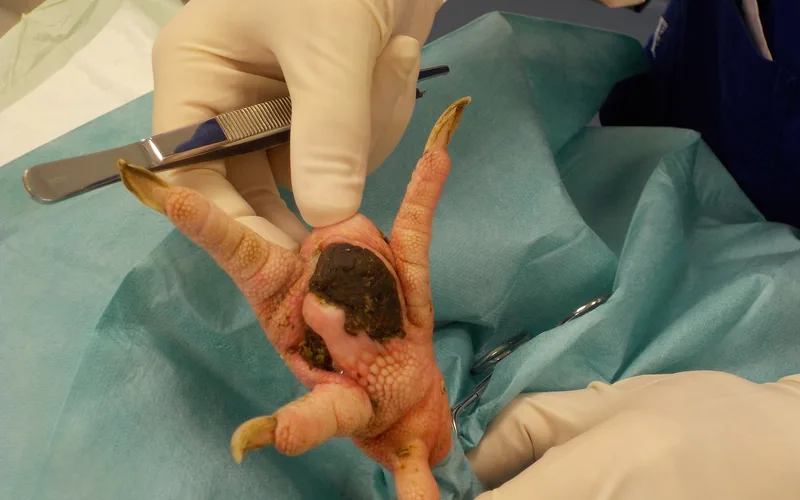
Accurately staging the lesion determines whether home-based conservative care will succeed or whether immediate veterinary surgical referral is mandatory:
| Stage | Clinical Presentation & Lesion Description | Mobility / Lameness | Triage Action Protocol |
|---|---|---|---|
| Stage 1 | Superficial hyperkeratosis, mild pink plantar redness, small smooth callus. No dark scab. | Normal gait; zero limping | Topical moisturizing balm (Bag Balm or coconut oil); sand perches; monitor weekly. |
| Stage 2 | Distinct brown-to-black surface scab 2–5 mm in diameter. Localized pad heat. Epidermis broken. | Slight favor of leg; subtle limp | Daily Epsom salt soaks, povidone-iodine scrub, PRID drawing salve, protective wrap. |
| Stage 3 | Large thick black necrotic scab. Palpable hard swelling inside footpad. Edema visible on dorsal toes. | Moderate lameness; rests foot when standing | Intensive warm soaks, drawing salve, scab softening, non-invasive kernel coaxing, sterile donut bandage. |
| Stage 4 | Massive bulbous swelling. Digital flexor tenosynovitis. Foot is hot and throbbing. Scab deeply rooted. | Severe lameness; hops on one leg; rests on hocks | Veterinary intervention recommended. Deep debridement required under local anesthesia; systemic antibiotics. |
| Stage 5 | Infection invades tarsometatarsal bones (osteomyelitis) and synovial joints. Joint ankylosis/fusion. | Non-weight bearing; recumbency; emaciation | Emergency avian vet care; radiographic assessment; potential surgical limb salvage or humane euthanasia. |

2. Non-Surgical Hypertonic Epsom Soak Protocol
The non-surgical method harnesses the high osmotic pressure of concentrated magnesium sulfate (Epsom salt) to draw interstitial fluid and inflammatory edema out of the footpad while softening the tough, outer keratin rind holding the necrotic core in place:
- Prepare the Osmotic Bath: Fill a clean 7.5-liter (2-gallon) plastic bucket or basin with warm water heated to 38°C to 40°C (100°F to 104°F). Dissolve 50 g to 60 g (1/2 cup) of pure Epsom salt thoroughly. The water depth should cover the foot and shank up to the hock joint (roughly 8 cm to 10 cm / 3 to 4 inches).
- Restrain and Calibrate the Hen: Wrap the hen securely in a soft bath towel, enclosing her wings against her body ("burrito style"). This calms her nervous system, prevents wing flapping, and shields you from accidental scratches. Place her gently into the bath, resting her chest on the rim or a soft towel pad.
- Maintain Soak Duration (15 to 20 Minutes): Hold her in the warm solution for a full 20 minutes. Refresh warm water if the temperature drops below 36°C (97°F). Never leave a bird unattended in water.
- Povidone-Iodine Cleanse: Remove the foot from the soak and gently scrub the scab with a soft toothbrush dipped in a 1:10 dilution of Betadine (povidone-iodine 10%) or chlorhexidine 2%. Rinse with sterile saline.
3. The Drawing Salve Phase: PRID, Ichthammol & Medical Manuka Honey
After drying the foot thoroughly with a sterile gauze pad, apply a thick layer of a therapeutic drawing agent directly over the softened black scab:
- PRID Drawing Salve or 20% Ichthammol: Ichthammol is a dense, black ammoniated shale oil ointment with mild local analgesic, anti-inflammatory, and strong osmotic drawing properties. Slather a generous pea-sized dollop directly over the center of the scab.
- Medical Manuka Honey (UMF 15+ / MGO 500+): If ichthammol is unavailable, medical-grade Manuka honey produces extraordinary clinical outcomes. Its high osmolarity pulls fluid and bacteria out of the deep core, while glucose oxidase enzymes continuously generate microscopic levels of bactericidal hydrogen peroxide against Staphylococcus aureus.
Internet videos frequently show keepers slicing deep into live chicken footpads with scalpel blades. In avian veterinary clinics, deep debridement requires local digital nerve blocks (lidocaine), sterile tourniquets to manage profuse arterial bleeding, and surgical cautery. Attempting this without anesthesia causes extreme pain, severe blood loss, and lacerates digital flexor tendons running mere millimeters beneath the skin. In 90% of Stage 2 and 3 cases, persistent Epsom soaks and drawing wraps will loosen the scab completely by Day 4 to Day 6, allowing the hardened caseous plug to slide out cleanly with gentle fingertip pressure.
4. Bandaging Architecture: The Donut Pressure-Relief Wrap
A bandage in a chicken coop faces mud, manure, moisture, and scratching forces. To ensure the treatment stays in contact with the wound and relieves walking pressure on the lesion, apply this multi-layer wrap:
- The Primary Sterile Contact Layer: Apply a sterile 5 cm × 5 cm (2 in × 2 in) non-stick Telfa pad coated with triple antibiotic ointment (without pramoxine or pain relievers, which are toxic to birds) directly over the drawing salve.
- The Pressure-Relief Donut Pad: Roll a piece of sterile gauze into a small ring or "donut" with an opening sized to match the scab diameter. Place the donut around the wound. When the hen steps down, her body weight is transferred to the surrounding ring rather than pressing directly onto the inflamed infected plug.
- Figure-Eight Cohesive Wrap (Vetrap): Using a 2.5 cm (1-inch) strip of cohesive elastic wrap (Vetrap), weave diagonally between the front three toes, under the plantar pad, and around the shank above the spur. Do not pull too tightly, as cutting off digital blood supply leads to gangrene and toe loss. The wrap should feel snug and secure, allowing toes to flex and grip freely.
- Waterproof Sole Barrier: Press a small square of clean duct tape directly onto the bottom sole of the Vetrap bandage. This prevents coop moisture and wet feces from wicking through into the sterile dressing. Change the entire bandage every 24 to 48 hours.
5. Environmental Eradication: Perch Physics, Drop Heights & Bedding
Bumblefoot is an environmental management disease. Birds with healthy feet do not develop Staphylococcus infections unless husbandry conditions create recurrent plantar micro-tears:
- Perch Geometry (The 2x4 Rule): Always install 5 cm × 10 cm (2 in × 4 in) timber perches with the flat, wide 10 cm face positioned upward. Sand down all corners to a smooth, rounded profile (3 mm to 5 mm radius). Round dowels, narrow metal pipes, and rough-sawn dimensional lumber focus all downward pressure on the metatarsal pad, causing ischemic pressure ulcers.
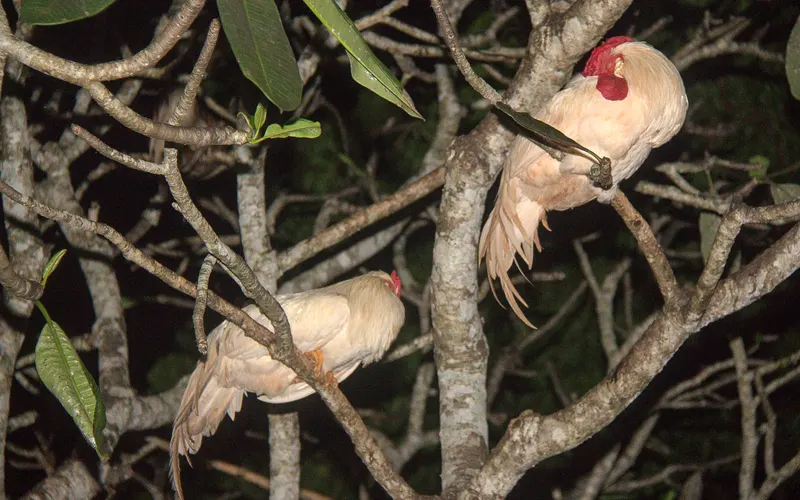
- Maximum Roost Drop Elevation: In heavy breeds (such as Australorps, Orpingtons, and Brahmas weighing over 3.0 kg / 6.6 lbs), launching off roosts higher than 45 cm to 60 cm (18 to 24 inches) onto thin bedding creates severe mechanical impact trauma that fractures the plantar epidermis. Keep perches low or provide graduated staging ladders.
- Cushioned Impact Bedding: Maintain a minimum 10 cm to 15 cm (4 to 6 inches) layer of clean, dry wood shavings, hemp bedding, or coarse dry sand beneath roosting rails to absorb landing forces. For comparison of bedding cushioning properties, review our Chicken Coop Bedding Comparison.
For severe flock lameness diagnostics or to distinguish bumblefoot from viral nerve paralysis, see our Marek's Disease Atlas Guide and Bumblefoot Pathology Reference.
Bumblefoot in Chickens: Stages 1–5, Non-Surgical Epsom Soaks & Bandaging Guide — Frequently Asked Questions
Add Poultria to your Google Preferred Sources
Follow Poultria on Google so our peer-reviewed poultry veterinary research, commercial breed genetics, and agronomic field guides are highlighted and cited first in your Google Search, Top Stories, and AI Overviews.