Sour Crop vs Impacted Crop in Chickens: Clinical Signs, Emptying & Antifungals
Ingluvies anatomy, morning crop palpation triage, aspiration hazards of vomiting maneuvers, physical massage techniques, and veterinary antifungal therapy.
Scientific Overview
The avian crop (ingluvies) is an anatomical marvel: an elastic muscular diverticulum situated on the right ventral margin of the thoracic inlet, functioning as a food storage and saliva-softening chamber before feed passes into the proventriculus and muscular gizzard. However, because birds ingest whole grains, coarse grasses, and foreign fibers without teeth, the crop is prone to two distinct yet frequently confused medical emergencies: Impacted Crop (mechanical stasis caused by fibrous blockages) and Sour Crop (ingluvitis caused by fungal dysbiosis, predominantly Candida albicans). Misidentifying an impacted mass as sour crop leads to useless antifungal therapy, while performing aggressive vomiting maneuvers on an impacted or fluid-distended bird carries a fatal risk of tracheal aspiration. This veterinary guide details differential morning palpation, hydration therapy, crop massage techniques, safe nystatin protocols, and prevention.
1. Avian Ingluvies Anatomy: Mechanics of the Upper Digestive Tract
Anatomical Positioning: The crop (ingluvies) is positioned on the right side of the hen's breast, immediately anterior to the wishbone (furcula). Food swallowed down the cervical esophagus enters the crop through an upper esophageal sphincter. The crop provides neither acid digestion nor mechanical grinding; it functions purely as a biological expansion pouch where salivary amylase and moisture soften hard kernels before metered peristaltic contractions push the bolus onward to the proventriculus.
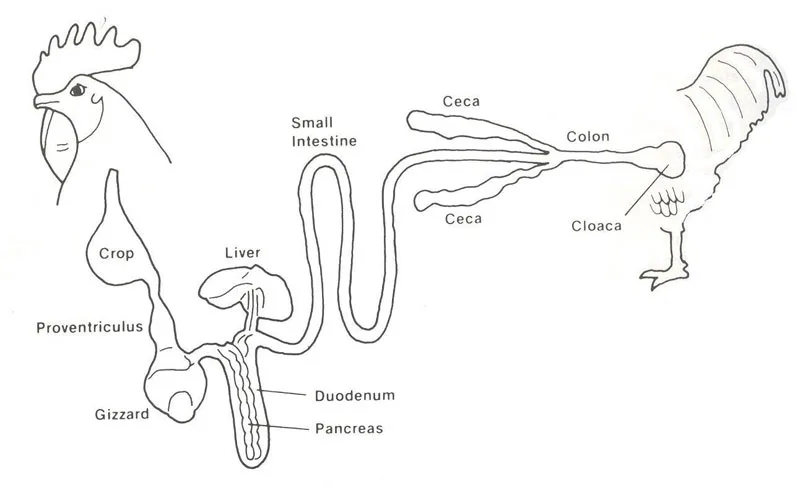
Because the crop wall consists of relatively thin smooth muscle fibers lined with stratified squamous epithelium, severe chronic overfilling or mechanical blockages can permanently stretch these elastic fibers. This irreversible stretching results in a condition termed pendulous crop, where the pouch sags below the thoracic inlet, losing its neuromuscular peristaltic ability to push food upward and into the stomach forever.
2. Differential Diagnosis: Sour Crop vs. Impacted Crop Palpation
Veterinary treatment depends entirely on identifying the pathology accurately before initiating physical therapy. Palpate the right breast gently between your thumb and fingertips at dawn:
| Clinical Metric | Impacted Crop (Mechanical Stasis) | Sour Crop (Candida Ingluvitis) | Pendulous Crop (Flaccid Sac) |
|---|---|---|---|
| Tactile Feel (Morning) | Firm, hard, solid, or dense like a dough ball | Squishy, fluid-filled, balloon-like, sloshing | Drooping, baggy, pendulous pouch low on chest |
| Oral Odor (Breath) | Neutral or faint fermented grain smell | Putrid, foul, sour yeast, rotten vinegar | Mildly sour or stale fermenting odor |
| Primary Etiology | Long stringy grass, wood shavings, twine, lack of grit | Candida albicans fungal overgrowth, antibiotics | Stretched muscle wall from chronic impactions |
| Physical Demeanor | Hungry, pecking at ground, neck twisting | Depressed, hunched, head tucked, inappetence | Active but chronically underweight |
| Primary Treatment | Warm hydration, massage, stool softeners | Antifungal (Nystatin), acidification, fasting | Crop bra/supporter sling, smaller meal portions |
3. The Impacted Crop Protocol: Lubrication, Massage & Hydration
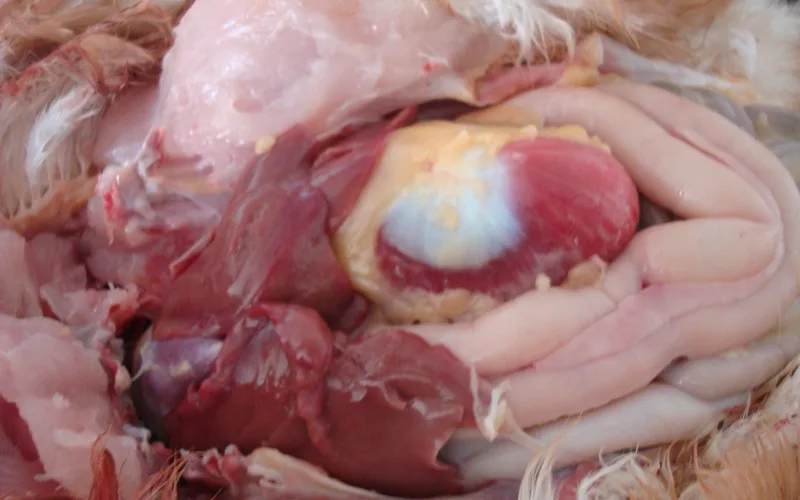
If the crop is firm and packed with fibrous material, follow this staged non-surgical conservative therapy over 24 to 36 hours:
- Immediate Food Isolation: Isolate the bird in a clean, quiet recovery crate bedded with puppy pads or clean towels. Do not use wood shavings or straw, as a hungry, impacted hen will continue ingesting bedding, compounding the blockage. Withhold all solid feed for 12 to 24 hours.
- Oral Lubrication Administration: Administer 10 mL to 15 mL (0.3 to 0.5 fl oz) of lukewarm water mixed with 1 mL of food-grade virgin coconut oil, olive oil, or docusate sodium (stool softener) via a needleless syringe. Place the syringe tip over the tongue aiming toward the right side of the throat; go slowly to ensure she swallows naturally without aspirating into the tracheal glottis.
- Circular Upward Kneading Massage: Support the hen's back against your body with one arm. Cup the impacted mass with your opposite hand. Gently, rhythmically knead the ball in circular motions for 5 to 7 minutes, working from the lower base upward toward the neck. The objective is to force the warm liquid through the tightly wound fibrous grass plug, breaking the outer layers apart into small, passable chunks.
- Repeat Protocol Every 3 to 4 Hours: Perform the lubrication and massage routine three to four times throughout the day. In 80% of early impactions, the mass softens, fragments, and gradually passes through into the proventriculus overnight.
4. The Sour Crop Protocol: Acidification, Antifungals & Biofilm Disruption
Sour crop is a fungal pathology where Candida albicans colonizes the mucosal epithelium, creating thick white pseudomembranes that inhibit muscular motility and ferment carbohydrates into acetic acid and alcohol. Treatment requires active biochemical suppression:
Organic Acidification Therapy
Candida yeasts thrive in neutral-to-alkaline stasis. Acidifying the crop lumen suppresses fungal cellular division.
- Apple Cider Vinegar (ACV): Add 10 mL to 15 mL per liter (1 tbsp per quart) of drinking water for 3 to 5 days. Use only unpasteurized ACV containing "the mother".
- Water Sanitation: Acidified water must be served strictly in plastic or ceramic waterers; acids leach toxic heavy metals from galvanized galvanized zinc fonts.
Veterinary Antifungals (Nystatin)
For severe sour crop with putrid breath and profound squishiness, acidifiers alone will fail. Target with prescription antimycotics.
- Dosing: Oral Nystatin at 100,000 units/kg body weight twice daily for 5 to 7 days.
- Administration: Give on an empty crop so the liquid coats the fungal plaque directly.
- Alternative: Acidified Copper Sulfate (1 g per 2 liters / 0.5 tsp per gallon) for 3 days as an antimicrobial astringent under vet guidance.
During sour crop treatment, offer zero grains, whole seeds, scratch, or bread. Feed exclusively small portions of plain probiotic Greek yogurt, soft scrambled eggs, or moist starter mash mixed with poultry electrolyte vitamins until normal crop emptying rhythm is restored.
5. Agronomic Prevention: Fiber Lengths, Granite Grit & Run Engineering
True flock resilience lies in eliminating the management mistakes that induce crop stasis in the first place:
- Mowing Physics (The Long Grass Danger): Never dump long, mature lawn clippings into a chicken run. Hens peck avidly at cut green clumps. Because cut grass strands are 10 cm to 25 cm (4 to 10 inches) long, they quickly ball up like a bird's nest inside the crop. If feeding greens, chop them finely into pieces under 2 cm (0.8 inches).
- Appropriate Particle Size Granite Grit: Supply free-choice insoluble granite grit (#2 grower size for pullets, #3 coarse layer size for adult hens) in a dedicated weather-protected container. Soluble calcium (oyster shell or limestone) dissolves in stomach acid and provides zero physical grinding friction in the gizzard.
- Plastic Twine & Hardware Inspection: Regularly inspect pasture runs and compost zones for baling twine, landscaping netting, or polypropylene strings. Chickens frequently swallow string, causing fatal gastrointestinal linear foreign-body strangulations requiring emergency ingluviotomy.
To explore detailed nutritional guidelines and understand safe kitchen scrap protocols, review our What Can Chickens Eat? Master Directory or our Laying Hen Feed Guide.
Sour Crop vs Impacted Crop in Chickens: Clinical Signs, Emptying & Antifungals — Frequently Asked Questions
Add Poultria to your Google Preferred Sources
Follow Poultria on Google so our peer-reviewed poultry veterinary research, commercial breed genetics, and agronomic field guides are highlighted and cited first in your Google Search, Top Stories, and AI Overviews.