
Black Australorp Chickens: Egg World Record Breed & Care
Complete flock manual on egg laying curves, glossy black plumage, docile temperament, and coop care.
Scientific Overview
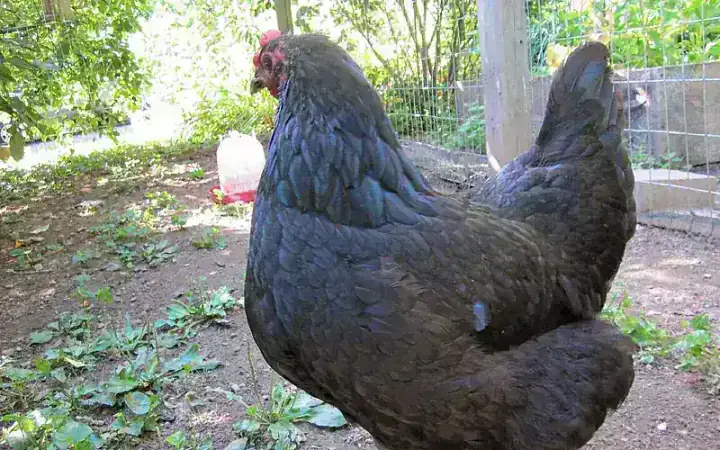
Developed in Australia during the 1920s from imported British Black Orpingtons, the Australorp holds legendary status in poultry history for its world-record egg laying feats. Australian breeders crossed Orpington stock with Minorca, White Leghorn, and Langshan genetics to create an athletic, productive bird that retained the Orpington's cold-hardiness and calm disposition while dramatically boosting egg laying speed. The breed shot to worldwide fame when an Australorp hen laid an astounding 364 eggs in 365 days under official test conditions. Today, the Black Australorp is celebrated worldwide as the premier dual-purpose heritage layer, combining prolific brown egg yields, beetle-green iridescent plumage, deep breast meat, and exceptionally sweet, docile temperaments.
1. Australian Breed Origins & Conformation Standards
The name 'Australorp' is a portmanteau of Australian Black Orpington. While British Orpingtons were bred primarily for massive, loose show feathering, Australian agriculturalists selected strictly for egg productivity, tight plumage, and vigor.
Admitted to the American Poultry Association Standard in 1929, the Australorp is recognized exclusively in its glossy Black variety in the US, though Australian standards also recognize Blue and White varieties.
| Conformation Trait | Standard Male (Cock) | Standard Female (Hen) |
|---|---|---|
| Mature Weight | 8.5 lbs (3.9 kg) | 6.5 lbs (2.9 kg) |
| Plumage Appearance | Intense jet-black with shimmering beetle-green sheen in sunlight | Uniform glossy black, tight feathering without excessive fluff |
| Comb & Head Features | Medium upright single comb, 5 regular points, bright red | Neat single comb, smooth texture, bright red wattles |
| Eyes | Dark brown to black iris with alert expression | Dark brown to nearly black |
| Shanks & Soles | Dark slate or black shanks with distinctive pinkish-white soles | Dark slate shanks with pinkish-white bottom of feet |
A key distinguishing standard trait of the true Australorp is the bottom of the feet: while shanks are slate-black, the footpads and toe bottoms are clean pinkish-white. This distinguishes them from breeds like the Jersey Giant, which feature yellow foot soles.
2. Historic Egg Laying Capacity & Production Economics
While the historic Australian record of 364 eggs in a single year represents exceptional individual performance under continuous artificial lighting, standard backyard Australorps routinely deliver 250 to 300 large tinted brown eggs per year under ordinary management.
Australorp pullets come into production briskly at 20 to 22 weeks of age. Their eggs grade as Large to Extra Large (2.1 to 2.4 oz or 60–68 grams), with smooth shell texture and high albumen height. Test your flock's daily egg production with the Hen-Day Egg Production Calculator.
To forecast egg income and feed overhead across your flock's lifespan, use the Backyard Egg Profitability Calculator.
3. Behavior, Flock Harmony & Free-Range Instincts
Black Australorps are renowned for their calm, gentle, and quiet temperament. They rarely exhibit bully behaviors in mixed flocks and frequently occupy the middle-to-upper social ranks without aggressive pecking.
- Approachability: Australorps become remarkably tame when raised with gentle handling. Hens are docile enough for small children to carry, making them premier family birds.
- Foraging Skills: Despite their quiet coop behavior, Australorps are athletic foragers that cover pasture ground thoroughly to harvest bugs, earthworms, and fresh greens.
- Gentle Roosters: Australorp roosters are attentive guardians who call hens to food and sound the alarm for hawks, but they seldom display unprovoked human aggression.
- Urban Coop Suitability: Because hens rarely squawk loudly and cackle softly after laying, they are popular choices for suburban settings with close neighbors.
4. Housing Setup, Roosting Needs & Weather Hardiness
Providing the right housing safeguards Australorps from seasonal weather extremes:
- Space Requirements: Plan on 4 sq ft (0.37 sq m) of dry floor space per bird indoors, and 10 to 12 sq ft (0.93–1.1 sq m) in an outdoor run. Calculate coop capacities using the Coop Housing Calculator.
- Roost Structure: Use 2x4 lumber positioned wide side up, 18 to 24 inches (45–60 cm) above the floor. Avoid high perches that force heavy hens to make steep landings.
- Cold Hardiness: Australorps thrive in freezing winter conditions. Their tight feather coat seals in body heat far more efficiently than loose fluffy plumage. Ensure cross-ventilation near coop peaks to remove moisture without creating direct drafts over perches.
- Heat Precautions: Because solid black plumage absorbs radiant solar energy rapidly, provide deep shade, open runs, and fresh cold water when summer temperatures exceed 88°F (31°C). Check heat stress levels with the Poultry Heat Stress (THI) Calculator.
5. Health Vulnerabilities & Nutritional Needs
Australorps are robust birds with high natural vitality. Keeping them productive requires attentive basic care:
Because Australorps lay 5 to 6 eggs per week over sustained periods, their calcium turnover is high. Provide free-choice coarse oyster shell in a separate dispenser. Monitor feed intake and nutrient balancing with the Layer Feed Intake Calculator.
Solid black birds can overheat quickly in direct midday sun. In hot climates, install shade cloths, misting lines, or plant deciduous shade trees around outdoor pens.
Australorps retain a gentle maternal broody instinct. Roughly one in four hens will decide to sit on a clutch in late spring. If chicks are desired, they make outstanding mothers; if not, break broody hens promptly in an elevated wire-bottom cage to restart their laying cycle.
6. Summary & Homestead Verdict
If your goal is to harvest steady cartons of large brown eggs from a calm, friendly, and stunningly beautiful bird, the Black Australorp is one of the top dual-purpose heritage breeds in the world. Their combination of heavy laying, cold resistance, docile nature, and good meat salvage value makes them a centerpiece for any backyard or homestead flock.
 zoom_in Click to Enlarge
Related Calculators
Scientific Literature
- American Poultry Association. (2023). The American Standard of Perfection. Burgettstown, PA.
- Gerrard, N. (2012). The History and Development of the Australian Orpington (Australorp). Poultry Heritage Society.
- Australian Poultry Standards (2nd ed.). (2011). Victorian Poultry Fanciers Association.