
Cobb 500 Broiler Management Guide
A comprehensive scientific guide to Cobb 500 commercial broiler performance objectives, low-density dietary formulation tolerance, and carcass cut-up yields.
Scientific Overview
A comprehensive scientific guide to Cobb 500 commercial broiler performance objectives, low-density dietary formulation tolerance, heat hardiness, and carcass cut-up yields. Benchmark daily growth curves and cumulative feed conversion standards.
1. Cobb 500 Genetic Heritage & Global Market Strategy
The Cobb 500 is one of the world's most popular meat chicken breeds. In everyday terms: it is famous for eating cheaper, lower-protein feed while still growing fast, handling hot summer weather better, and producing larger breast meat fillets with strong legs.
Technical Definition: The Cobb 500 is the premier commercial meat chicken strain bred by Cobb-Vantress (a subsidiary of Tyson Foods). Renowned for operations seeking the lowest cost of live weight gain, the Cobb 500 is genetically selected for high breast meat deboning yield, exceptional feed conversion on lower-cost diets, and robust survivability in high-temperature environments.
Unlike competing breeds that require high dietary amino acid densities to maintain daily gain, the Cobb 500 demonstrates remarkable metabolic efficiency on lower crude protein diets. By synthesizing muscle tissue with lower maintenance energy, chicken integrations using Cobb 500 can formulate feeds with lower soybean meal inclusions, reducing feed cost per kilogram of live bird by 3% to 6%.
Cobb 500 meat chickens exhibit a distinctive broad breast conformation with a low center of gravity. This anatomical build confers greater leg strength and lower incidence of bone and walking issues when birds are reared to heavy market weights (2.8 to 3.4 kg).
2. Cobb 500 Performance Benchmarks: Live Weight & Feed Intake by Day
Official Cobb-Vantress mixed-sex broiler performance objectives under standard management and modern dietary programs:
| Age (Days) | Live Weight (g) | Daily Gain (g/day) | Daily Feed (g/bird) | Cumulative Feed (g) | Cumulative FCR |
|---|---|---|---|---|---|
| Day 1 | 42 g | — | 12 g | 12 g | 0.80 |
| Day 7 | 190 g | 31 g | 34 g | 168 g | 0.88 |
| Day 14 | 470 g | 52 g | 66 g | 520 g | 1.10 |
| Day 21 | 975 g | 81 g | 112 g | 1,210 g | 1.24 |
| Day 28 | 1,620 g | 99 g | 159 g | 2,180 g | 1.34 |
| Day 35 (Market) | 2,190 g (2.19 kg) | 105 g | 196 g | 3,360 g | 1.53 |
| Day 42 (Heavy) | 2,910 g (2.91 kg) | 110 g | 228 g | 4,920 g | 1.69 |
Conformation & Deboning Advantage: While the Cobb 500 averages approximately 50 grams lower body weight than the Ross 308 at Day 35, its ready-to-cook deboning yield is superior, achieving 23.5% to 25.0% white breast meat yield as a percentage of eviscerated carcass weight.
3. Low-Cost Nutrition Strategy: Formulation Flexibility in Hot Climates
One of the defining advantages of the Cobb 500 is its physiological tolerance of lower crude protein diets. High crude protein diets generate elevated heat increment of feeding (specific dynamic action), which increases core body temperature when birds digest amino acids.
- Synthetic Amino Acid Supplementation: In hot climates, Cobb 500 diets can be formulated down to 18.0%–18.5% Crude Protein in the finisher phase by balancing synthetic L-Lysine, DL-Methionine, L-Threonine, and L-Valine. This lowers metabolic heat production and minimizes mortality during summer heat waves.
- Calorie-to-Protein Ratio: Maintaining an optimal ME:CP ratio (e.g., 165:1 in grower, 180:1 in finisher) ensures that birds deposit lean muscle rather than excessive abdominal fat pads.
4. Environmental Control & Ventilation Management for Cobb 500
Cobb 500 broilers respond exceptionally well to wind-chill cooling in tunnel-ventilated houses. Key environmental parameters include:
- Airspeed Target: Maintain air velocity between 2.5 m/s and 3.0 m/s across the birds when ambient temperatures exceed 28°C (82°F).
- Static Pressure Inlets: Keep house negative static pressure between 25 and 35 Pascals (0.10 to 0.14 inches water column) during minimum ventilation to ensure incoming cold air shoots to the roof apex and mixes with warm thermal air before contacting birds.
- Litter Moisture Management: Keep litter moisture below 25% using timed exhaust cycles to prevent pododermatitis (footpad lesions) and ammonia burns.
Evaluate Cobb 500 vs Ross 308
Review the comprehensive side-by-side technical comparison of both dominant broiler lines.
Read Ross 308 vs Cobb 500 Manual →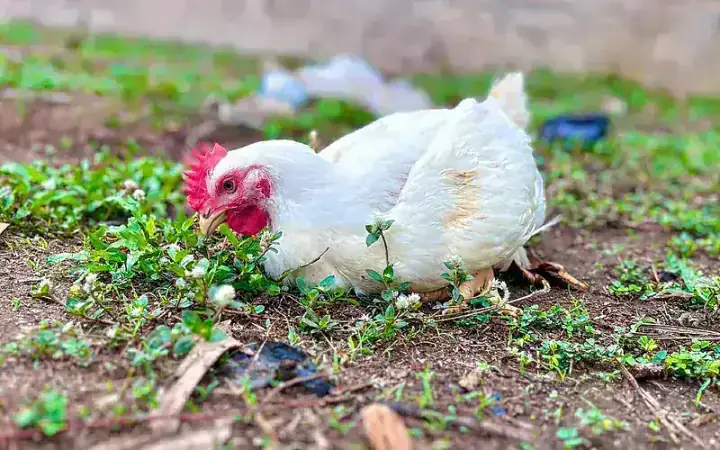 zoom_in Click to Enlarge
Related Calculators
Scientific Literature
- Cobb 500 Broiler Performance Objectives (Cobb-Vantress, 2022).
- Cobb 500 Management Guide (Cobb-Vantress Technical Services).
- Commercial Broiler Nutrition & Genetics (World's Poultry Science Journal).