
Hubbard Classic Broilers: Rustic Tropical Meat Strain Guide
Complete management manual on Hubbard Classic genetics, heat tolerance, rustic vigor, and open-sided housing.
Scientific Overview
Renowned throughout the tropical and subtropical poultry regions of the world, the Hubbard Classic is celebrated as the most robust, resilient, and climate-adaptable commercial meat chicken in modern agriculture. Engineered by Hubbard to deliver dependable performance in challenging environmental conditions, the Hubbard Classic thrives where high-density environmental control is unavailable—including open-sided naturally ventilated housing, hot and humid tropical zones, and variable rural farm infrastructures across Africa, South Asia, and the Middle East. Featuring a strong skeletal frame, outstanding cardiovascular resilience, robust appetite in warm weather, and excellent digestive efficiency on regional feed ingredients, the Hubbard Classic offers an unbeatable combination of high livability, heavy carcass yield, and steady feed conversion. This guide details growth targets, tropical heat stress management, minimum ventilation, and flock husbandry.
1. Breeding Pedigree, Conformation & Tropical Hardiness
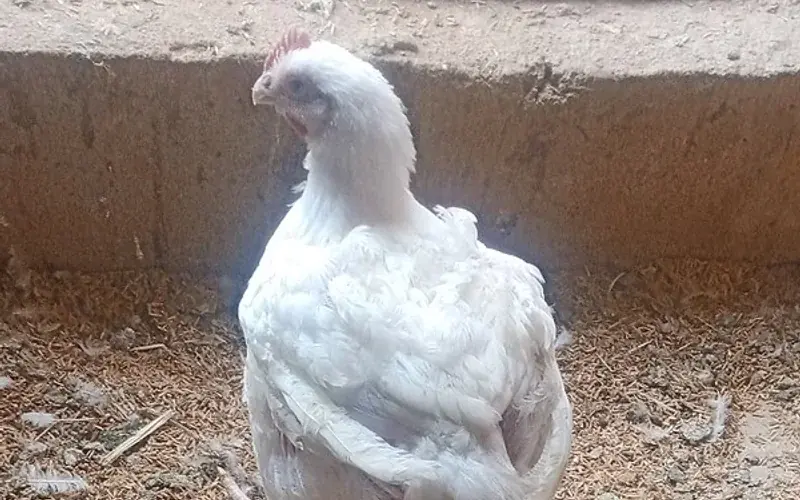
The Hubbard Classic was developed through targeted genetic selection emphasizing rustic vigor, strong leg bones, and cardiovascular capacity. The bird features a broad, muscular frame carried upright on sturdy yellow shanks:
| Flock Age (Days) | Live Weight (lbs / kg) | Daily Feed Intake (g) | Cumulative FCR | Tropical Performance Trait |
|---|---|---|---|---|
| Day 7 | 0.40 lbs (180 g) | 29 g/day | 0.95 | Active feeding response even in warm weather |
| Day 21 | 2.05 lbs (930 g) | 98 g/day | 1.26 | Heavy bone mineralization resisting heat lameness |
| Day 35 | 4.55 lbs (2,065 g) | 166 g/day | 1.50 | Outstanding livability (>96%) in tropical conditions |
| Day 42 | 5.95 lbs (2,700 g) | 198 g/day | 1.63 | Dressed Yield: 73.5%; Whole-bird market standard |
Plumage is solid white, shanks and skin are rich yellow, and birds possess strong, well-formed single combs. Their wide ribcage provides ample space for lungs and heart, reducing mortality spikes during hot summer afternoons.
2. Economic Returns, FCR & Tropical Performance
In hot regions, fast-growing broilers often suffer reduced appetite, leading to extended growing cycles. The Hubbard Classic maintains a hearty feed drive even when ambient temperatures reach 90°F to 95°F (32°C–35°C), achieving an FCR of 1.49 to 1.54 at 35 days.
Calculate your flock's live feed efficiency with the Feed Conversion Ratio (FCR) Calculator and project production revenue using our Broiler Turn ROI Simulator.
3. Nutrition & Heat Mitigation Feeding Strategies
Managing broilers in warm climates requires nutritional strategies that minimize metabolic heat production:
- Dietary Fat vs Carbohydrates: Formulate rations using vegetable oils (fats) to replace a portion of dietary starch. Fat digestion produces significantly less metabolic heat increment than carbohydrate fermentation, helping broilers stay cooler internally. Formulate feeds with the Feed Formulation Tool.
- Midnight Flash Feeding: In hot regions, provide 1 to 2 hours of light during the cool night hours (midnight to 2:00 AM) to allow birds to eat and drink without heat stress.
- Electrolyte Water Supplementation: When temperatures exceed 90°F (32°C), add potassium chloride and sodium bicarbonate to drinking lines to counter respiratory alkalosis caused by heavy panting. Check heat stress risks with the Poultry Heat Stress (THI) Calculator.
4. Housing Setup, Open-Sided Barns & Air Movement
Hubbard Classic broilers excel in naturally ventilated open-sided poultry houses:
- Air Velocity & Circulation Fans: Install high-volume ceiling circulation fans over the birds to maintain air speeds of 400 to 500 feet per minute (2.0–2.5 m/s), creating a cooling wind-chill effect. Calculate airflow with the Ventilation Fan Calculator.
- Stocking Density in Warm Climates: Lower stocking density to 5.0 to 5.5 lbs/sq ft (25–27 kg/sq m) during hot summer seasons to allow adequate body heat dissipation. Plan floor space with the Coop Space Calculator.
5. Health Maintenance & Disease Resilience
Key veterinary and biosecurity protocols include:
The Hubbard Classic exhibits strong cardiac stroke volume and lung capacity, dramatically reducing sudden death syndrome and ascites when weather conditions fluctuate.
Warm, humid tropical litter accelerates coccidia oocyst sporulation. Maintain strict drinker maintenance and implement rotating coccidiostat programs in feed.
6. Summary: The Tropical Meat Champion
For poultry producers farming in hot, humid, or developing agricultural regions, the Hubbard Classic provides the gold standard in livability, rustic hardiness, and dependable meat production, delivering profitable flocks turn after turn.
6. Practical Tropical Decision Guide & Open-Sided House Management
Managing the Hubbard Classic in warm, tropical, or naturally ventilated barns requires specific husbandry adjustments:
In open-sided houses with corrugated metal roofing, solar radiation can heat ceiling panels to over 130°F (55°C), radiating intense heat down onto the birds. Installing reflective foil insulation beneath metal sheets or planting green pasture grass around the perimeter reduces ambient barn heat by 5°F to 8°F (3°C–5°C).
Chickens refuse to drink water when its temperature rises above 86°F (30°C). In hot climates, overhead water tanks and distribution pipes exposed to the sun can deliver boiling water to nipples. Paint supply tanks white, bury pipes underground, and flush drinker lines twice daily during afternoon heat peaks to deliver cool water.
Never run feed lines during the hottest hours of the day (noon to 4:00 PM). The metabolic heat produced by digesting feed peaks 3 to 4 hours after eating; if this digestive peak coincides with high afternoon temperatures, heavy broilers suffer acute heat collapse. Run feeders early in the morning and during evening cool-down.
 zoom_in Click to Enlarge
Related Calculators
Scientific Literature
- Hubbard Breeders. (2023). Hubbard Classic Broiler Management Guide for Warm Climates.
- Daghir, N. J. (2008). Poultry Production in Hot Climates (2nd ed.). CAB International.
- Aviagen Group. (2022). Tropical Broiler Husbandry & Environmental Management.