
Hy-Line W-36 Chickens: Commercial White Layer Industry Guide
Complete management manual on America's top commercial white egg layer, livability, feed intake, and shell strength.
Scientific Overview
Bred by Hy-Line International in West Des Moines, Iowa, the Hy-Line W-36 is America's undisputed commercial white egg layer benchmark. Recognized worldwide for producing the lowest feed cost per dozen eggs produced, the W-36 is the most widely housed commercial white layer in the United States and Latin America. Developed through decades of quantitative genetic selection on pure White Leghorn pedigree lines, the W-36 combines exceptional flock livability (>95% through 72 weeks), calm cage and aviary manners, outstanding late-cycle shell strength, and uniform chalk-white eggs that command premium grading in supermarket cartons and liquid breaking facilities. This guide covers Hy-Line W-36 flock benchmarks, feed conversion curves, brooding management, and housing parameters.
1. American Breeding Pedigree & Physical Standards
Founded in 1936 by Henry A. Wallace (later Vice President of the United States), Hy-Line was the world's first company to produce hybrid chicks using modern genetic inbreeding and hybridization techniques. The Hy-Line W-36 represents the pinnacle of this research:
| Flock Performance Metric | Target Benchmark (to 72 Weeks) | Extended Performance (to 90 Weeks) |
|---|---|---|
| Mature Body Weight | 3.4–3.6 lbs (1.54–1.64 kg) | Remarkable feed-saving light body frame |
| Cumulative Eggs per Hen Housed | 320–330 eggs | 405–420 eggs (to 90 weeks) |
| Peak Hen-Day Production | 94% to 96% | Reached at 26–28 weeks of age |
| Livability to 72 Weeks | 95.0% to 97.0% | Industry-leading flock resilience |
| Average Egg Weight | 2.21 oz (62.8 grams) | Pristine chalk-white porcelain shells |
| Daily Feed Consumption | 3.4–3.6 oz (96–102 grams/day) | Lowest feed consumption of any major commercial layer |
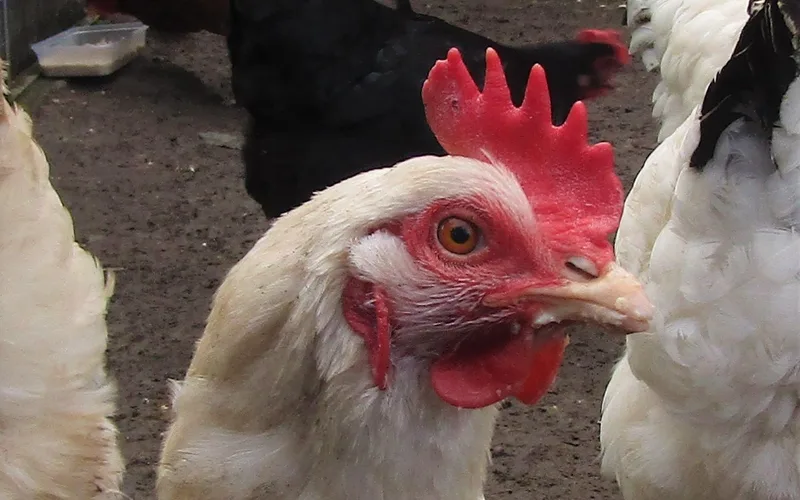
Hens feature pure white plumage, white earlobes, and a bright red single comb that flops smoothly to one side during peak lay. Their legs and beaks are clean yellow, turning pale white as carotenoids are mobilized into egg yolks.
2. Economic Supremacy & Feed Efficiency Modeling
The Hy-Line W-36 is renowned for consuming the least feed of any commercial layer in the world: an average of just 96 to 102 grams (3.4 to 3.6 oz) per day. Across a commercial flock of 100,000 hens, this 10-gram daily saving per bird translates into hundreds of tons of feed saved annually.
Model your flock's feed conversion with the Feed Conversion Ratio (FCR) Calculator and monitor live laying percentages using the Hen-Day Egg Production Calculator.
Late-Lay Shell Strength & Processing Value
A major advantage of the W-36 is its ability to maintain thick, crack-resistant shells beyond 70 weeks of age. While older hens typically produce thinner shells, Hy-Line geneticists selected for superior calcium transport in the shell gland.
This results in fewer egg cracks on conveyor belts and high recovery rates in modern automated egg processing facilities.
3. Nutritional Phasing & Dietary Balance
Because W-36 hens consume small amounts of feed, the nutrient concentration of each mouthful must be precisely calibrated:
- Protein & Amino Acids: Formulate rations to deliver 17.0 to 17.5% crude protein, with a minimum daily intake of 420 mg digestible methionine and 840 mg digestible lysine per hen. Check requirements with the Layer Feed Calculator.
- Calcium Strategy: Supply 4.0 to 4.2 grams of calcium daily, ensuring that at least 65% is provided as coarse 2–4 mm limestone grit to support nocturnal eggshell calcification.
- Feed Texture: Use uniform crumbles or coarse mash with minimal fine dust to stimulate steady intake in hot weather.
4. Housing Setup, Aviary Management & Photoperiods
Hy-Line W-36 hens are calm and adaptable across diverse housing systems:
- Cage-Free Aviary Readiness: Unlike historic flighty Leghorns, the modern W-36 is bred for calm, sociable behavior. Hens navigate multi-tier aviaries smoothly, utilizing nesting boxes consistently. Plan housing with the Coop Space Calculator.
- Photoperiod Stimulation: Step up lighting from 12 hours during rearing to 14–16 hours at point-of-lay (week 18 to 20). Maintain 20 to 30 lux light intensity at the feed trough.
5. Health Maintenance & Management Protocols
Key biosecurity and flock management protocols include:
Achieving peak egg production requires reaching a uniform body weight (at least 85% uniformity) at 16 weeks of age. Weigh pullets weekly during the grow-out phase to ensure frame development targets are met.
The W-36 handles warm climates well due to its light body and large single comb. In extreme heat above 90°F (32°C), provide tunnel ventilation, midnight flash feedings, and electrolytes in water lines. Check heat stress risks with the Poultry Heat Stress (THI) Calculator.
6. Summary: America's Premier Commercial Layer
The Hy-Line W-36 remains the industry gold standard for commercial white egg production in the Americas. With the lowest feed consumption, exceptional livability, and reliable late-cycle shell strength, it provides unbeatable economic returns for modern commercial egg producers.
6. Practical Egg Quality Troubleshooting & Calcium Transit Dynamics
Maintaining high shell strength and internal albumen quality in Hy-Line W-36 flocks through 90 weeks requires strict attention to gastrointestinal transit dynamics:
A laying hen mobilizes approximately 2.0 to 2.2 grams of pure calcium for every single eggshell. If dietary calcium is delivered exclusively as fine ground limestone, it passes quickly through the gut in 3 to 4 hours. During the overnight shell calcification cycle, the hen is forced to dissolve calcium from her structural medullary bones, predisposing older birds to cage layer fatigue and brittle keels. Delivering coarse limestone chips solves this by releasing calcium continuously through the night.
In late lay (past 60 weeks), eggs naturally become larger as the oviduct ages, which can thin the shell wall. Commercial nutritionists control excessive egg size by slightly dialing back dietary digestible methionine while maintaining high calcium and phosphorus levels, preserving shell breaking strength.
High saline or chlorinated drinking water containing excess sodium chloride impairs carbonate ion availability in the shell gland, producing pimpled or soft shells. Test well water chemistry semi-annually and supplement sodium bicarbonate in summer to maintain blood bicarbonate ions.
 zoom_in Click to Enlarge
Related Calculators
Scientific Literature
- Hy-Line International. (2023). Hy-Line W-36 Commercial Management Guide.
- Wallace, H. A. (1936). Genetic Principles and Poultry Improvement. Hy-Line Research Bulletins.
- United Egg Producers. (2022). Commercial Egg Industry Quality and Management Standards.