
ISA Brown Chickens: Global Commercial Brown Layer Guide
Complete management manual on high peak persistency, dark brown eggshells, docile temperament, and housing.
Scientific Overview
Developed in France in 1978 by the Institut de Sélection Animale (ISA) and now bred under Hendrix Genetics, the ISA Brown is the most recognized and widely distributed commercial brown egg layer on Earth. Engineered through systematic pedigree selection crossing specialized Rhode Island Red and White Leghorn/Rhode Island White parent stocks, the ISA Brown transformed commercial egg farming by proving that brown layers could match the prolific egg numbers and feed efficiency of traditional white Leghorns. Renowned for its calm, friendly disposition, early onset of lay, peak production exceeding 96%, and rich chocolate-brown eggshells, the ISA Brown is equally dominant in modern multi-tier aviary complexes, commercial organic pasture operations, and backyard family coops across five continents. This guide outlines production targets, nutritional phasing, pasture management, and flock care.
1. French Origins, Hybrid Architecture & Physical Conformation
The ISA Brown was created by French poultry geneticists to satisfy European consumer demand for rich brown eggs while maintaining the high productivity of industrial white layers. The bird is a four-way cross sex-linked hybrid:
| Flock Parameter | Target Benchmark (to 72 Weeks) | Extended Cycle (to 90–100 Weeks) |
|---|---|---|
| Mature Body Weight | 4.2–4.4 lbs (1.90–2.00 kg) | Uniform, robust body conformation |
| Cumulative Eggs per Hen Housed | 320–330 eggs | 410–425 eggs (to 90 weeks) |
| Peak Hen-Day Lay Rate | 95% to 97% | Maintains >90% production past 50 weeks |
| Average Egg Weight | 2.24 oz (63.5 grams) | Rich chocolate-brown shell with strong palisade calcite |
| Daily Feed Consumption | 3.9–4.2 oz (110–118 grams/day) | FCR: 2.1–2.2 kg feed / kg egg mass |
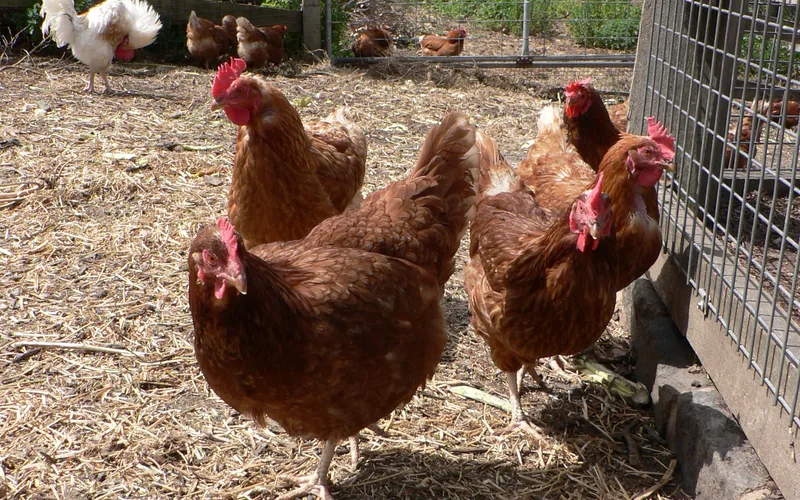
Hens display warm copper-chestnut plumage with white underdown feathers visible around the hackles and tail. They feature neat red single combs, red earlobes, and clean yellow legs that naturally lighten during long laying seasons.
2. Production Persistency, Laying Speed & Shell Breaking Strength
The ISA Brown is celebrated for its rapid point-of-lay. Pullets drop their first egg between 18 and 20 weeks of age, hitting 50% production by week 20 to 21 and surging past 95% Hen-Day production by week 26.
The shell of an ISA Brown egg is famous for deep, uniform brown protoporphyrin pigmentation and high breaking strength (>40 Newtons), which protects eggs during commercial washing, grading, and transport. Track your flock's egg production with the Hen-Day Egg Production Calculator, and model carton sales with the Backyard Egg Profitability Calculator.
3. Docile Temperament, Family Appeal & Pasture Suitability
The ISA Brown is renowned as one of the friendliest, calmest chickens in existence:
- Gentle Pet Disposition: ISA Browns love human company. They readily run up to keepers, eat from hands, and allow gentle petting. Their calm manners make them popular for backyard families with young children.
- Free-Range Foragers: In pasture operations, ISA Browns range actively across grass, hunting bugs and clover while maintaining high flock cohesion.
- Low Aggression: They rarely start disputes and integrate smoothly into multi-breed coops.
4. Housing Setup, Roosting Needs & Winter Care
Setting up your coop to house ISA Browns ensures optimal egg production and welfare:
- Space Planning: Provide 4.0 sq ft (0.37 sq m) of indoor space per bird, and 10 to 12 sq ft (0.93–1.1 sq m) in an outdoor run. Calculate flock capacity with the Coop Space Calculator.
- Roosts: Position perches 24 to 30 inches (60–75 cm) off the floor using wide 2x4 lumber.
- Cold Hardiness: ISA Browns handle freezing winter conditions with ease. Ensure coop ventilation exhausts moisture while keeping perches draft-free.
- Photoperiod Management: Supply 14 to 16 hours of light daily to prevent winter egg pauses.
5. Health Maintenance & Management Protocols
Because ISA Browns lay at intense velocity, health protocols focus on metabolic support:
Laying 320+ eggs puts intense demand on calcium reserves. Always provide free-choice coarse oyster shell alongside their balanced 16% layer feed. Check daily requirements with the Layer Feed Intake Calculator.
Because they channel immense metabolic energy into egg production, commercial brown hybrids have shorter productive lifespans (typically 2 to 4 years) compared to slow-laying heritage breeds. Providing balanced vitamins and rest during autumn molts maintains flock vigor.
6. Summary: The Worldwide Queen of Brown Eggs
From backyard coops to commercial pasture operations, the ISA Brown delivers the perfect combination of world-class egg numbers, docile companionship, and rich brown shells, maintaining its place as the most popular brown layer in the world.
6. Practical Free-Range Management & Keel Bone Protection
Because ISA Browns are active, high-yield layers widely used in pasture and organic systems, management should focus on range utilization and bone health:
Chickens are prey animals with an innate fear of open, uncovered sky. Flocks provided with wide, bare dirt paddocks will crowd nervously near coop pop-holes. Planting fruit trees, hedgerows, or erecting shade canopies every 30 yards encourages up to 80% of the flock to explore outer pastures, dispersing manure and increasing natural foraging.
When ISA Browns jump between perches and nesting tiers in multi-tier barns, collisions can fracture the keel bone. Installing rubber-padded perches, intermediate landing ramps, and keeping perch drops under 30 inches (75 cm) reduces keel fractures by over 60%.
Pastured birds regularly pick up roundworms (Ascaridia galli) and cecal worms from earthworms and grasshoppers. Implement rotational grazing between paddocks and conduct fecal egg counts quarterly to target deworming treatments effectively.
 zoom_in Click to Enlarge
Related Calculators
Scientific Literature
- Hendrix Genetics. (2023). ISA Brown Commercial Product Guide & Management Standards.
- Institut de Sélection Animale. (1985). The Genetic Development of the ISA Brown Layer. Lyon, France.
- European Laying Hen Welfare & Performance Survey. (2022). Poultry Science Journal.