
Wyandotte Chicken Guide: Silver & Blue Laced Plumage, Rose Comb & Egg Output
Comprehensive guide to Wyandotte chickens: rose comb frostbite immunity, laced plumage genetics, dual-purpose yield, and winter egg production.
Scientific Overview
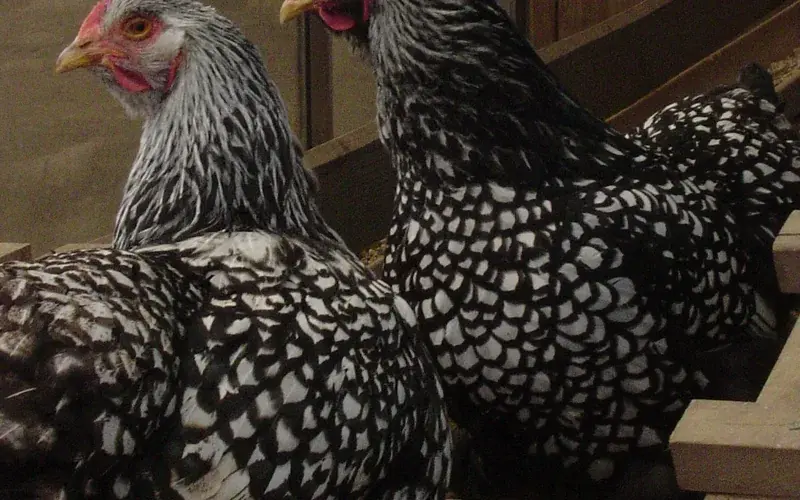
Named in honor of the Indigenous Wyandot (Huron) Nation, the Wyandotte is America's premier cold-hardy dual-purpose chicken. Developed in upstate New York and Michigan in the 1870s, Wyandottes were bred specifically to conquer severe sub-zero North American winters. With a low-profile, pebbled rose comb that is completely immune to frostbite, dense down insulation, and breathtaking lacing patterns (Silver Laced, Golden Laced, and Blue Laced Red), the Wyandotte is a cornerstone breed of sustainable homesteads.
American Farmstead Heritage & The Rose Comb Advantage
Breed Definition: The Wyandotte is a medium-heavy American dual-purpose breed featuring a compact curved back, broad deep chest, clean yellow legs, and a low-set rose comb (governed by the dominant R gene) ending in a well-defined leader following the curve of the skull.
The low, flat rose comb is a vital survival adaptation in northern climates. While single-comb breeds frequently suffer painful black necrosis (frostbite) on tall comb points during freezing weather, the Wyandotte's rose comb hugs the skull, suffering zero tissue loss even during extreme winter blizzards.
Wyandottes are calm, steady, and independent. They thrive under free-range grazing while laying 200 to 240 large, rich brown eggs consistently throughout the coldest months of the year.
Production Metrics & Weight Milestones
 zoom_in Click to Enlarge
Related Calculators
Scientific Literature
- American Poultry Association (APA). Standard of Perfection (2023).
- Davenport, C. B. (1906). Inheritance in Poultry: Studies of the Rose Comb Gene. Carnegie Institution of Washington.