
Blackhead Disease / Histomoniasis (Histomonas meleagridis)
Heterakis cecal worm vectors, bullseye liver lesions, mustard droppings, and turkey flock management.
Scientific Overview
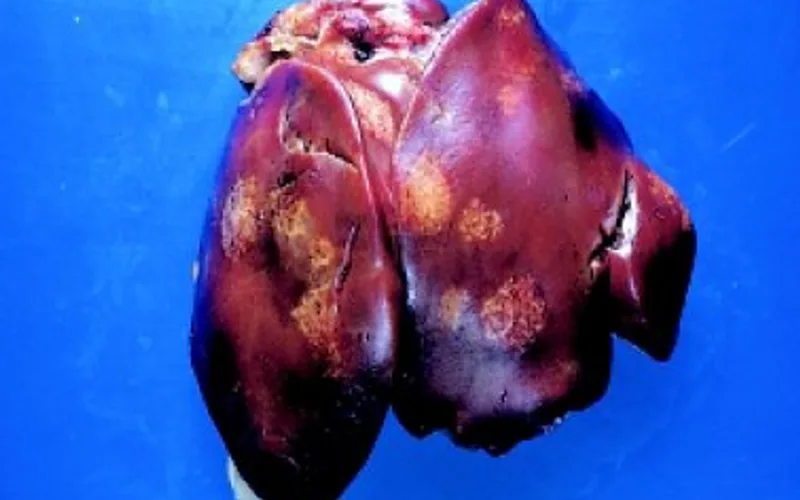
Blackhead Disease (Histomoniasis) is a devastating protozoal infection affecting turkeys, chickens, pheasants, and quails. Caused by Histomonas meleagridis and vectored by the cecal worm Heterakis gallinarum, it induces severe typhlohepatitis with pathognomonic 'bullseye' liver necrosis.
1. Life Cycle & Heterakis Vector
Histomonas meleagridis is extremely fragile in the environment and relies on protective transport inside the eggs of the cecal worm (Heterakis gallinarum) or within earthworms. Birds ingest worm eggs, releasing protozoa into the ceca where they penetrate mucosal walls and migrate via the portal bloodstream to the liver.
2. Pathognomonic Lesions & Clinical Signs
Infected birds exhibit sulfur-yellow (mustard-colored) diarrhea, severe lethargy, drooping wings, and occasional cyanosis of head skin. Necropsy reveals bilaterally enlarged ceca filled with yellow-green caseous cores and pathognomonic circular, crater-like liver lesions with raised yellowish borders ('bullseye' lesions).
3. Prevention & Biosecurity Controls
Because no therapeutic drugs are cleared for food production, prevention relies on strict separation: never house turkeys and chickens on the same farm or litter. Implement regular deworming schedules (e.g. Flubendazole) to control Heterakis cecal worm vectors.
 biotech Clinical Pathology
Related Calculators
Scientific Literature
- McDougald, L.R. (2020). Histomoniasis in Poultry. Avian Diseases Journal.
- WOAH Terrestrial Manual: Avian Histomoniasis.